
Search
24 items
-

Pope Francis and Environmental Leaders Forge Vision for Global Action
Environmental leaders, activists and advocates gathered with Pope Francis for a two-day Vatican-organized conference with hopes to emerge with a shared vision for protecting our planet. The conference was inspired by the third anniversary of the Pope’s encyclical and was attended by political and religious leaders, scientists, economists and heads of civil society organizations. Inspired by the call for unity and action in the encyclical, UN Environment also introduced their Interfaith Rain-forest Initiative at the conference. -
WCC Executive Committee: global biodiversity crisis reaches urgent level
This article from the World Council of Churches discusses the current biodiversity crisis. The majority of land surfaces and ocean areas are significantly modified, and over 85% of the wetlands are gone. The following excerpt notes how this subsequently affects the poor and vulnerable:
"The statement notes that, increasingly, the drive for relentless expansion built into dominant economic systems are endangering the survival of many of God’s creatures. 'Ultimately our significant and adverse impacts on ecology will impact humanity’s own future,' the statement reads. 'Already they are destroying the very basis of sustenance of our income-poor, vulnerable and Indigenous sisters and brothers, who contribute least to the ecological damage for which human beings are collectively responsible.'" -

Interfaith Rainforest Initiative
From the organization's website: "The Interfaith Rainforest Initiative is an international, multi-faith alliance that aims to bring moral urgency and faith-based leadership to global efforts to end tropical deforestation. It is a platform for religious leaders to work hand-in-hand with indigenous peoples, governments, civil society and business on actions that protect rainforests and safeguard those that serve as their guardians." The initiative focuses on raising awareness, mobilizing action, and influencing policy. -

Engaged Organizations: Stratford Ecological Center
The Stratford Ecological Center is an organic farm and nature preserve that provides education sessions, tours, and hiking trails to the public. They also offer various workshops and classes on an ongoing basis.
Trinity Catholic Elementary School 4th and 5th graders participation each year in a 5-day environmental camp "Messages of the Earth" at the Stratford Ecological Center. -

Engaged Organizations: Kenyon College Brown Family Environmental Center
The Brown Environmental Center at Kenyon College offers both self-guided and educational sessions that showcase their diverse range of natural habitats that are maintained at the center.
St. Vincent de Paul in Mt. Vernon, Ohio makes annual trips for their K-6 students. -
-

Christians and Endangered Species
Throughout time, it has often been difficult to reconcile concepts from both biology and theology. This article focuses on the critical impact of endangered species with regard to various Christian religions. Citing biblical text, especially the story of Noah’s Ark, many religions have deemed the preserving and caring for all living creatures to be of utmost importance. -
Tu' B'Shvat: The Green of Judaism
Tu B’Shvat: The Greening of Judaism is a handout from Interfaith Family. It offers a brief overview of Tu B’Shvat and different activities to celebrate the holiday. It also offers examples of how to be caretakers of the earth. To read the entire handout, click below. -
Ethiopia’s Church Forests
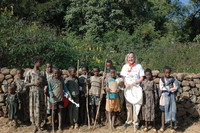
The beautiful forests of Ethiopia are rapidly disappearing due to human activity. However, the forests around the Ethiopian churches remain intact and teeming with diverse life. Dr. Margaret D. Lowman, known as Canopy Meg, has teamed up with one of these churches to study and survey the wildlife, mostly insects in the area. The children of the church community are being engaged to become the next generation of stewards in order to ensure that the forests and creatures are preserved. Project leaders also aim to help build walls in order to keep these forest areas more protected from human development. -
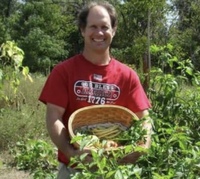
WWOOF: Christian nonprofit residential ministry perched atop the Ozark Mountains
“Perched atop the Ozark Mountains on 101 acres of forest, pasture, rocky bluffs, and old logging trails, we are a rustic Christian nonprofit residential ministry in need of help with the development of planning stages of a 30 acre campus with proposed cabins for housing, a reception lodge, Creator’s Workshop, dining hall, stables, organic garden, vineyard, fruit grove, petting farm, and saw mill. In short, we are a ministry that leans toward sustainability. We are a ranch, not an income-producing farm.” -

Community Grower's Network
"The Community Growers’ Network is an initiative for Columbus-based Urban Farmers and Gardeners who steward a fresh food culture in their own neighborhoods. The Community Growers’ Network (CGN) focuses on communities which are food deserts/apartheids. The project is designed to build food system resilience by investing in the capacities of Urban Growers with various experience levels." -

Engaged Organizations: A Rocha International
A Rocha International discuss their mission on their website:
"At A Rocha USA, our mission is to restore both people and places through collaborative, community-based conservation.
We resource Christians to care for creation where they live by building a network of hands-on conservation projects in communities across the nation. Through partnerships with individuals, churches, and community groups, we provide content, curriculum, and a network of support for improving local habitats and increasing biodiversity." -

Engaged Organizations: Catholic Association of Diocesan Ecumenical and Interreligious Officers
The following is an excerpt from the Catholic Association of Diocean Ecumenical and Interreligous Officers' call to care for creation on their website:
"Catholics now realize that the environment is equally as important as the social issues that have been given attention in the Church and that in fact, certain of these issues are tied inextricably to our care of the earth or lack thereof. Can even one individual live without clean air, water, or food? Can any life be protected without concern for the basic systems and networks required to sustain life? If we “teach a man to fish” but the water is so polluted that fish are poisoned or if overfishing causes them to become extinct, what then?
Catholics in past centuries were not concerned about air, water, soil and climate for the simple reason that these life systems were not endangered. Clergy and faithful had no need to be worried that the water, wheat, or grapes required for our sacramental life might be dangerously polluted or ruined by climate extremes. Current threats to creation are a sign of our times." -

Baha'i Faith Statement on the Environment
The Interfaith Center for Sustainable Development posted a Baha'i faith statement, from the Baha'i Office of the Environment, on their website. Below is the introduction within the statement:
"In this age of transition toward a world society, protection of the environment and conservation of the earth’s resources represent an enormously complex challenge. The rapid progress in science and technology that has united the world physically has also greatly accelerated destruction of the biological diversity and rich natural heritage with which the planet has been endowed. Material civilization, driven by the dogmas of consumerism and aggressive individualism and disoriented by the weakening of moral standards and spiritual values, has been carried to excess.
Only a comprehensive vision of a global society, supported by universal values and principles, can inspire individuals to take responsibility for the long-term care and protection of the natural environment. Baha’is find such a world-embracing vision and system of values in the teachings of Baha’u’llah, which herald an era of planetary justice, prosperity, and unity. " -
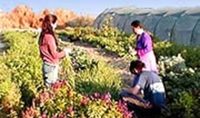
Judaism Ecology
Interfaith Center for Sustainable Development posted a statement of Judaism ecology, based on the Windsor Statements, on their website. Key points include a warning with regard to altering creation, wasteful destruction, and the urgency for preservation. -
North American Pollinator Protection Campaign (NAPPC) - Brochure on Christianity and Pollinators
Various Christian groups in the United States (North American Pollinator Protection Campaign) have created this leaflet that discusses the importance of protecting endangered pollinating species in urban areas. The concluding section focuses on actions that congregations, and specifically youth groups can take to assist pollinators. -

Climate Change and the Common Good: A Statement of the Problem and the Demand for Transformative Solutions
The Pontifical Academy of Social Sciences prepared the following statement on climate change. It covers a wide range of associated sustainability issues. Various suggestions for societal interventions are also included within the statement. -

Global Climate Change A Plea for Dialogue Prudence and the Common Good
A Statement of the United States Conference of Catholic Bishops was issued on June 15, 2001. This document covers a multitude of current environmental problems and the resulting negative impact on populations around the world - especially with regard to indigent populations. It stressed the connectivity of human behavior and it's impact on the planet. -
Lenten Call for ‘Carbon Fast’
This circular Lenten Call for ‘Carbon Fast’, addressed to the Bishops of the Churches in South India, was provided on February 8, 2017 in Chennai, India, at the Church of South India Synod Secretariat. The circular emphasizes the desecration of the Earth as sinful. However, the call for a Carbon Fast can be considered one way to repent. -
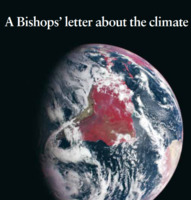
A Bishops’ Letter about the Climate
Below is a section of the introduction from A Bishops’ Letter about the Climate, which covers a multitude of critical environmental issues, from the 2014 Bishops' conference:
"We have lived with reports and forecasts of climate change since the 1980s. Our climate is the result of the interaction of complex systems and there is often a great distance between cause and effect in terms of both space and time. There are uncertainties and a lack of clarity. However, the knowledge we possess today does not allow us to postpone until tomorrow
what needs to be done now. Our human climate impact must decrease for the sake of the earth, for the sake of the world that God so loves that God gave us Jesus Christ." -
The Miracle Garden
The Miracle Garden is a non-profit organization founded in 2014 with the intention to convert vacant lots in the Columbus area into gardens that provide healthy produce for food-insecure areas. This organization relies on volunteers to maintain the garden and donate supplies, which provides a great opportunity for churches to volunteer outdoors while serving the local community and bringing about positive change. -
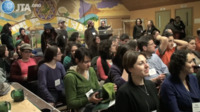
Jewish Outdoor, Food, Farming & Environmental Education (JOFEE)
"JOFEE stands for Jewish Outdoor, Food, Farming & Environmental Education. These experiences connect people to Judaism, community, and the natural world through hands-on, thoughtful and engaging Jewish content across different ages, Jewish backgrounds, and religious approaches. Tens of thousands of people engage in JOFEE activities every year, from learning about Jewish harvest rituals to starting a CSA, to greening their institutions by rethinking their consumption decisions. Combining methods from existing secular models (like outdoor education) with Jewish learning, wisdom, and traditions, JOFEE programs create unparalleled entry points to Jewish life and social action." -
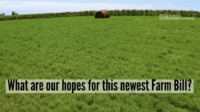
What are our hopes for the new Farm Bill?
"Over the past year, EEN has spoken with Farmers across the country to hear directly from them about their priorities for the 2023 Farm Bill. Based on these recommendations, EEN is hoping to prevent further rollbacks of conservation benefits for farmers!
Learn more and send a message to your lawmakers in support of a conservation-forward Farm Bill at creationcare.org/farm" -

St. Patrick Parish Green Kits
"St. Patrick Parish in Iowa City, a participant in the Victory Noll Sisters Small Grants Program, offered each household in the parish a free kit with native plant seedlings, a kitchen compost container, and LED bulbs.
The 162 native plants arrived just in time for Laudato Si Week in late May, and more than thirty households signed up in this inaugural effort."