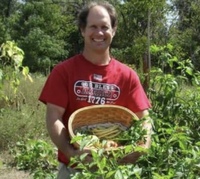
The Villa Maria, located in Villa Maria, Pennsylvania, describes itself on their website as the following: "Operating on 759 acres, the farm of Villa Maria Community Center is an integral part of the heritage of the Sisters of the Humility of Mary. The farm serves as a symbol of the struggle and sacrifice of a small group of women who settled on the Lawrence County land in 1864 and succeeded in establishing a viable, productive farm when others before them had failed. Land management at the farm is based on spirituality, sustainability, simplicity and the preservation of all local life systems." The greenhouse is open seasonally along with a produce market that sells the food grown.
“Perched atop the Ozark Mountains on 101 acres of forest, pasture, rocky bluffs, and old logging trails, we are a rustic Christian nonprofit residential ministry in need of help with the development of planning stages of a 30 acre campus with proposed cabins for housing, a reception lodge, Creator’s Workshop, dining hall, stables, organic garden, vineyard, fruit grove, petting farm, and saw mill. In short, we are a ministry that leans toward sustainability. We are a ranch, not an income-producing farm.”
"The Community Growers’ Network is an initiative for Columbus-based Urban Farmers and Gardeners who steward a fresh food culture in their own neighborhoods. The Community Growers’ Network (CGN) focuses on communities which are food deserts/apartheids. The project is designed to build food system resilience by investing in the capacities of Urban Growers with various experience levels."
A Rocha International discuss their mission on their website:
"At A Rocha USA, our mission is to restore both people and places through collaborative, community-based conservation.
We resource Christians to care for creation where they live by building a network of hands-on conservation projects in communities across the nation. Through partnerships with individuals, churches, and community groups, we provide content, curriculum, and a network of support for improving local habitats and increasing biodiversity."
Columban Center for Advocacy and Outreach serves as a line of communication between Columban missionaries and policy makers in Washington D.C. Missionaries are stationed in 16 countries around the world, bringing attention to environmental justice issues that are most pressing for marginalized populations in the areas. Their primary focus is combating human-induced climate change. In addition, they advocate for sustainable development and agricultural systems, and right to clean water.