
Search
39 items
-
The Miracle Garden
The Miracle Garden is a non-profit organization founded in 2014 with the intention to convert vacant lots in the Columbus area into gardens that provide healthy produce for food-insecure areas. This organization relies on volunteers to maintain the garden and donate supplies, which provides a great opportunity for churches to volunteer outdoors while serving the local community and bringing about positive change. -
A Greener Faith: Religious Environmentalism and Our Planet's Future
Roger S. Gottlieb outlines principles of religious environmentalism and its implications for social and political issues. Gottlieb addresses issues of consumerism and fundamentalism while offering the perspective of religious environmentalism to guide how we should treat other beings. Through these discussions, Gottlieb proposes his dream for the future of our world. -
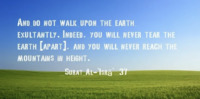
Environmental Sustainability in Islam
"Islamic beliefs, traditions and values provide an effective and comprehensive solution to the current environmental challenges faced by the human race. Islam has a rich tradition of highlighting the importance of environmental protection and conservation of natural resources. According to Islamic law, the basic elements of nature – land, water, fire, forest, and light – belong to all living things, not just human beings.
The Holy Qur’an and Sunnah are a guiding light to promote sustainable development in Islamic countries as well as around the world. Allah (Subhanahu Wa Ta’ala) commands human beings to avoid doing mischief and wasting resources as these acts cause degradation of the environment. The privilege to exploit natural resources was given to the mankind on a guardianship basis, which implies the right to use another person’s property on the promise that it will not be damaged or destroyed." -
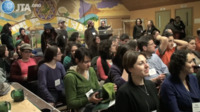
Jewish Outdoor, Food, Farming & Environmental Education (JOFEE)
"JOFEE stands for Jewish Outdoor, Food, Farming & Environmental Education. These experiences connect people to Judaism, community, and the natural world through hands-on, thoughtful and engaging Jewish content across different ages, Jewish backgrounds, and religious approaches. Tens of thousands of people engage in JOFEE activities every year, from learning about Jewish harvest rituals to starting a CSA, to greening their institutions by rethinking their consumption decisions. Combining methods from existing secular models (like outdoor education) with Jewish learning, wisdom, and traditions, JOFEE programs create unparalleled entry points to Jewish life and social action." -
Stop getting your modest clothes from fast fashion brands
"The hijab and modest fashion are not immune from the global mainstream shift to fast fashion. Ironically, in light of celebrating diversity and inclusivity, fast fashion businesses have created new niches for underserved audiences, including the Muslim community. Often these businesses outsource production to Muslim majority countries in the Global South. Here garment workers are exploited for less than a living wage..." -
What are our hopes for the new Farm Bill?
"Over the past year, EEN has spoken with Farmers across the country to hear directly from them about their priorities for the 2023 Farm Bill. Based on these recommendations, EEN is hoping to prevent further rollbacks of conservation benefits for farmers!
Learn more and send a message to your lawmakers in support of a conservation-forward Farm Bill at creationcare.org/farm" -

St. Patrick Parish Green Kits
"St. Patrick Parish in Iowa City, a participant in the Victory Noll Sisters Small Grants Program, offered each household in the parish a free kit with native plant seedlings, a kitchen compost container, and LED bulbs.
The 162 native plants arrived just in time for Laudato Si Week in late May, and more than thirty households signed up in this inaugural effort." -

Household Carbon Footprint Calculator
This interactive resource allows the user to input information on their housing situation and energy usage to calculate their estimated carbon footprint. It can show you where the most waste is and any possible ways to reduce the carbon footprint. -
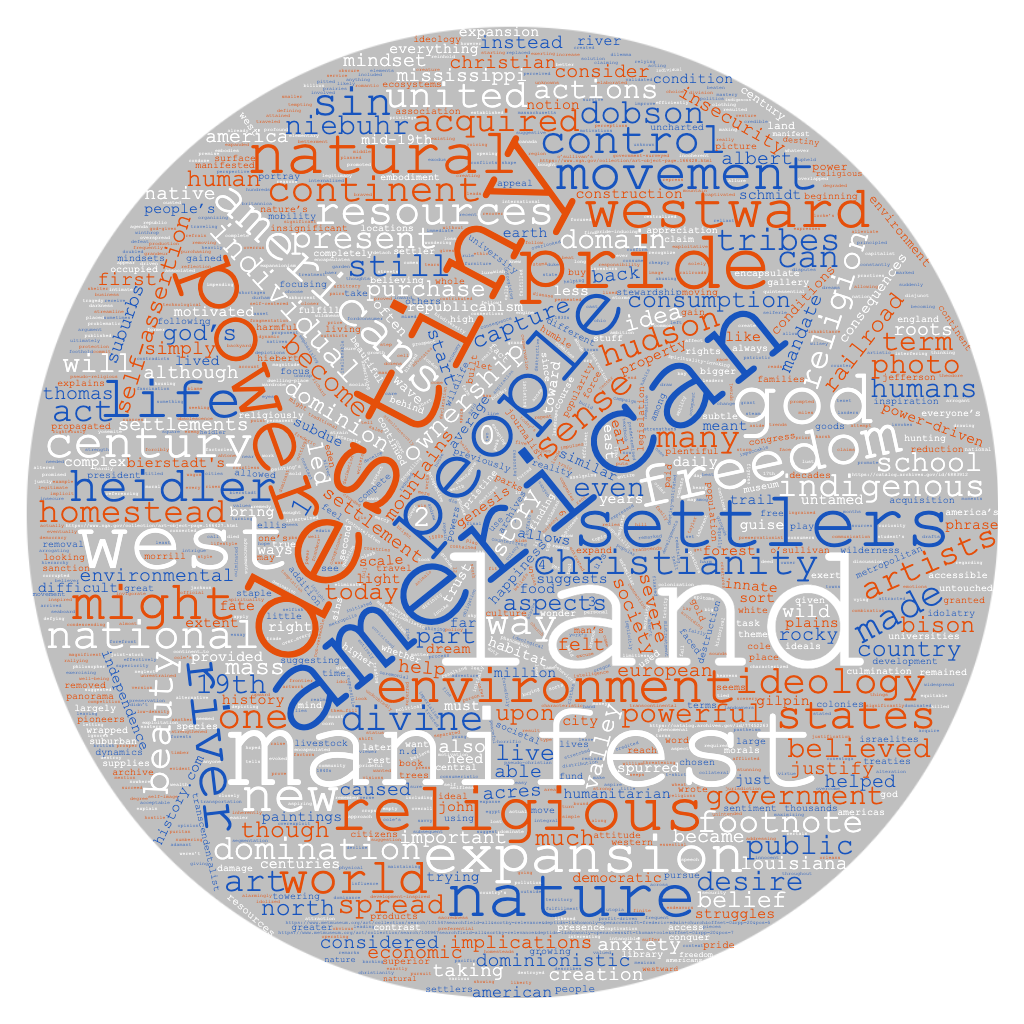
Manifest Destiny: The American Dream or an Ecological Crisis?
This chapter from the student-written book "Emerging Perspectives on Religion and Environmental Values in America" explores the history of colonial expansion and the concept of manifest destiny in the US. It examines the environmental impacts as well as the religious motivations behind this course of action. Below is the first paragraph of the chapter to introduce the discussion.
"A quintessential part of the “American dream” is freedom. Whether it be freedom of religion, freedom of speech, or simply freedom to pursue one’s own dreams, Americans have always idolized the United States as a sort of utopia for individual freedom. 'Manifest destiny' is a mindset that embodies this belief. A staple term in every elementary, middle, and high school student’s American history textbook, it might be considered the epitome of what it meant to be American at the start of American imperialism. The idea of manifest destiny gained popularity in the mid-19th century and was built upon the notion of freedom. Advocates for manifest destiny believed that Americans were free, even bound by fate, to conquer the North American continent and expand the realm of democratic republicanism and Christianity. Under the guise of religious, political, and economic motivations, manifest destiny allowed Americans to pursue the 'American dream' and subdue the 'wild west.' The environmental and humanitarian implications of manifest destiny were frequently overlooked or not considered, resulting in ideology that still today seeps into our behaviors and perceptions regarding domination and superiority." -
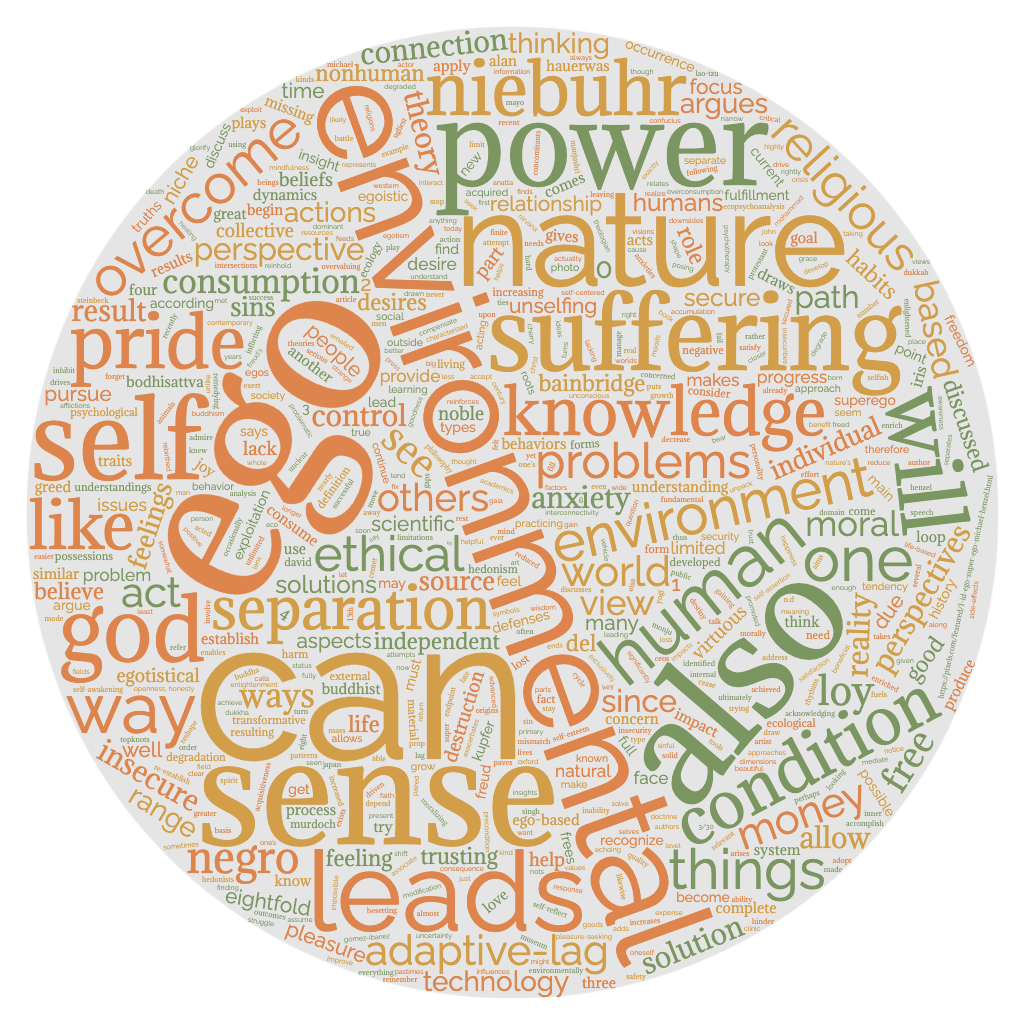
The Consequences of the Ego and the Potential of Unselfing
This chapter from the student-written book “Emerging Perspectives on Religion and Environmental Values in America” explores consumption, human ego, and the relationship between these and our environment. It discusses human nature and how we interact with each other, technology, and nature. Below is the first paragraph of the chapter to introduce the discussion.
"Consumption is one of the favorite pastimes of our developed society, but it is also the source of many environmental problems. As technology has advanced, our society and economy have developed into one dependent on the mass consumption of things. Our habits of mass consumption have acted as a vehicle of destruction by increasing the amount of resources we use and waste we produce, leaving parts of our environment severely degraded. As a result, the people who have more and seem to be successful make more environmental impact, while the environmental consequences of their actions tend to be felt by the have nots. Our symbols of success that we prop up seem to be part of the problem as they have serious environmental downsides, and even though we recognize these downsides we continue to glorify consumptive habits that are destructive. But have you ever considered the roots of our need to consume?" -

#PlasticDetox Social Media Challenge
"Join the EARTHDAY.ORG #PlasticDetox challenge and reduce your plastic use! Take small steps to avoid single-use plastics like bags, straws, bottles, and packaging. Share your eco-friendly swaps and inspire others to join the movement on social media using #PlasticDetox.
The challenge not only focuses on individual actions but also encourages participants to spread awareness and inspire others to join the movement. By collectively engaging in the EARTHDAY.ORG #PlasticDetox challenge, participants will create a ripple effect and encourage a wider shift towards a plastic-free lifestyle. Together, we can make a big impact for a plastic-free future!" -
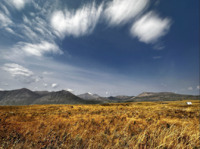
Moving Goal
"Sustainability is a moving goal; requiring humans to be agile and intuitive to achieve sustainability and build resiliency." Taken by Kenedy Witherow. Submitted to the RESTORExchange Sustainability Contest. -
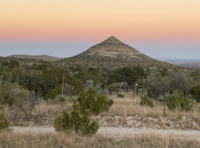
Preserving a Beautiful World
"Preserving a beautiful world". Taken by David Farrokh. Submitted to the RESTORExchange Sustainability Photo Contest. -

Reflections of Our Impact on the Built Environment
"Reflections of our impact on the built environment: This photo of a main canal in Amsterdam, Netherlands held deeper correlation to the meaning of sustainability to me since it demonstrates how the state of the natural environment is a reflection of the built environment and what measures we take to mitigate climate change and environmental degradation. Sustainability to me is deeply related to the intersection of the built environment and nature and how we can create an evolving world while maintaining the earth for future generations." Taken by Mikayla Carey. Submitted to the RESTORExchange Sustainability Contest.