
Search
48 items
-

Pope Francis and Environmental Leaders Forge Vision for Global Action
Environmental leaders, activists and advocates gathered with Pope Francis for a two-day Vatican-organized conference with hopes to emerge with a shared vision for protecting our planet. The conference was inspired by the third anniversary of the Pope’s encyclical and was attended by political and religious leaders, scientists, economists and heads of civil society organizations. Inspired by the call for unity and action in the encyclical, UN Environment also introduced their Interfaith Rain-forest Initiative at the conference. -

Leadership Meeting Guide - Protecting Your Nest
This meeting guide from Evangelical Environmental Network MOMS offers ways to live in a simple, toxic free home. It focuses on ways to protect children from fossil fuels and consumption of chemicals that are known to cause diseases. Suggestions for household improvements in this area include: reading labels, dumping processed foods, using homemade cleaning products, and more. -

Earth Day statement from ELCA presiding bishop
The Reverend Elizabeth A. Eaton, Presiding Bishop of the Evangelical Lutheran Church in America (ELCA), issued an Earth Day statement on behalf of the ELCA. A salient excerpt from the statement is shown below:
"The effects of the warming climate are felt in nearly every corner of the globe. These include increased migration, food insecurity due to changing agricultural landscapes, national security issues and health problems. As bad as it is for all creation, the most vulnerable people around the world are suffering the most. Yet they have contributed the least and, as noted in the United Nation's 2030 Agenda for Sustainable Development,[iii] are ill equipped to adapt to or mitigate the effects of a changing climate to build resilient communities." -

Climate Change
The Presbyterian Church has put forth this video on care for creation, emphasizing that Christ has called us to go out into the world to care for creation and our fellow humans, especially the poor. The Union of Concerned Scientists has identified food, transportation, and energy as three key areas of focus to help stem climate change Congregations can help by implementing energy saving techniques, participate in recycling and composting waste, teaching children to grow food, and incorporating salient creation care concepts within educational settings. -

Hazardous Waste, Race, and the Environment
This statement was approved by the 207th General Assembly Presbyterian Church (U.S.A.), 1995. The predominant theme focuses on the impact that hazardous waste has on individuals who are suffering from poverty and minority groups. The final section provides suggestions for taking action. -
USCCB President's Refelction and Prayer During Coronavirus
The president of the U.S. Conference of Catholic Bishops Archbishop José H. Gomez offers his statement regarding COVID-19 to bring comfort to those affected by the virus and to pray for recovery. He offers prayer to healthcare workers and civic leaders helping fight against the virus and calls for solidarity among the congregation.
He leads a prayer to the Virgin Guadalupe for protection and healing, and for compassion and patience in the church.
-
WCC Executive Committee: global biodiversity crisis reaches urgent level
This article from the World Council of Churches discusses the current biodiversity crisis. The majority of land surfaces and ocean areas are significantly modified, and over 85% of the wetlands are gone. The following excerpt notes how this subsequently affects the poor and vulnerable:
"The statement notes that, increasingly, the drive for relentless expansion built into dominant economic systems are endangering the survival of many of God’s creatures. 'Ultimately our significant and adverse impacts on ecology will impact humanity’s own future,' the statement reads. 'Already they are destroying the very basis of sustenance of our income-poor, vulnerable and Indigenous sisters and brothers, who contribute least to the ecological damage for which human beings are collectively responsible.'" -
Catholic Response to Outbreak of Coronavirus
Chairman of the U.S. Conference of Catholic Bishops' Committee on International Justice and Peace and Bishop David J. Mallot, Sean Callahan the president of Catholic Relief Services, and Sr. Mary Haddad, RSM, the president of the Catholic Health Association of the United States offer a statement in the midst of the Coronavirus outbreak. The statement applauds healthcare workers and calls on governing bodies to work together to combat the virus. The statement also recognizes the U.S. for sending 17 tons of medical supplies to China, an example of how compassion and teamwork is needed at this time. A part of his address contains the following:
“The Catholic Church in the United States stands in solidarity with those affected by the coronavirus and their families, health workers who are valiantly trying to diagnose and treat patients, and those under quarantine awaiting results of their screening for the virus. We offer our prayers for healing and support those organizations, both domestic and international, working to provide medical supplies and assistance to address this serious risk to public health." -

Faith, science and technology
The World Council of Churches (WCC) discusses the intersection of faith, science, and technology and what the future might hold given the current trajectory of new technological developments. The concluding paragraph provides some summary statements regarding this issue:
"The work done so far on genetic engineering has helped to identify also other challenging technological developments, especially in the field of nano-scale technologies that operates at the scale of atoms and molecules. According to the U.S. National Science Foundation, the global market for nano-scale technologies will exceed $1 trillion within six years, yet most governments and intergovernmental agencies have hardly heard or thought of nano-technology. One of the Ecumenical Conversations will focus on the challenges by new technologies to the churches’ witness to the sanctity of life. The question will be if the WCC can facilitate exchange among the churches on these issues in order to broaden the basis for common witness and action. Is it true that time has come for a new emphasis on the concerns posed by science and technology?" -

A Prayer for Protection in Time of Pandemic
A prayer for those who are sick, vulnerable, and/or have passed away due to illness, to Mother Mary and Son Jesus; Adapted from the prayer of Pope Francis, provided by the Knights of Columbus. -
Coronavirus, Faith Leaders, and Sustainable Development
An event organized by the United Nations Environment Progamme and the Swedish International Development Cooperation Agency led a digital conference to discuss innovation to combat the environmental crisis in light of the COVID-19. The Faith for Earth Initiative calls for interfaith collaboration to combat environment problems. In the midst of a global crisis, the UN encourages this time to be used for innovation and educational progression. This quote from Iyad Abumoghi summarizes the mission:
“'The coronavirus pandemic is focusing hearts and minds, says the director of Faith for Earth, Iyad Abumoghli. “Faith for Earth is mobilizing youth, the leaders of faith-based organizations, as well as scientists and theologians to work together for innovative change to speed up sustainable development.'” -
Interfaith Response to COVID-19
The United Nations Environment Programme compiled a list of Interfaith responses to the outbreak of COVID-19, including statements from the Berkley Center, Oxford, and the World Evangelical Alliance. The UN recognizes faith organizations as leaders in navigating the impacts of COVID-19 and made this list to recognize these emerging responses. -

Interfaith Rainforest Initiative
From the organization's website: "The Interfaith Rainforest Initiative is an international, multi-faith alliance that aims to bring moral urgency and faith-based leadership to global efforts to end tropical deforestation. It is a platform for religious leaders to work hand-in-hand with indigenous peoples, governments, civil society and business on actions that protect rainforests and safeguard those that serve as their guardians." The initiative focuses on raising awareness, mobilizing action, and influencing policy. -
Congregational Profile: St Francis of Assisi parish Creation Care Team, Columbus, OH
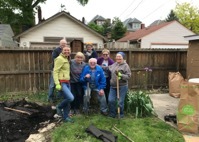
When St. Francis of Assisi’s Creation Care Team volunteered to take responsibility for caring for the church’s flower and vegetable gardens in the summer of 2018 it faced a challenge: how to dispose of yard waste in a responsible manner. The parish did not have resources to hire a vendor to appropriately dispose of leaves and garden debris and hauling it away in our private cars while possible would take extra time. The Team members did know though that we did not want to continue to toss the yard waste in the trash, which is what had previously been done.
Luckily a solution was at hand: a new member of our parish and our Creation Care Team—Todd Marti-- serves as one of the “garden stewards” at Upper Arlington Lutheran Church’s community garden at Mill Run. Todd volunteered to haul away the yard waste from St. Francis and add it to the compost bins at the community garden. So St. Francis’ yard waste helps grow food that when harvested feeds hungry families through Neighbors (SON) Ministries’ Hilliard Free Lunch Summer Camp for Kids program, the Hilltop, Mid-Ohio Food Bank, and through Faith Mission-- a win for all involved.
-

Engaged Organizations: Stratford Ecological Center
The Stratford Ecological Center is an organic farm and nature preserve that provides education sessions, tours, and hiking trails to the public. They also offer various workshops and classes on an ongoing basis.
Trinity Catholic Elementary School 4th and 5th graders participation each year in a 5-day environmental camp "Messages of the Earth" at the Stratford Ecological Center. -

Engaged Organizations: Kenyon College Brown Family Environmental Center
The Brown Environmental Center at Kenyon College offers both self-guided and educational sessions that showcase their diverse range of natural habitats that are maintained at the center.
St. Vincent de Paul in Mt. Vernon, Ohio makes annual trips for their K-6 students. -

Engaged Organizations: Black Church Food Security Network
The Black Church Food Security Network strives to provide fresh produce to historically Africa American churches within the Baltimore Metro area. Their popup farm stands provide convenience to the public as they are able to set up during times when congregation members typically gather. Ideally, members will either start their own gardens on site or expand ones that they currently maintain. Often, the farmers or urban growers will offer to lead bible studies and include food security issues as part of the sessions. -

Toledo Grows: Community Supported Agriculture (CSA)
Community Supported Agriculture is run by grassroots organization Toledo Grows. Benefits of being a CSA shareholder include receiving weekly shares of quality, fresh farm products. Shareholders also can choose between a full share (portioned for a family of 3-4 for the week) or a half share (portioned for 1 or 2).
Members support local farmers using sustainable growing methods—no harmful chemicals; receive a variety of vegetables and herbs, including many “staples” such as carrots, lettuce, peppers, onions, etc.—whatever is ready that week; experience new vegetables; and receive recipes and tips on cooking them. -

Engaged Organizations: Scaling Up Nutrition
Scaling Up Nutrition discuss their vision and goals on their website:
"Since 2010, the SUN Movement has inspired a new way of working collaboratively to end malnutrition, in all its forms. With the governments of SUN Countries in the lead, it unites people—from civil society, the United Nations, donors, businesses and researchers—in a collective effort to improve nutrition. The SUN Movement Strategy and Roadmap (2016-2020) has helped illuminate the importance of nutrition as a universal agenda – and one which is integral to achieving the promise of the Sustainable Development Goals (SDGs).
To realise the vision of a world without hunger and malnutrition, the SUN Movement Principles of Engagement guide actors as they work in a multi-sectoral and multi-stakeholder space to effectively working together to end malnutrition, in all its forms. These principles ensure that the Movement is flexible while maintaining a common purpose and mutual accountability." -

Engaged Organizations: 1,000 Days
1,000 Days non-profit organization for women and children discuss the work that they do on their website:
"1,000 Days works to win support for investments in the nutrition and well-being of mothers, babies and toddlers in the U.S. and around the world. We make the case to policymakers, global leaders and those who influence them that brighter futures begin with ensuring mothers and children everywhere have a thriving first 1,000 days.
From advocating for evidence-based dietary guidelines for pregnant women and young children to providing parents with educational resources and content on baby and toddler feeding, 1,000 Days is committed to nourishing healthy beginnings. " -
Profile: Todd Marti
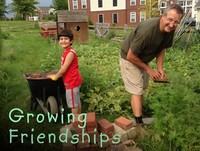
Todd Marti, a parishioner at St. Francis of Assisi Parish in Columbus, serves as a “garden steward” for the community garden located on the grounds of the Upper Arlington Lutheran Church at Mill Run. Todd’s garden stewardship is a clear reflection of his care for creation and his fellow man. Each year vegetables are planted on two-thirds of the 12,500 square feet garden. When the tomatoes, beets, squash, lettuce and other vegetables are harvested they are donated to the Hilliard Free Lunch Summer Camp for Kids, and Mid-Ohio Food Bank partner pantries. On average 10,000 pounds of produce is harvested and donated annually. Over the life of the garden 130,000 plus pounds of produce have been donated. The recipient of the Franklin Park conservatory Growing to Green Gardener of the Year Award in 2012, Todd utilizes innovative gardening practices such as companion planting and sequencing of multiple crops to enhance output. The garden helps preserve God’s creation by composting food waste and coffee grounds from local coffee shops and restaurants. Yard waste is also composed including that generated by St. Francis of Assisi from its flower and vegetable gardens.
When he is not working in the community garden—which he is every Saturday from spring until mid-November--or recruiting volunteers to help with weeding, planting and harvesting, Todd can be found at his day job as an Assistant Attorney General for State of Ohio.
-
-

Christians and Endangered Species
Throughout time, it has often been difficult to reconcile concepts from both biology and theology. This article focuses on the critical impact of endangered species with regard to various Christian religions. Citing biblical text, especially the story of Noah’s Ark, many religions have deemed the preserving and caring for all living creatures to be of utmost importance. -
Tu' B'Shvat: The Green of Judaism
Tu B’Shvat: The Greening of Judaism is a handout from Interfaith Family. It offers a brief overview of Tu B’Shvat and different activities to celebrate the holiday. It also offers examples of how to be caretakers of the earth. To read the entire handout, click below. -
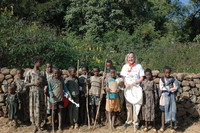
Ethiopia’s Church Forests
The beautiful forests of Ethiopia are rapidly disappearing due to human activity. However, the forests around the Ethiopian churches remain intact and teeming with diverse life. Dr. Margaret D. Lowman, known as Canopy Meg, has teamed up with one of these churches to study and survey the wildlife, mostly insects in the area. The children of the church community are being engaged to become the next generation of stewards in order to ensure that the forests and creatures are preserved. Project leaders also aim to help build walls in order to keep these forest areas more protected from human development.