
Search
301 items
-

IRI Colombia continues far-reaching communications campaign to grow awareness on the importance of tropical forests
IRI Colombia continued its communications campaign to raise awareness about its mission and expand engagement in the 36 local chapters where IRI has a presence. IRI Colombia radio spots (which will run through the end of 2021) are being broadcast seven days a week on the country’s leading radio networks and will reach over 250,000 people. Listen to the radio spots in Spanish here.
IRI Colombia has also commissioned 10 billboards in strategic locations with messages like “Forest = water and oxygen” and “Plant a tree” to increase awareness about the importance of protecting and restoring tropical forests. The 36 IRI Colombia local chapters continue implementing their 2021 action plans, which include activities such as reforesting watersheds and springs, cleaning up riverbanks, and establishing tree nurseries. -

Interfaith Rainforest Initiative (IRI) Campaign Videos
The Interfaith Rainforest Initiative (IRI) creates artistic and well-produced videos that accompany their programs on climate change education and awareness-raising in branch offices around the world.
These videos are great resources for those looking for multimedia inspirations that amplify sustainability communications efforts. -
Faith for Earth: A Call for Action
This book was first published at the beginning of the twenty-first century. A joint project of the United Nations Environment Programme and the Interfaith Partnership for the Environment, it was titled Earth and Faith: A Book of Reflection for Action. The partners printed tens of thousands of copies and gave them to schools, congregations, and communities throughout the
world. The book described the growing threats to our planet’s life support systems, the reverence all faiths share for life on Earth, and the responsibility that people have to future generations. -
Zoom Events: Greening the Bible
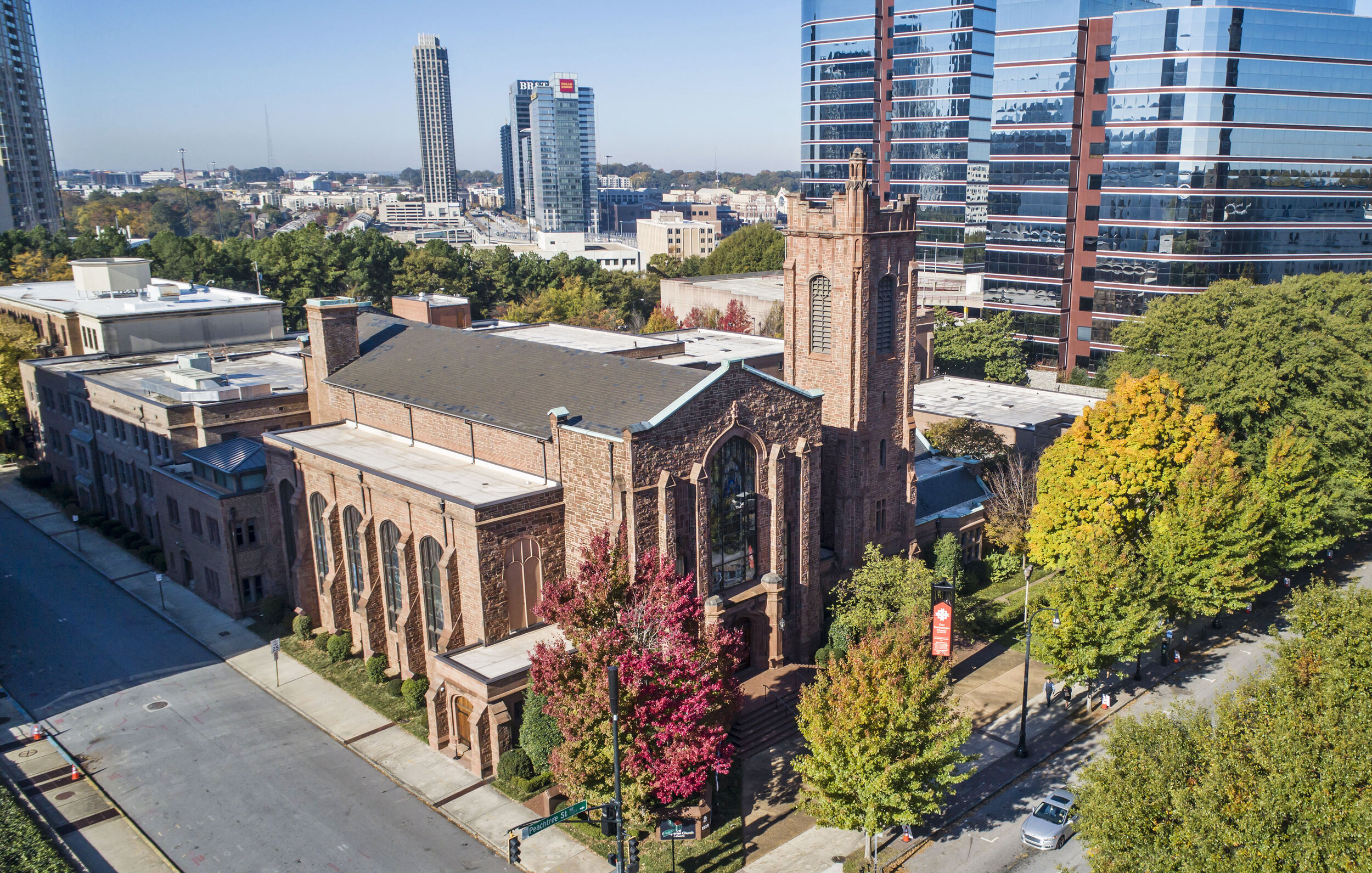
The goal of this short course is to read the Bible afresh: to reinterpret texts of terror (for other creatures) and to reclaim passages that show the importance and agency of nonhuman persons. It is intended as a tool for forming earth-inclusive Christians. -

ECHO Global Farm
ECHO introduces sustainable plants, climate-resilient techniques, and technologies to farmers around the world who are struggling to feed their families.
Through partnering with local NGOs, farmers, volunteers, and missionaries, ECHO is able to be efficient with their resources in providing aid where it's needed the most.
Empty bellies and empty hearts lead to pain and suffering for individuals, families, and communities across the world. ECHO believes that as active participants in the Great Commission and stewards of great agricultural knowledge, it is their duty to grow and make disciples. -

Profile: EquaSion (Equality, Spirituality, Inclusion)
EquaSion, formerly known as the Bridges of Faith Trialogue, is a non-partisan civic organization founded upon interfaith dialogue that works to develop educational and community service programming to foster greater understanding, respect, compassion, inclusion, and engagement for all people and faith communities in Greater Cincinnati and beyond. -

Sustainable Consumption Research and Action Initiative (SCORAI)
The Sustainable Consumption Research and Action Initiative (SCORAI) is a knowledge network of professionals working at the interface of material consumption, human well-being, and technological and cultural change. We aim to foster a transition beyond the currently dominant consumer society. SCORAI provides a forum for scholars and practitioners striving to understand the drivers of the consumerist economy in affluent technological societies; to formulate and analyze options for post-consumerist lifestyles, social institutions, and economic systems; and to provide the knowledge for emergent grassroots innovations, social movements, and public policies. -

The Bhumi Project Hindu Plans for Generational Change
This article outlines the Bhumi Project's nine-year plan to encourage better environmental practices among Hindu communities. This plan is broken down into three sections: Networking, Action, and Education. These sections are derived from Hindu traditions and creatively suggest how such traditions can be tailored to be more environmentally friendly. The Network section details how the plan will be dispersed throughout Hindu communities and provides incentives for those who choose to follow the plan. The Action section focuses on what can be done at the organizational and individual level to promote sustainability in Hindu communities. The Education section of the plan discusses how the Bhumi project intends to provide informative resources for communities, schools, and priests to learn about the interconnectedness of the Hindu faith and the environment. Overall, the Bhumi Project intends to inform Hindu communities about environmental issues and encourage them to adopt pro-environmental behaviors that are in line with the Hindu faith and traditions. -

Religion and the Environment in the Rhetoric of Thomas Berry and Pope Francis
This academic journal entry is based on reflections by geologian Thomas Berry and religious figure Pope Francis as they draw a connection between the environment and religion.
The article covers various perspectives to cumulatively demonstrate the need for environmental change, whether it is rooted in the Judeo-Christian belief in the biblical responsibility of man to protect the earth, or other non-religious roots of responsibility. Both figures agree that there will be consequences for not implementing better environmental practices. -

Interfaith Rainforest Initiative Faith Toolkits
According to their website, The Interfaith Rainforest Initiative (IRI) "...is an international, multi-faith alliance that is working to bring moral urgency and faith-based leadership to efforts to end tropical deforestation." The IRI provides 8 unique "Faith Toolkits" to encourage the conservation of tropical forests and their inhabitants through guided reflections, prayers, meditations, lesson plans, and other teaching tools. Crafted to promote engagement with specific religions, the website provides kits for communities of the following faiths: Baha'i, Buddhism, Catholicism, Hinduism, Islam, Judaism, Evangelicalism, and Protestantism. -

Environmental Protection in Sikhism
In this article, Dr. Dalvinder Singh Grewal explains Sikhism's commitment to protecting humans and the environment, highlighting the organization "EcoSikh," a five-year plan created by the USA-based Sikh Council on Religion and Education (SCORE). In this article, Grewal also translates portions of Japuji, the Sikh sacred verse written by Guru Nanak, which describes an integral relationship between nature and God. This article helps readers from any religious background gain a deeper understanding of Sikhism and its connection to the environment. -

How Religion Impacts Americans' Views on Climate Change
This article discusses the findings of a survey conducted by the Pew Research Center in 2015. Surveys of Mainline Protestants, Hispanic Catholics, and Evangelicals demonstrated that views surrounding climate change vary by religious affiliation. More specifically, religious observance was also found to be correlated with specific views on climate issues. -

Conservation Good Turn
Conservation Good Turn is an article on the Boy Scouts of America website that describes the BSA's mission for conservation. As rooted in the Boy Scout tradition, conservation is an integral part of responsible citizenship. This article provides a general overview of scouting and its dedications, recognitions, and partnerships. -

Green the Church: On a Mission of Faith for Sustainability
Green the Church: On a Mission of Faith and Sustainability is an article by Betsy Lopez-Wagner for the non-profit Earth Justice. The article details Green the Church's history and founding. Lopez-Wagner also brings into discussion the work that Green the Church is doing. -
Climate Change Impacts on the Water Resources of American Indians and Alaska Natives in the U.S.
This article is an overview of the impacts climate change has had on tribal water resources and, consequently, on the lives of Alaskan Natives and American Indians. The articles discusses the increasing hazards of the land they live on and how changes in climate and the ecological landscape significantly affects their daily lives. -

Religious Americans Demand Climate Action
This article offers a unique perspective on the intersection of environmentalism, religion, and politics. On the one hand, the current established consensus of virtually all religious groups is that climate change is real and human-induced, with certain religious groups placing extra pressure on politicians to advance climate legislation quickly. On the other hand, politicians have interacted with important religious leaders to rouse motivation among congregations to mitigate the effects of climate change. The article also includes actions being taken by religious groups toward fighting climate change on both national and local platforms. -

Evangelical Group Releases Climate Change Report, Urges a Biblical Mandate for Action
The article discusses a new report called “Loving the Least of These: Addressing a Changing Environment” by the National Association of Evangelicals that cites a “biblical basis” for stopping climate change. The report was written to spur fellow evangelicals to rally together and address the issue. It cites the Bible, with verses about caring for creation and each other, as well as basic climate science about air pollution as its reasoning. An interview about evangelicals’ current views on the issue with Dorothy Boorse, one of the authors of the report, is included. -
The Language of Science and Faith: Straight Answers to Genuine Questions
This book discusses the links between science and faith and attempts to reconcile the two communities by demonstrating ways in which Christians can find God in scientific theories. Written by Francis Collins, a leader in the Human Genome Project, and scientist Karl Giberson, it offers a holistic view of the intersection between science and religion. -

American Jewish World Service- Land, Water, and Climate Justice: Story Collection
The American Jewish World Service compiled a website of their outreach stories from the US, Africa, Asia, Latin America, and the Caribbean. Reflections from work with Indigenous communities are included as well. The environmental activism showcased on their website also defend women and their crucial involvement with agriculture and the environment. From the website;
"We aid communities and movements organizing to protect the land, water and natural resources that people depend on for their survival".
More information on how to get involved is listed on their website. -

Bellwether Farm
Bellwether Farm is a Christian organization which applies Biblical principles of creation stewardship to land use sciences to provide hands-on environmental education to the public on responsible land use. Responsible land use benefits human society and the earth both physically and spiritually, and this beautiful farm offers programs that help to exemplify this principle. Bellwether Farm routinely partners with the Episcopal Diocese of Ohio to educate the members of its congregations on environmental stewardship. -

United Women in Faith- Climate Justice
All creation is God’s, and we are responsible for the ways in which we use and abuse it … God has granted us stewardship of creation. We should meet these stewardship duties through acts of loving care and respect.” (Social Principles, ¶160)
Protecting God’s creation and those who are disproportionately affected by global climate change is more than our belief; it is one of our core principles. -
Religion and Ethics Focused On Sustainability
Yale student Dieter T. Hessel elaborates on how religion could solve sustainability issues all over the world. Eco-justice characteristics and values challenge everyone, both individually and collectively. Many religious leaders do not act urgently on environmental matters, which keeps the United States fueling global warming. But, religious environmentalism is on the rise in recent years. Christian denominations and many spiritual groups have realized the importance of "caring for creation". -

Religions of the World and Ecology
"Enroll in these free self-paced courses from Yale University and Coursera to explore the answers to these questions and experience the rich ecological teachings and dynamic practices of religious traditions across our planet Earth." -
Sikhism and Caring for the Environment in Practice
This article describes Sikh values and how they relate to Sikh environmental beliefs. The Sikhs believe that every man and woman, regardless of status or creed, is born with unalienable rights to happiness and liberty. This belief leads to the Sikh stance on environmental ethics, arguing that fighting climate change is a universal effort that can only be achieved with love and compassion for humanity in mind. -

Muslim Hands
"We have long been prioritising environmental sustainability in all our projects. Many of the people in the developing world suffer the consequences of our irresponsible and indulgent lifestyle choices so it is our responsibility to be aware of the environmental impact that our actions have on others.
At Muslim Hands, we believe in operating projects in partnership with communities to deliver effective support that works in harmony with the surrounding environment. This means working locally to find sustainable solutions to the problems that people face.
This can take many forms. Rather than flooding markets with foreign produce, we purchase food, clothes and other necessities in the vicinity, or as close by as possible which reduces the carbon footprint and also boosts business for local traders.
Rather than clearing land for farming, we encourage the planting of orchards to bind the soil and provide people with a natural, long-term income source. Instead of using generators to produce electricity on new builds we use solar energy to reduce CO2 emissions. And environment forms an important part of our school curriculum, ensuring that the green message is passed onto future generations."