
Search
122 items
-

Seminary Hill Farm Community Supported Agriculture (CSA)
The Seminary Hill Farm website includes the following information on their community supported agriculture program:
"Transforming the traditional model of a CSA program, our program follows a new model that allows you to choose what items you would like week to week without having to commit to the entire season. Once the season begins, simply choose the items you would like to enjoy in your kitchen that week by visiting our website and meet us at one of our convenient locations to pick up your honestly fresh ingredients. We will have the items properly washed, packed and ready for you to take home and celebrate." -

Engaged Organizations: General Board of Global Ministries
General Board of Global Ministries discuss their vision and span of their work on their website. Their areas of impact run the gamut for a multitude of environmental and social justice issues:
"Connection is at the core of our work. Global Ministries connects The United Methodist Church, its people and congregations to partner with others engaged in God’s global work, which takes place in a variety of settings, countries and cultures.
Global Ministries works through missionaries and partners in more than 60 countries around the world. " -

Engaged Organizations: Austin Presbyterian Theological Seminary
Austin Presbyterian Theological Seminary participates in the Green Seminary Initiative. In addition to their larger mission (as stated on their website at https://www.austinseminary.edu/), the GSI website describes their environmental efforts:
"Austin Presbyterian Theological Seminary has offered three faith-based environmental courses: “Environmental Ethics,” “Nature, Theology, and Ethics: Christian Spirituality and Creation Care,” and “Christian Creation and Spirituality.” These courses are taught by Dr. William Greenway, Associate Professor of Philosophical Theology. During his tenure at Austin, Dr. Greenway has taught several other faith-based environmental courses including "Nature, Theology, and Ethics" and an experiential course titled "An Adventure in Wilderness and Spirituality." In recent years, Austin has been steadily increasing its environmental commitments through its curriculum and communal worship. In joining the program, Austin brings cross-disciplinary faculty expertise, commitment to outdoor chapel services, and the implementation of an Energy Management System to reduce the school’s carbon footprint."
Austin Presbyterian Theological Seminary strives to infuse care of the earth into all aspects of theological education. -

Engaged Organizations: Boston University School of Theology
Boston University School of Theology participates in the Green Seminary Initiative. In addition to their larger mission (as stated on their website at https://www.bc.edu/content/bc-web/schools/stm.html), the GSI website describes their environmental efforts:
"Located in Boston, MA, Boston University School of Theology is a United Methodist seminary with broad ecumenical connections, including Episcopal and United Church of Christ Communities of Learning. BU has been actively working toward ecological justice since 2008, and built green initiatives into their strategic plan in 2010. BU brings to the Green Seminary Initiative an expertise in how to imagine what is possible as a theological school embedded in a large university that is also committed to ecological sustainability. They also exemplify what it means to transform curriculum and communal practice, and renovate aged buildings."
Boston University School of Theology strives to infuse care of the earth into all aspects of theological education. -

Engaged Organizations: Claremont School of Theology
Claremont School of Theological participates in the Green Seminary Initiative. In addition to their larger mission (as stated on their website at https://cst.edu/), the GSI website describes their environmental efforts:
"Claremont School of Theology in Claremont, CA, is a United Methodist Church seminary. Ecological sustainability has been a priority for the school since the tenure of Professor John Cobb, an early eco-theologian who began work at Claremont in 1960. Claremont held its first conference on the environmental crisis in 1971. The leaders of Claremont’s Green Team, Dr. Philip Clayton and Kristin Ritzau, shared with GSI that they see the certification process as a way to become a place of ecological education and empowerment for seminary leaders, students, and community members in Southern California. Claremont enters the program eager to share its curriculum and syllabi from multiple eco-classes and programs."
Claremont School of Theology strives to infuse care of the earth into all aspects of theological education. -
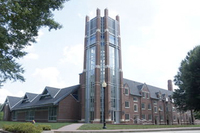
Engaged Organizations: Columbia Theological Seminary
Columbia Theological Seminary participates in the Green Seminary Initiative. In addition to their larger mission (as stated on their website at https://www.ctsnet.edu/), the GSI website describes their environmental efforts:
"Columbia Theological Seminary, a school in the Presbyterian Church (USA), has been a leader in ecological theological education for the last decade. They have two LEED Gold buildings on campus in Decatur, GA, was one of the founding members of the Seminary Stewardship Alliance, and their late president Steve Hayner began a Sustainability Commission that continues to this day. They also bring to the certification program a commitment to health, imagination, and resilience."
Columbia Theological Seminary strives to infuse care of the earth into all aspects of theological education. -
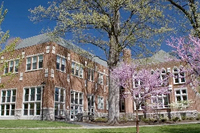
Engaged Organizations: Drew Theological School
Drew Theological School participates in the Green Seminary Initiative. In addition to their larger mission (as stated on their website at https://www.drew.edu/theological-school/), the GSI website describes their environmental efforts:
"Drew Theological School, a seminary of the United Methodist Church and part of Drew University in Madison, NJ, hosts The Green Seminary Initiative. Professor Laurel Kearns heads the Green Team, which also includes Dr. Catherine Keller and Dr. Heather Elkins on the faculty. All three publish, teach, and lecture on topics related to theology and eco-justice, joined by several other faculty who bring environmental concerns into their classes. Recently, eco-justice began to be integrated throughout the curriculum, building on almost two dozen courses with an ecological focus, including several required courses. Students can focus on religion and ecology in all degree programs. Drew’s other environmental initiatives include environmental justice field trips, native species and integrated pest management, water bottle refilling stations, reusable cutlery and sustainable food options. The campus includes a community garden, arboretum, labyrinth, native species planting, and a forest. The school is particularly proficient in establishing environmental policies to guide its institutional practices, and integrating environmental themes into chapel services, curriculum, speakers, cross-cultural trips, and broad social justice work."
Drew Theological School strives to infuse care of the earth into all aspects of theological education. -

Engaged Organizations: Methodist Theological School in Ohio
Methodist Theological School in Ohio participates in the Green Seminary Initiative. In addition to their larger mission (as stated on their website at https://www.mtso.edu/), the GSI website describes their environmental efforts through the following excerpts:
"MTSO has a Sustainability and Land Initiative, which includes Seminary Hill Farm, a certified organic farm that makes it possible for MTSO to incorporate environmental learning into student life. This farm plays a prominent role in the school’s Ecology and Social Justice specialization."
"The Sustainability and Land Initiative seeks to further MTSO’s aspiration to 'prepare and invigorate transformational leaders to engage the church and the world in leadership and service' by creating a 'sustainable campus plan which establishes a model for theological education through the cultivation of sustainable teaching and learning communities on our land.' Current practices in sustainability include 90% of all food served in Dunn Dining Hall being sourced from organic and humane farms within 50 miles of campus, a Community Supported Agriculture (CSA) program, and commitments to urban farming partners in nearby Columbus. The campus has also installed geothermal heating/cooling and solar panels to power its administration and academic buildings."
Methodist Theological School in Ohio strives to infuse care of the earth into all aspects of theological education, including its offering of eight distinct religious-environmental courses. -

Engaged Organizations: Pacific Lutheran Theological Seminary
Pacific Lutheran Theological Seminary participates in the Green Seminary Initiative. In addition to their larger mission (as stated on their website at https://www.plts.edu/), the GSI website describes their environmental efforts:
"Pacific Lutheran Theological Seminary (PLTS) is a seminary of the Evangelical Lutheran Church in America, a graduate school of California Lutheran University, and a founding member of the Graduate Theological Union interfaith consortium in Berkeley, CA. PLTS decided to enter the Certification Program soon after their president Dr. Chris Kimball signed the Second Nature Climate Commitment, committing both the university and seminary to achieving carbon neutrality and developing strategies for resilience. PLTS has moved recently to a new urban campus in the heart of Berkeley, and is committed to exploring the relationships between earth care and justice issues of race, class, and gender."
Pacific Lutheran Theological Seminary strives to infuse care of the earth into all aspects of theological education. -

Engaged Organizations: Trinity Lutheran Seminary
Trinity Lutheran Seminary participates in the Green Seminary Initiative. In addition to their larger mission (as stated on their website at https://www.capital.edu/trinity-lutheran-seminary-at-capital-university/), the GSI website describes their environmental efforts:
"Located in Columbus, OH, and a seminary in the Evangelical Lutheran Church of America, Trinity has engaged in a number of steps required in the certification process, including an energy audit, updating the seminary’s HVAC system, tracking campus energy use, and enhancing recycling efforts. The student group SEEDS held a retreat in April at Lutheran Memorial Camp and students have participated in a Faith Climate Action Rally at the Ohio Statehouse. In addition, Trinity students have been active in cleaning up the Alum Creek watershed that borders the seminary property. The school has cultivated a garden, and students, faculty, and staff held a worship service to bless it. The school engages with the natural landscape surrounding the campus through hikes and excursions."
Trinity Lutheran Seminary strives to infuse care of the earth into all aspects of theological education.
-
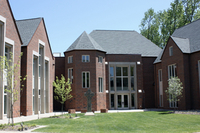
Engaged Organizations: Union Presbyterian Seminary, Charlotte
Union Presbyterian Seminary, Charlotte, participates in the Green Seminary Initiative. In addition to their larger mission (as stated on their website at https://www.upsem.edu/alumni-connect/charlotte-campus/), the GSI website describes their environmental efforts:
"Union Presbyterian Seminary at Charlotte is a part-time, non-residential seminary extension of Union Presbyterian Seminary in Richmond, Va. We have a brand new campus located in the fast-growing South Park area of Charlotte. While our home campus is pursuing a partnership with Shalom Farms, incorporating a community garden and classes in the ethics of food and eco-justice, the Charlotte campus is pursuing its commitment to “church and the world” in several different ways. Having just completed our energy audit, we are committed to making an already efficient building more so. We are Including new course offerings that focus on faith and environmental issues, such as Paul Galbreath’s upcoming class on “Ecology and Worship.” Rodney Sadler is challenging us to step up as advocates in areas such as the use of solar energy in congregational and seminary facilities. We look forward to learning from our colleagues in the GSI in the years ahead."
Union Presbyterian Seminary, Charlotte strives to infuse care of the earth into all aspects of theological education. -

Anglican Views on Climate Change - a report compiled by the Climate Institute of Australia
Interfaith Center for Sustainable Development posted a report, compiled by the Climate Institute of Australia, on Anglican views of climate change. A predominant them includes the toll that greed and selfishness takes on God's creation. It focuses on specific actions that individuals can take to reduce energy usage and foster environmental justice for the world population. -

America Baptist Churches USA (ABCUSA) Creation Justice Congregations Bulletin
America Baptist Churches USA (ABCUSA) has created a bulletin insert that discusses how congregations can earn certificates of achievement for implementing eco-justice measures. Further details are discussed below:
"Creation Justice Congregations is an environmental education, stewardship, and justice program sponsored by the Creation Justice Network of the American Baptist Churches USA. Through this program your congregation can earn certificates of achievement for implementing eco-justice measures in your building, within your congregations, and in your ministries of outreach and justice.
Creation Justice Congregations has three stages, each with a checklist of suggested education, worship, and other action items that can help bring Baptist churches into the wider movement for peace, justice, and reconciliation with all of God's creation. " -

Our Moral Opportunity on Climate Change
On November 3, 2017, the New York Times posted an article by Justin Welby, the archbishop of Canterbury and primate of the Church of England, discussing some of the devastating weather-related disasters that had occurred at that time and how climate change factored into the tragedies. Below is one section of the article, discussing responses of various faith groups with regard to these events:
"Indeed, even amid the hurricane-caused devastation and despair of recent weeks, I have seen seeds of hope. Different expressions of the Christian faith are freshly united around the need to care for our common home. The Catholic, Anglican and Orthodox Churches just came together with the World Council of Churches to celebrate a month long Season of Creation. During this season, people all around the globe prayed and acted to address climate change and to protect the earth." -

The world is our host: A call to urgent action for climate justice
Anglican Bishops from around the world discuss various environmental complications resulting from climate change. They provide a list of initiatives of commitment that they have pledged as a church, some of which include strengthening collaboration among partners, developing and distributing educational resources and liturgical materials, and strengthening of ethical investment guidelines. They also list actions that individuals can take to support their mission. -

Episcopalians Confronting Climate Change
This article discusses American Episcopalians' concern over climate change and the impact with regard to those facing poverty. The introduction to the article is stated below:
"In September 2011, the House of Bishops in the Episcopal Church, attending a meeting in Quito, Ecuador, sent a pastoral letter to Episcopal clergy worldwide expressing 'mounting urgency' to address climate change within church membership. The letter argued the critical need for Christians to care for all of God’s creation and urged that justice be sought for the poor, who it said will suffer most from climate change." -

The Hope We Share: A Vision For Copenhagen
The Anglican Communion Environmental Network addressed the United Nations Framework Convention on Climate Change (UNFCCC)
Conference Of Parties (COP) Meetings, the Fifteenth Session, held in Copenhagen, Denmark in December 2009. They lament the consequences of environmental human footprints, some of which include the lack of drinkable water in various parts of the world, the increased difficulty to grow crops due to the water shortages, rampant consumerism, and subsidies for fossil fuels. -

ELCA issues statement on Pope Francis’s encyclical on climate change
In an effort to demonstrate solidarity of interfaith-based environmental action, the Evangelical Lutheran Church in America released a statement in support of Pope Francis's encyclical on climate change. The following concluding excerpt emphasizes the movement of solidarity within the statement:
"Today we join with Pope Francis in calling on world leaders to embrace our common responsibility as work continues toward a global agreement on climate change. We urge leaders to support an ambitious agreement that reduces greenhouse gas emissions, encourages development of low-carbon technologies, and supports the ability of countries to cope with the effects of a changing climate and build resiliency for a sustainable future." -

Lutherans Reflect on Climate Change Conference in Copenhagen
This article discusses some of the sentiments regarding proceedings from the 2009 United Nations Climate Change Conference in Copenhagen. While some attendees expressed disappointment in the outcome, others were more optimistic about steps which may lead to more effective action for climate change in the future. The following excerpt provides a brief description of the event:
"More than 3,000 ELCA members, along with a coalition of U.S. faith leaders, sent some 20,000 postcards to President Barack Obama, urging him to be at the meeting, she said. Obama attended the conference and urged leaders of Brazil, China, India and South Africa to join the United States 'to fund developing nations' projects to deal with droughts,
floods and other impacts of climate change, and to develop clean energy,' among other agreements, according to a U.N. news release." -

Why Lutherans Care for Creation
This article discusses how various concepts of Lutheran theology are woven into ecological messages with regard to God as creator, human interactions, and ways of worship. The following is a section from the introduction of the article, emphasizing human responsibility towards care for the Earth:
"For Christians, care of the Earth is not an 'environmental cause.' Rather, it is central to our holy calling to treasure the Earth and to care for it as our common home, fully integrating creation-care into our love of God and neighbor. Without sacrificing the transformational effects of the 16th-century Reformation, we are called to embrace an eco-reformation that will re-examine and rethink how we read the Bible, how we can expand the scope of our theology, how we can reconfigure our personal vocation and our common ethic, how we worship, how we organize our church life together, and how we understand ourselves as creatures within creation as a whole. This call to continuing reformation is for the whole church, not solely for the committed. Earth care is not an add-on. It is not just for those who happen to be interested in it. It is a call for all Christians to participate in this great work of our time." -

Caring for Creation Today
This video, put forth by the Evangelical Church in America, encourages individuals to act as stewards by both assisting those in need and caring for our land, as God had intended. The salient message is to do what you can to work for change and care for God's creation, as this is our duty as humans. -

Episcopalians bring spiritual urgency to youth-led climate strikes
The Episcopal News Service shares stories of Episcopalians from around the country engaging in climate strikes. Episcopal leaders spoke on behalf of the environment, bringing the Christian responsibility to protect the earth into the discussion. Episcopal bishops, priests, and students all stood in support of climate change, citing the urgency of the threat.