
Search
165 items
-
Laudato Si' Adds Catholic Voice to Diverse spectrum of Religious Creation Care Views
Here are some links to the encyclical and related educational materials and statements that have been developed by different religious communities, including a letter of support from over 400 Rabbis, and a new Islamic statement on the environment:
Laudato Si’: Praise Be To You: On Care for Our Common Home: (html)
Laudato Si’ study guide from the US Conference of Catholic Bishops: (pdf)
National Catholic Reporter Reader’s Guide to Laudato Si: (pdf)
The Shalom Center with its history of ecological practices: (url)
Announcement of the Rabbinic Letter on the Climate Crisis: (url)
Islamic Declaration on Global Climate Change: (url)
United Methodist Bishops Pastoral Letter: God’s Renewed Creation: Call to Hope and Action: (url)
Lutheran Study Guide to Pope Francis’ Letter on Climate Change: (pdf)
Evangelical Declaration on the Care of Creation: (url)
National Association of Evangelicals 2015 Call to Action on Creation Care: (url)
A Buddhist Declaration on Climate Change: (url)
Buddhist Climate Change Statement to World Leaders 2015: (url)
Black Church Climate Statement: (url)
-
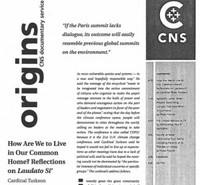
Origins Publishes Full Text of Cardinal Turkson's Ohio State Speech; Highlights Link to COP-21
The Catholic News Service publication “Origins,” which is delivered to Catholic bishops, clergy, and diocesan staff across the country, recently gave front page attention to the full text of Cardinal Peter Turkson’s November 2 address at The Ohio State University (OSU). This prominent placement has provided a broad, national reading for the speech that Turkson delivered to a live audience of nearly 1,500 at Mershon Auditorium and several hundred other live stream viewers across Ohio. The remarks published in Origins also include some expanded text beyond what Cardinal Turkson was able to present in his evening program at OSU, which can inform further dialogue and response at OSU and beyond.
In these remarks, Turkson highlights the role of the encyclical, Laudato Si’, in calling attention to the great environmental challenges of our time, sparking individual and political commitment to address climate change and other challenges, and inspiring an “ecological conversion” towards an “integral ecology” that joins natural, social, and spiritual dimensions to effect positive change. Within this integral framework, Turkson highlights several issues that receive particular attention in Laudato Si’, including: the relation between the poor and the planet, the interconnection of everything, a critique of the new “technocratic paradigm,” the value of all creatures and the importance of humans to ecology, the need for “forthright and honest debates,” the serious responsibility of international and local policy, the “throwaway culture,” the need for new lifestyles, and an “invitation to search for other ways of understanding economy and progress.”
The full speech closes with a short overview of the six chapters of Laudato Si’ and looks forward to the hope that the encyclical will inspire real dialogue and meaningful political action at the COP-21 negotiations in Paris that began today. -
Living the Laudato Si'
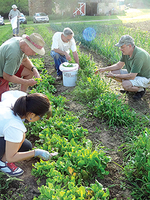
Pope Francis encourages all people to take to heart what is written in the Laudato Si' encyclical. The Catholic Multicultural Center in Madison, Wisconsin has strived to live out the message of Laudato Si' even prior its release. This community seeks to live as stewards of the environment and care for their less fortunate neighbors. Some examples of how they are achieving their goals include installing solar panels to cut costs and reinvest the money in charitable programs and running a local food garden. Members of this community have also helped to install rain gardens and find innovative ways of serving their neighbors. These activities help to bring people closer together as well as care for the planet. -
The Blessing of Bikes
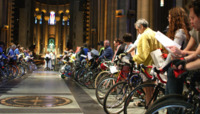
In recent history, a new event has been occurring all over the world. In an attempt to generate environmental awareness, various congregations of different faiths have encouraged their members to commute to church via bicycle. This movement has often been stimulated by a blessing of bikes ceremony. Special services have been held in churches and temples all over the world to bless the bikes, keep the cyclists safe, and remember those who have died in accidents.
They are hosting a virtual blessing May 9th, 2020 during the COVID-19 Pandemic, details can be found on their website. -

Laudato Si’ in Columbus: Bishop Campbell Regales OSU Students with Historical Overview of Catholic Tradition
Bishop Campbell spoke to OSU students about Laudato Si', specifically regarding how Catholic tradition develops the context for it.
"Bishop Campbell highlighted four themes in his talk, including how Catholicism has considered nature for 2,000 years, a Catholic imagination of nature, historical trends of alienation from nature in the Western world, and a discussion of how sin – light and shadow of the world together – plays a role in our ecological situation."
Please click on the link below to view the entire article. -

Trees for the Earth
The Catholic community is joining with the Earth Day Network to help reach the goal of planting 7.8 billion trees by 2020. This would equate to one tree per person on earth. Pope Francis's recent encyclical, Laudato Si, focuses on the importance of trees and their benefits to the environment as well as human kind. -

A Sinking Island
Many people who currently inhabit one of four small islands in the Pacific Ocean are being forced to evacuate their homes. The rising sea levels have washed away their homes and eroded their beaches. In addition, their sources of freshwater are being contaminated. This unfortunate circumstance is a prime example of Pope Francis's message on the impact of climate change. -
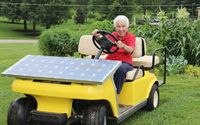
Remembering Sr. Paula Gonzalez, Ohio’s “Solar Nun” and Environmental Visionary
Sister Paula Gonzalez, a Sister of Charity in Cincinnati and co-founder of Ohio Interfaith Power and Light (OhIPL), passed into eternal light earlier this month and was mourned and celebrated by friends and loved ones at a green burial on August 2 and a mass at the Sisters of Charity Motherhouse on August 4. Sr. Paula taught biology at Mount St. Joseph University for 15 years before dedicating the last 40 years of her life to environmental education and ministry. Shown here in her solar powered golf cart (which she built; photo credit: Sisters of Charity, Cincinnati), Paula received Green Energy Ohio’s Lifetime Achievement Award in 2005 and was honored as a “Woman of the Year” by the Cincinnati Inquirer in 2014. She remains famous for her good spirit and vision for sustainability, and for her energy efficient renovated living and work spaces. An award was made in her honor, The Sister Paula Gonzalez Award, and Sara Ward was the recipient. Paula will be remembered at OhIPL’s Earthkeeping Summit at Ohio State on Sept. 24. -
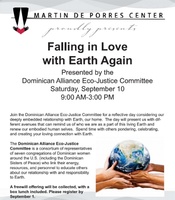
Seven Congregations of Dominican Women Collaborate to Offer Sept. 10 Earth Stewardship Program in Columbus
The Dominican Alliance Eco-Justice Committee is offering "Falling in Love with Earth Again" from 9:00am-3:00pm on Saturday, September 10 at the Martin de Porress Center in Columbus, OH. In the words of the organizers, the program will provide various avenues to “remind us of who we are as a part of this living Earth and renew our embodied human selves. Spend time with others pondering, celebrating, and creating your loving connection with Earth.” -

Hitzhusen to Deliver Lecture on Spirituality and Sustainability on Sept. 20 in Sylvania, OH
The Science Alliance for Valuing the Environment, an “educational consortium for environmental concerns” affiliated with Lourdes University in Sylvania, OH, will host Dr. Greg Hitzhusen to deliver a lecture on “Spirituality and Sustainability: Hope for All Creation” at the Franciscan Center from 7:30-9:00pm on Tuesday, Sept. 20.
Attend this FREE public lecture hosted by S.A.V.E. – Science Alliance for Valuing the Environment.
To read more about this event please click on the link below: -
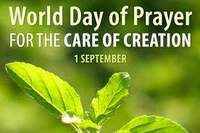
Tomorrow (Sept. 1) is World Day of Prayer for the Care of Creation: Pope Francis calls on believers and unbelievers to care for our common home
Thursday, September 1, 2016, has been declared a shared World Day of Prayer for the Care of Creation by Catholic and Orthodox Christian communities. This year, Pope Francis issued a video invitation to prayer in which he calls believers and unbelievers alike to work together to care for our common home. In August of 2015, the pope issued a letter
(https://w2.vatican.va/content/francesco/en/letters/2015/documents/papa-francesco_20150806_lettera-giornata-cura-creato.html) declaring Sept. 1 as an annual day of prayer for the care of creation, joining the Orthodox Church, which has been doing so since 1989. Citizens are urged to pray and join a local prayer service, or if no local service is offered, representatives from Catholic, Protestant, Orthodox and Episcopalian churches will offer an online prayer service (https://seasonofcreation.org/2016/08/25/sept-1-online-prayer-service/) at 8am US EDT. -
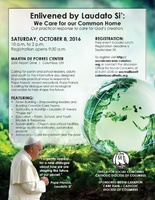
Today is registration deadline for Columbus Diocese Creation Care Conference on Oct. 8
The Columbus Diocese is offering a day of reflection, inspiration, study, and sharing of resources to help Columbus area Catholic communities respond to Pope Francis’ environmental urgings in his recent encyclical, Laudato Si: Caring for Our Common Home. The conference: “Enlivened by Laudato Si’: We Care for our Common Home: Our practical response to care for God’s creation” will be held at the Martin De Porres Center in Columbus from 10am-2pm on Saturday, October 8.
The conference will feature creation care team building sessions, spirituality and worship, education, sustainability information for energy savings, and advocacy to care for creation and the poor. Dr. Greg Hitzhusen of the School of Environment and Natural Resources at Ohio State will deliver a keynote address. -

WATERSHED: Replenishing Water Values for a Thirsty World
This site highlights the reports and videos and resources gathered to address world water resources, sponsored by the Vatican and many other partners. -

Fasting for Climate Justice
Fasting for Climate Justice is a resource from Global Catholic Climate Movement (GCCM ) on the practice of fasting for climate action through two initiatives: meatless Fridays and monthly fasting. The GCCM encourages abstinence from meat on Fridays as a way to reduce one’s negative impact on global climate change. The GCCM also promotes fasting for the climate which takes place the first day of each month. -
Homily Help
Homily Helps is a resource from Catholic Climate Covenant that offers resources that help to integrate the insights of Laudato Si’ and caring for creation into Sunday mass. It includes highlights from the Scripture, relevant quotations from Laudato Si’, sample applications, and more. -

Catholic Climate Covenant Earth Day Video
Catholic Climate Covenant has created their 2018 Earth Day video Beyond a Throwaway Culture. The focus of the video is the harm that comes from single-use disposable plastics - how it contributes to both land and marine pollution. -

Reducing Waste and Moving Beyond a Throwaway Culture Webinar
This hour-long webinar was created by Catholic Climate Covenant and Earth Day Network to address the exponential growth of plastics and how it is threatening the survival of our planet. Earth Day Network discusses the resources they offer to help end plastic pollution and their Earth Day campaign: A World Without Plastic Pollution. The webinar then discusses Catholic Climate Covenant’s program, Beyond a Throwaway Culture: Reduce Waste–Grow Community, and describes how faith communities can celebrate our common home on Earth Day and every day. -

Catholic Climate Covenant: Earth Day 2018
Catholic Climate Covenant has created their 2018 Earth Day with the theme of reducing waste. Titled Beyond a Throwaway Culture: Reduce Waste- Grow Community, the focus is on single-use disposable plastics and how they contribute to land and marine pollution. The program includes prayers, readings, actions, and a video. -

Climate Change: A Matter of Faith
Climate Change: A Matter of Faith is a list of talking points created by Blessed Tomorrow. The talking points are meant to be a starting point for faith communities providing a prophetic voice to inspire others to work towards a healthier and safer world. The list also offers possible counterpoints and how to respond. -

Engaged Organization: The Catholic Climate Covenant
The Catholic Climate Covenant is the US Catholics response to the Church’s call to care for creation and care for the poor. They are based out of Washington, DC, and are supported by 14 national partners. Among their many ambitions, they aim to teach Catholics on climate change, equip them to care for creation and the poor, and inspire leaders to take actions. They have helped 140 Creation Care Teams lead their communities, organized 7 national press conferences, and helped supporters send over 10,000 letters in support of climate change. Additionally, their work has been mentioned in over 3,000 media stories. Their website includes environmental programs, teachings, and resources. -
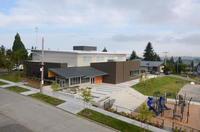
Sustainability at Our Lady of Guadalupe
Our Lady of Guadalupe, a Catholic parish located in Seattle, Washington, has recently undergone the transition to become more sustainable. With the help of Energy Star, city grants, and their own agenda, this parish has implemented changes that help the environment as well as cut costs to their budget. New buildings have been constructed and old ones have been retrofitted to reduce energy consumption as well as teach people about sustainable living. -

Engaged Organizations: Maryknoll
Maryknoll is a Catholic non-profit mission movement comprised of four organizations: Maryknoll Fathers & Brothers, Maryknoll Sisters, Maryknoll Lay Missioners, and Maryknoll Affiliates. Each organization sponsors mission trips. In addition to supporting sustainable development and environmental service trips, Maryknoll has trips related to Health Care, Human Rights, Education, and more. -
Laudato Si' and the U.S. Catholic Church Recordings
"The 2023 Laudato Si’ and the U.S. Catholic Church (June 14-July 27, 2023) national conference, is part of a biennial conference series co-sponsored by Creighton University and Catholic Climate Covenant to equip and inspire Catholics to more deeply integrate Laudato Si’ and its creation care teachings into the U.S. Church. The purpose of this year's conference is to encourage a greater understanding of the Laudato Si’ Action Platform’s seven goals – Response to the Cry of the Poor, Ecological Economics, Adoption of Sustainable Lifestyle, Ecological Education, Ecological Spirituality, Community Resilience and Empowerment, and Response to the Cry of the Earth – and encourage Catholic individuals and groups to enroll in the Platform, providing them with a clearer path for accomplishing each of the goals through speaker presentations." -
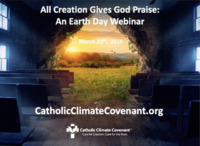
All Creation Gives God Praise: An Earth Day Webinar
"Every year, Catholic Climate Covenant produces a one-hour educational program. This year [2019] we are focusing on the issue of protecting biodiversity to complement the Earth Day Network's 'Protect Our Species' campaign. In the webinar we explore why the Earth day Network chose the theme of 'Protecting Our Species' and all the wonderful resources and toolkits that they have available for your use. We also delve into the Covenant's Earth Day program and how you can facilitate a program in your parish, school, or religious community." -

ESA Baltimore Religion-Ecology/Faith Justice Links
Here are live links and further speaker information for OOS44 and OOS56, two organized oral sessions on Religion and Ecology that were presented at the 100th Anniversary meeting of the Ecological Society of America in Baltimore, MD, in August of 2015:
OOS 44: Ecologists and Faith & Justice Communities: A Journey from Antagonism to Earth Stewardship Partnerships for the Next Century
(Wed. 8/12, 8am-11:30am; 337, BCC; primar organizer: Greg Hitzhusen; co-organizers: Leanne Jablonski and Terry Chapin)
David Lodge, Biological Sciences, University of Notre Dame, ESA President-Elect. Ecology, Environmentalism, and Religion: A Nexus in Flux.
Including insights from the book Religion and the New Ecology; Recent essay in Nature: http://www.nature.com/news/faith-and-science-can-find-common-ground-1.18083
Mary Evelyn Tucker, School of Forestry and Environmental Studies, Yale University, CT. Global Perspectives on the Vital Relationship Between Ecology and Religion. Director, Yale Forum on Religion and Ecology: http://fore.yale.edu ; see also related podcast
Leanne Jablonski, University of Dayton, OH, Marianist Environmental Education Center. Pope Francis’ Environmental Encyclical, Catholic Environmental Social Teaching, and Implications for Ecologists (co-author: Dan DeLio, Catholic Climate Covenant); http://meec.udayton.edu.
George Middendorf, Biology, Howard University, Washington, DC. Skeptical Scientists Approaching Religion on Common Ground of Earth Stewardship. Related research: behavioral ecology and population demographics of lizards; race, ethnicity and gender in ecology and STEM
Cal DeWitt, University of Wisconsin-Madison. Evangelical Contributions to Earth Stewardship: Laudato Si’ and Stewardship as Con-Service. Paper available at: http://faculty.nelson.wisc.edu/dewitt/
Kerry Ard, School of Environment and Natural Resources, Ohio State University. Social Science Perspectives on Ecology and Religion: Implications for Environmental Justice and Ecology (co-author: Greg Hitzhusen, Ohio State University)
The Most Reverend Dr. Katharine Jefferts Schori, Presiding Bishop, The Episcopal Church. Comprehensiveness and the Middle Way: Anglican Perspectives on Religion and Ecology. http://www.episcopalchurch.org/page/katharine-jefferts-schori-biography.
Terry Chapin and Carl Safina; University of Alaska, Fairbanks; Safina Center. Religious, But Not Necessarily Theological. http://terrychapin.org; http://carlsafina.org
Munjed Murad, Harvard Divinity School, Harvard University, MA. Islam and Nature Today: Insight Into Traditional Discernment. Related work: http://hds.harvard.edu/news/2014/09/23/conversation-on-sustainability-and-religion# ; http://cswr.hds.harvard.edu/news/seeing-god-everywhere.
Ron Trosper, American Indian Studies, University of Arizona, Tucson, for Nigel Haggan, Interdisciplinary Studies, University of British Columbia, Vancouver. Creative Justice: Restoring Art, Indigenous Spirituality and Religion to Environmental Impact Assessment and Ecosystem-Based Management. http://www.fisheries.ubc.ca/students/nigel-haggan ; http://courses.ais.arizona.edu/people/ronald-l-trosper
OOS 56: Ecologists and Faith & Justice Communities: Evaluating Opportunities and Challenges for Outreach and Partnership for the Next 100 Years
(Wed, 8/12, 1:30pm-5:00pm; 341 BCC; primar organizer: Leanne Jablonski; co-organizers: Greg Hitzhusen and Kellen Marshall)
Shantha Ready Alonso, Executive Director, Creation Justice Ministries. The American religious environmental landscape: Opportunities and challenges for ecologists. Creation Justice Ministries serves 38 member Christian denominations; its 2016 Earth Day Sunday study and prayer resources will focus on biodiversity and endangered species. (co-author: Cassandra Carmichael, National Religious Partnership for the Environment)
Indigenous perspectives on ecology, justice, ways of knowing, and the Earth
(Gail Woodside CANCELLED) Speakers to be introduced Dorothy Boorse, Professor of Biology, Gordon College, Wenham, MA (see Boston Globe coverage). Loving the least of these: Lessons from the climate change report of the National Association of Evangelicals; available at: http://nae.net/loving-the-least-of-these/; see also God and Nature
Dan Misleh, Executive Director, Catholic Climate Covenant, Washington, DC. Growing catholic engagement and voice in climate change, environmental justice and policy: From St. Francis to Pope Francis to people and planet.
Lisa Benham, Insight Garden Program, San Quentin State Prison, CA; Department of Environmental Studies, San Jose State University, Buddhist Eco-chaplain. From longing to belonging: Combining mindfulness practice and ecological understanding in prison rehabilitation; Related research: From utility to significance: Exploring ecological connection, ethics, and personal transformation through a gardening and environmental literacy program within San Quentin Prison: http://gradworks.umi.com/15/67/1567980.html
Kellen Marshall, Department of Biological Science M/C 066, University of Illinois at Chicago.Ecological equity and spatial assimilation: A justice paradigm for 2nd Centennial ecologists.
Jacqui Patterson, Director, Environmental and Climate Justice, NAACP. Lessons for ecologists from the NAACP’s Environmental and Climate Justice Program. Related Research: Just Energy Policies: Reducing Pollution, Creating Jobs
http://www.naacp.org/blog/entry/naacp-just-energy-policies-report-released;
Equity in Resilience Building for Climate Adaptation Planning: An Indicators Document:
http://www.naacp.org/blog/entry/equity-in-resilience-building-for-climate-adaptation-planning.
Jessica Lewis, Right to Housing Alliance, Baltimore, MD. Working at the intersection of water, housing, and economic and environmental justice
(co-authors: Vicente Lara, Daisy Gonzalez, Colin Bailey, Environmental Justice Coalition for Water).
Greg Hitzhusen, School of Environment and Natural Resources, The Ohio State University. Ecologist dialogue and outreach with faith communities: Lessons from experience and study in the Ecological Society of America (co-author, Leanne Jablonski, University of Dayton).
Fred Scherlinder Dobb, Rabbi, D.Min., representing Adat Shalom Reconstructionist Congregation (www.adatshalom.net); Interfaith Power and Light (www.gwipl.org); Coalition on the Environment and Jewish Life (www.coejl.org). Old-time religion and cutting-edge climate: Jewish and interfaith intersections with ecological science;
available at: https://scherlinders.wordpress.com/2015/08/10/esa-presentation-august-2015/.