
Search
165 items
-

Engaged Organizations: National Council of Catholic Women
National Council of Catholic Women discuss their work with Catholic Relief Services with regard to their focus on water projects in developing countries, as indicated on their website and in the video below:
"The Water for Life video illustrates the work of Catholic Relief Services in partnership with the National Council of Catholic Women (www.nccw.org) in responding to the critical need for water projects in developing countries. The greatest humanitarian crisis in the world today is food and water scarcity issues that threaten the peace and security of most developing nations." -

Engaged Organizations: Sisters of Mercy of the Americas
Sisters of Mercy of the Americas has both sponsored and co-sponsored faith based organizations that focus on ecological issues. One of the organizations is Mercy Ecospirituality Center. -

Engaged Organizations: Mercy Ecospirituality Center
Mercy Ecospirituality Center discuss their various environmental/spiritual offerings of their retreat center on their website:
"Mercy Ecospirituality Center of Mercy Ecology, Inc. is a sponsored work of the Sisters of Mercy. We are committed to reflection, education and living gently in mutual relationship with the Earth. We offer hospitality for those seeking solace and to refresh their spirit in the beauty of creation, as well as programs in ecospirituality.
The Benedictine monks of Elmira, NY gave the 39-acre property located in the rural beauty of Vermont to the Vermont Sisters of Mercy. Sisters Judy Fortune and Elaine Deasy directed it as Lumen Christi Retreat House for many years, but after Lumen Christi closed, a group of Sisters established it as an Ecospirituality Center, originally named Mercy Farm in 2010." -

Green Corner Bulletin (St. Camillas Parish, Silver Spring, MD)
St. Camillas periodically issues their Green Corner Bulletin, in support of their stance on creation care as indicated on their website:
"Our preaching and liturgical music deepens our love of creation. Moreover, St. Camillus Church evangelizes by offering the adult faith formation programs on care of creation to parishioners, promoting various activities around Earth Day that spur people to adopt a more sustainable lifestyle, and doing advocacy for policy and legislation.
Our parish community is undertaking an effort to “green” our campus, reduce our energy consumption, and eliminate practices that are wasteful and destructive to God’s creation." -

Catholic Charities USA Prayer for Creation
Catholic Charities USA uploaded a prayer for creation on their website, focusing on cherishing the Earth rather than exploiting, and providing a reminder that we are all connected to each other and the land. This prayer for creation can be used in a variety of setting, especially in liturgical worship. -

Engaged Organizations: Global Catholic Climate Movement
Global Catholic Climate Movement discuss their identity and mission through the following excerpts from their website:
"Who we are
The Global Catholic Climate Movement is a first-of-its-kind international coalition of Catholics from many nations, continents, and walks of life. We are laity, religious, and clergy, theologians, scientists, and activists from Argentina, the Philippines, the United Kingdom, Kenya, Australia, the United States, and many other nations. We are united by our Catholic faith and our work in various roles and organizations on climate change issues."
"First, we recognize that conversations about the climate crisis have historically been more about intellectual arguments than about the profound spiritual and moral implications of our failure to care for God’s creation. Catholic leaders are thus called to speak with a prophetic voice and in a spiritual dialogue with all people, especially those political and business leaders and consumers who engage in climatically destructive policies and practices. And we recognize our own need for ongoing conversion to live more in keeping with the Creator’s intentions for life in abundance for all people. Until the moral implications of anthropogenic climate change are clearly established and accepted, it is unlikely that societies can or will transition in an appropriate timeframe to sustainable technologies, economies, and lifestyles." -

Engaged Organizations: Association of United States Catholic Priests
The Association of United States Catholic Priests discuss their climate change initiative on their website. The following excerpt list the first five "Green Commandments" from Fr. Joshtrom Isaac Kureethadamof's book on Laudato Si':
"Earth, our common home, is in peril. Take care of it.
Listen to the cry of the poor who are the disproportionate victims of the crisis of our common home.
Rediscover a theological vision of the natural world as good news/gospel.
Recognize that the abuse of creation is ecological sin.
Acknowledge the deeper human roots of the crisis of our common home." -

Catholic Views on Climate Change - a statement from the Catholic Bishops of Australia
The Catholic Bishops of the Climate Institute, Australia created a statement on climate change. The statement emphasizes various responsibilities of individuals and entities that are necessary to provide a safe and healthy environment for all parts of the world. They also warn against further ecological destruction for future generations. -

Pope Francis' Speech on UN World Environment Day
Pope Francis's speech on the United Nations World Environment Day emphasizes the importance of world solidarity to counter what he deems a current culture of waste. One prevailing message is the danger of consumerism. The pope extends a challenges to forgo excessive wealth in exchange for living a more simplistic lifestyle, which can help combat world health and hunger issues. -
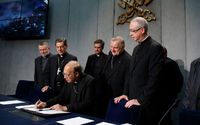
World bishops' appeal to COP 21 negotiating parties
In preparation for the 2015 United Nations Negotiations in Paris, the heads of Catholic bishops' federations on every continent issued a joint appeal to COP 21 delegates that they produce a "comprehensive and transformational agreement" to address global climate crisis. Salient themes include the challenges and opportunities of climate change, and sustainable development to benefit the poor. They also call for leaders to become motivated to work towards enforceable agreements. -
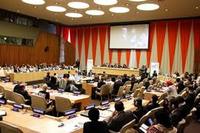
Presentation by Cardinal Peter K. A. Turkson of the Encyclical Laudato si’ in the ECOSOC Chamber
Cardinal Peter K. A. Turkson gave a presentation about Laudato si' at the United Nations Economic and Social Council (ECOSOC) Chamber on June 30, 2015. He emphasized that the environment, our common home, can not be considered in isolation, but rather is a product of integral ecology. Midway through the presentation, the question of the meaning of life is broached, asking the audience to ponder how the earth should be left for future generations. -

Remarks by Cardinal Peter K. A. Turkson on the Encyclical Laudato si’ to Child-Focused Agencies
Cardinal Peter K. A. Turkson addressed child-focused agencies at UNICEF House on June 30, 2015. His message is about the relevance of Laudato si' encyclical with regard to children and our common home. He urges individuals to contemplate the negative impact of climate change and how this will impact the future for our children. -
Statement by Cardinal Peter K. A. Turkson at the High Level Event on Climate Change
Cardinal Peter K. A. Turkson provides a statement on climate change at the United Nations High Level Event on Climate Change on June 29, 2015. He emphasizes that the plight of the poor and the fragility of the planet are intimately related. As stewards of the Earth, he therefore greatly urges individuals to make courageous choices in order to reverse the trend of global warming. -

Catholic Bishops' statement in Lima on the road to Paris
During the High-level event at the COP20 in Lima, Bishops from around the world called for a fair and legally binding climate agreement to be signed at the COP21 in Paris, 2015. One segment of the introduction is shown below:
"Following the evangelical option for the poor, we work closely with the most vulnerable communities and the excluded and as such are closely attuned to how the problem of climate change is affecting them. Our message to political leaders and all people of good will is rooted in the experience and suffering of these poor communities.
Humankind on the Planet Earth is ordained to live in equity, justice and dignity, peace and harmony in the midst of the order of Creation. Humankind is ordered to treat respectfully Creation, which has a value in itself. We Catholic Bishops recognize the atmosphere, rainforests, oceans and agricultural land as common good that require our care." -

Address at the United Nations Climate Change Conference given by H.E. Archbishop James Patrick Green
H.E. Archbishop James Patrick Green provides a statement on the impact of climate change on poverty at the United Nations Conference in Lima, Peru on December 10, 2014. He discusses the interdependence of humans and the Earth. He emphasizes Pope Francis's call for intervention to fight against global warming in order to protect the planet and, in particular, those at the poverty level. -
Message of His Holiness Pope Francis on the Occasion of the 20th Conference of the Parties to the United Nations Framework Convention on Climate Change
Pope Francis's statement on climate change was issued at the High Level segment of the United Nations Climate Change Conference on December 10, 2014. The introduction to the Holy See's message is stated below:
"At this very decisive moment in the history of climate negotiations we have to come to the point where we must overcome inaction. As Pope Francis said in his Message to our Conference, the issues we are debating 'affects all humanity, especially the poor and future generations: […] it is a serious ethical and moral responsibility […] There is a clear, definite and urgent ethical imperative to act […] We can only find adequate solutions if we act together.'
The longer we wait, the more it will cost; more victims will suffer from our inaction and the greatest weight will fall on the most vulnerable, the poorest peoples and future generations: what is at issue here is respect for their fundamental human rights." -
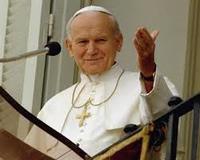
Common Declaration on Environmental Ethics
On June 10, 2002, Pope John Paul II and Ecumenical Patriarch Bartholomew I issued a declaration on the environment. The introduction to the declaration is stated below:
"We are gathered here today in the spirit of peace for the good of all human beings and for the care of creation. At this moment in history, at the beginning of the third millennium, we are saddened to see the daily suffering of a great number of people from violence, starvation, poverty and disease. We are also concerned about the negative consequences for humanity and for all creation resulting from the degradation of some basic natural resources such as water, air and land, brought about by an economic and technological progress which does not recognize and take into account its limits." -

Global Climate Change A Plea for Dialogue Prudence and the Common Good
A Statement of the United States Conference of Catholic Bishops was issued on June 15, 2001. This document covers a multitude of current environmental problems and the resulting negative impact on populations around the world - especially with regard to indigent populations. It stressed the connectivity of human behavior and it's impact on the planet. -

Common Declaration on Environmental Ethics
Pope John Paul II and the Ecumenical Patriarch His Holiness Bartholomew I delivered a speech titled Common Declaration on Environmental Ethics on June 10, 2002. Below is the introduction within the declaration, focusing on the current state of the poor and the consequences of natural degradation:
"We are gathered here today in the spirit of peace for the good of all human beings and for the care of creation. At this moment in history, at the beginning of the third millennium, we are saddened to see the daily suffering of a great number of people from violence, starvation, poverty and disease. We are also concerned about the negative consequences for humanity and for all creation resulting from the degradation of some basic natural resources such as water, air and land, brought about by an economic and technological progress which does not recognize and take into account its limits." -
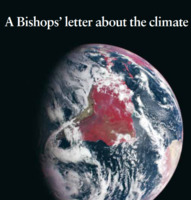
A Bishops’ Letter about the Climate
Below is a section of the introduction from A Bishops’ Letter about the Climate, which covers a multitude of critical environmental issues, from the 2014 Bishops' conference:
"We have lived with reports and forecasts of climate change since the 1980s. Our climate is the result of the interaction of complex systems and there is often a great distance between cause and effect in terms of both space and time. There are uncertainties and a lack of clarity. However, the knowledge we possess today does not allow us to postpone until tomorrow
what needs to be done now. Our human climate impact must decrease for the sake of the earth, for the sake of the world that God so loves that God gave us Jesus Christ." -

Columban Center for Advocacy and Outreach
The Columban Center for Advocacy and Outreach was founded in 1985 under the Missionary Society of St. Columban in the United States. They were established under the name The Columban Justice, Peace, and Integrity of Creation Office and changed the name to what it is now in April 2009. The Columban Missionaries primarily advocate for Environmental Justice, Economic Justice, Migation, and Peace and Demilitarization. The Columban Center for Advocacy and Outreach serves as a mediator between the missionaries and the policy makers in America. They seek struc tural change guided by their faith to create a more sustainable, peaceful Earth. From their website;
"We believe that policies and decisions should be informed by the experiences of the people most impacted by those policies and decisions. We advocate for peace and justice, and are guided by the Gospels, Catholic Social Teaching, and the experience of Columban missionaries and the communities they serve". -
Five Years After Speaking Out on Climate Change, Pope Francis Sounds an Urgent Alarm
This article covers Pope Francis's reaction to the world governments responses to climate change. The Pope writes to unite people through religion in an effort to bring awareness to the movement. The article details how the church is divesting in fossil fuel companies. The article also focuses on the political divide and how it affects people's views on the climate crisis. -

How to Green your Parish
This article is about the importance of parishes to participate in environmentally sustainable actions based on Pope Francis’s Laudato Si’. It encourages parishes to strive to become more eco-friendly by taking work together as a community and focusing on change one issue at a time. The article focuses on three main areas: reducing the parishes greenhouse gas, sustaining food and land use, and preserving water. -
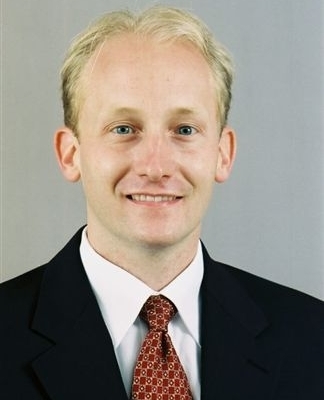
Profile: Jerry Freewalt
Jerry Freewalt is Director of the Office for Social Concerns of the Catholic Diocese of Columbus, Ohio. In this capacity, he serves as an educator and advocate to further the understanding of the Church’s social justice teachings. Jerry joined the office in 1995 as the respect life coordinator. Jerry also administers the respect life program, parish social ministry, rural life, jail and prison ministry, advocacy for persons with disabilities, and other education and advocacy efforts. -
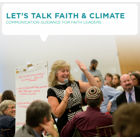
Let's Talk Faith and Climate: Communication Guidance for Faith Leaders
Let's Talk Faith and Climate: Communication Guidance for Faith Leaders is designed to be useful to both experienced and novice climate change and faith communicators. This guide synthesizes the latest academic research and message testing on climate communications from across the social sciences into a practical guide to support meaningful discussions on climate change and faith among individuals and groups.
This guide offers tips on how to initiate new conversations with the faithful, how to create one’s own successful, value-based messages, and how to utilize specific wording that has been tested for its ability to bring people together regarding climate issues. Additionally, this document provides guidance on how to more deeply integrate creation care concerns into one’s own organization, ministry, or denomination.
This, along with the many resources offered by ecoAmerica’s
Blessed Tomorrow program, will allow faith leaders to become as adept at talking about climate change as they are at inspiring others to act on behalf of our shared future.