
Search
111 items
-

United Church of Christ – Environmental Ministries
The United Church of Christ has taken an active role in environmental stewardship. They have made multiple statements about various aspects of the environment. This link provided by Environmental Ministries discusses various critical environmental justice issues. If you are looking for ideas on how to live more Eco-friendly in your own life, or simply searching for a great set of resources, check them out! -

Environmental Statement – Reformed Church in America
In 1982, the Christian Action Commission of the Reformed Church in America (RCA) released a document titled “Care for the Earth: Theology and Practice.” This was given to General Synod, who then passed several resolutions outlining the Reformed Church in America’s stance on environmental issues. The Action Institute wrote the article below that discusses the resolutions that were passed. -
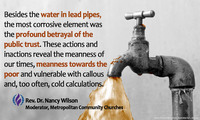
Flint Water Crisis – Religious Leaders Respond
The Flint Water Crisis has affected a large community of mostly impoverished people for a long time; however, it has only recently begun to gain attention. Pastors of different churches are claiming that the situation displays a crime against humanity itself. Many religious leaders have cited biblical texts to encourage people to reevaluate what is happening here, and to start to take better care of the earth. Some hope that attention to this crisis will help people all around the country become more aware of issues of justice and realize the importance of environmental stewardship. -

Flint Water Crisis – Activism
Due to the extreme conditions in Flint, Michigan, recently, many church communities of varying faiths have stepped up to provide aid. From Catholics to Jews to Muslims, all are involved in distributing free bottled water to the residents of the area. They are also committed to making sure that this sort of situation never happens again. -

Naropa Ceremony
A Buddhist tradition, the Naropa ceremony, is held once every 12 years. The Drupka, or a religious leader in Mahayana Buddhism, is excited to conduct this ceremony. One principle of Mahayana Buddhism is caring for the environment. This ceremony will help spread the concerns that the Drupka has about the environment, and raise awareness for the issues at large. -

St. John’s Lutheran Church and Solar Power
Churches have turned to solar power to bring down energy costs for their sanctuaries. St. John’s Lutheran Church in San Antonio has begun to use a large array of solar panels, as well as more energy efficient lights to cut costs. -
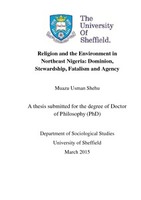
Faith Communities on Nigerian Environmental Degradation
A research study was conducted on how faith communities view environmental degradation in Northeast Nigeria. 18 congregations throughout the states in the area were interviewed to see how they view these issues. Almost all said that they environmental degradation as an issue, and source the blame to human activity. The human activities that are to be blamed range from corrupt politics to a lack of social responsibility. However, they all agree that through spirituality, these problems can be overcome. -
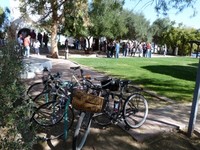
Bicycling to Church
When it comes to meeting for a religious service or ceremony, some people are beginning to switch their mode of transportation to a more sustainable option. More and more people are switching to riding their bikes to their respective houses of worship, as they feel that this is more in line with what their faith teaches. -
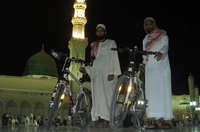
Bicycle Pilgrims
Two South African men, Haron and Cairncross, went on a typical pilgrimage in an untypical way. These young Muslim men road bicycles all the way from South Africa to the holy city Mecca. Not only was this physically invigorating, but it was spiritually rewarding as well. This was also an extremely sustainable way to travel. -

Jewish Tradition and Endangered Species
The Jewish ways teach members of its community to care for the earth and all of God’s creations. With so many species becoming endangered, the Jewish faith has made cited scripture to show that all animals are to be valued. -

Muslim Leaders on Endangered Species
Indonesian religious leaders have released a statement confirming that killing endangered species is no allowed in their faith. Most people have already agreed to this concept, but this push from religious leaders will have an effect on farmers and fishermen who don’t always care about whether or not they kill endangered species. -
Tu B’Shevat
Tu B’Shevat is the Jewish Arbor Day. Students of Temple Emanuel of the Pascack Valley Religious School have recently prepared for and decorated the building to get ready for the holiday. -

Religion and Food
Every religion has its own special rules and considerations on food. Each religious teaching also addresses the idea that people should share with their neighbors and eat healthy and moderate amounts of food. The difficulty now lies in connecting today’s food shortages with these teachings. -
Some Religious Views on Fracking
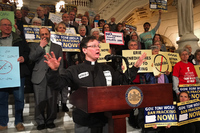
Fracking is, and has been, a highly controversial and political issue. Various religious leaders of many different faiths have come out within the past few years to advocate against the use of this practice. Most, if not all, are citing the need in their religious text to preserve and care for the earth. They are all getting very involved in their communities, which range from New York to Colorado. -
Punjab Farmers and Pesticide
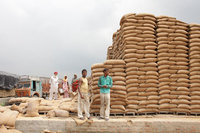
Many farmers from Punjab, India are beginning to speak out against the high levels of pesticide use that are occurring in the area. These farmers feel guilty because they are donating these chemical laden crops to the poor as part of a religious custom. They are pushing for a reform to go back to producing crops organically. -
Trees in the Bible
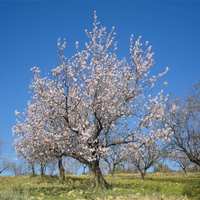
As Arbor Day approaches, it is interesting to look at how trees are used symbolically in different religions. For example, trees are mentioned many times in the various religious teachings in the bible. -
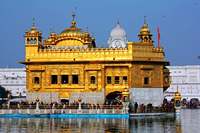
Pollution and the Golden Temple
The level of air pollution India, where the Golden Temple stands, has risen to extreme levels over the past years. The pollution is dulling the golden walls, as well as causing huge health impacts on the Indian people who live there. To combat this, the government is beginning to regulate fossil fuel use as well as change various environmental standards throughout the area. -
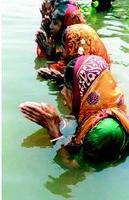
The Presence of Water in Religion
Water is an important element in all religions. Whether you look at the Muslim faith, Christianity, or the beliefs of American Indians, water has constantly played an important role in purification and creation. Because of its high importance to all religions, as well as its necessity to sustain human life, it is essential that water is conserved and used in a sustainable way. -

Studying Religion and Sustainability
Religion has been used for both the preservation and the destruction of the environment. On one hand, most religions teach stewardship and care for all of creation. On the other hand, with the prospect of the world ending, people are less inclined to take care of something that may not exist in the future. This is why it is important to educate people on the importance of studying sustainability. One program that has done an excellent job of this is a course offered at Cornell. -

A Common Cause for Opposing Groups
When groups share a common cause, they can see past their differences to work towards a goal. This is what has been happening recently when it comes to conservatives and liberals. These two groups are bonding over caring for the earth in their own ways. -

Religion and Hunting
All religions have varying views on the practice of hunting. Some advocate for it, as long as it is done in a sustainable way and food is not wasted. Other religions preach vegetarianism, as all animals are living creatures that should be allowed to live. Others allow the consumption of animals, but only if the animal is killed in a sacred way. -
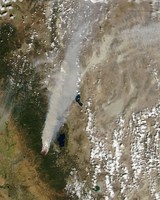
Faith and Fire
A recent study conducted by professors at the University of Melbourne shows a connection between fires on earth and religion. They found that there were significantly less fires on the earth on the traditional days of rest for the predominant faith in an area. -
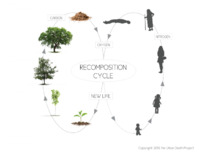
Urban Death Project
Death is a part of life. Every religion has its own traditions and rites when it comes to laying a body to rest. A new program, the Urban Death Project may be changing how some faiths proceed with funeral services. -

Faith and Composting
Many churches and religious houses have recently took to composting. This is a more spiritual way of disposing of trash while remaining environmentally conscious. Not only that, but composting programs help to teach spiritual lessons of renewal. -
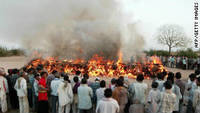
Hindu Funeral Pyres
Hindu people traditionally have a funeral pyre for their deceased. However, this funeral pyre is very environmentally damaging, as it burns hundreds of kilograms of wood and creates a lot of ash. To combat this, a Green Cremation System has been developed that will allow for all traditional funeral rites and bring down environmental impacts.