
Search
111 items
-
Scientific American Highlights Religion-Environment Potential for Climate Change
Today’s article in Scientific American, "Science and Faith Can Solve Climate Change Together", by Evangelical Christian climate scientist Katharine Hayhoe highlights some of the potential of religions to help solve environmental problems. Hayhoe notes recent survey research showing that Pope Francis’ environmental encyclical and visit to the United States helped shift American perceptions about climate change about 10% toward greater belief in the seriousness of climate change and the need to take action. Hayhoe will attend the COP-21 meetings in Paris as both a scientist and a person of faith.
Dr. Hayhoe spoke about Climate Change: Facts, Fictions, and Our Faith at an Earthkeeping Summit at Ohio State in October of 2014. -
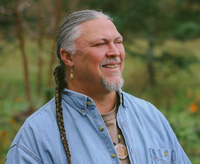
Decolonizing Thanksgiving
"As we head into the Thanksgiving holiday weekend in the United States, it’s great to think about all the things we can be grateful for. It is good to have a time to pause and reflect, to participate in the seasonality of gratitude for the year’s bountiful harvest, and to gather with family and friends. (We’ll ignore the über-consumerism of the day following Thanksgiving…)
Many of us probably know by now, however, that the story many of us learned in school about the first Thanksgiving is rather inaccurate at best, and racist and paternalistic in many ways, with a focus on the Manifest Destiny idea of the divine mandate for Europeans to conquer the “New World” in the name of Christ and country.
A few questions come to mind (at least my mind), for those of us with European-American roots, such as:
Should we even celebrate Thanksgiving, since it’s so tainted with colonialism?
What might it look like to “decolonize” our own understandings and our culture?
How can we do this work in a way that encourages our own folks to partner, rather than making them (our White brethren) feel further ostracized, but while also speaking real truth?
What can we do this Thanksgiving to begin to reconcile relationships damaged in the colonial era, both human to human and human to this land?" -

The World on Fire: A Buddhist Response to the Environmental Crisis
The World on Fire: A Buddhist Response to the Environmental Crisis by Katie Javanaud explores how Buddhist teachings can inspire environmental activism. Javanaud examines key Buddhist sermons, such as the "Fire Sermon," which metaphorically portrays the world consumed by the flames of greed, hatred, and delusion, resonating deeply with contemporary environmental challenges.
Greed is identified as a driving force behind the environmental crisis, fueling overconsumption and disregard for ecological balance. Javanaud illustrates how Buddhist principles offer insights to counteract societal norms of materialism and promote mindful living.
The article addresses common objections to applying Buddhist teachings to environmentalism, providing valuable perspectives for those interested in integrating spirituality with environmental activism. This article serves as a concise introduction to Buddhist environmentalism, offering clarity on the compatibility of Buddhist values with ecological stewardship. -

Towards a Psychology of Religion and the Environment
This article discusses how religion is a powerful tool that can be utilized in promoting environmentalism. While religious text can be utilized both for and against environmentalism, religion more often than not helps to promote protection of the environment according to their findings. -

In Threatened Island Nation, Pope Hears Plea for Climate Action
Pope Francis visited Papua New Guinea, a Pacific Island nation facing serious environmental issues including water pollution, sea level rise, and deforestation. This continued his involvement in the discussion on climate change as he met with governor general Bob Dadae and spoke at meetings. The article covers the Pope's visit, the environmental challenges facing Papua New Guinea, and the ties between religious positions and care for the environment and people who are affected by climate change. -

Our Moral Opportunity on Climate Change
On November 3, 2017, the New York Times posted an article by Justin Welby, the archbishop of Canterbury and primate of the Church of England, discussing some of the devastating weather-related disasters that had occurred at that time and how climate change factored into the tragedies. Below is one section of the article, discussing responses of various faith groups with regard to these events:
"Indeed, even amid the hurricane-caused devastation and despair of recent weeks, I have seen seeds of hope. Different expressions of the Christian faith are freshly united around the need to care for our common home. The Catholic, Anglican and Orthodox Churches just came together with the World Council of Churches to celebrate a month long Season of Creation. During this season, people all around the globe prayed and acted to address climate change and to protect the earth." -

Episcopalians Confronting Climate Change
This article discusses American Episcopalians' concern over climate change and the impact with regard to those facing poverty. The introduction to the article is stated below:
"In September 2011, the House of Bishops in the Episcopal Church, attending a meeting in Quito, Ecuador, sent a pastoral letter to Episcopal clergy worldwide expressing 'mounting urgency' to address climate change within church membership. The letter argued the critical need for Christians to care for all of God’s creation and urged that justice be sought for the poor, who it said will suffer most from climate change." -

Preachable Moments: Evangelical Christians and Climate Change
This article by Yale Climate Connections provides encouraging news of how some evangelical Christians are re-examining their stance on climate change. The following is an excerpt from the article:
"About 60 percent of evangelicals think climate change has nothing to do with human activities. By comparison, less than half of all Americans, or 47 percent, share that view. (Both figures are in sharp contrast to the overwhelming majority of climate scientists who agree that climate change is occurring and primarily caused by human actions).
Richard Cizik sees climate change as ‘top-tier issue’ for younger evangelicals. But the theological doors are beginning to open. Signs are that more evangelicals now are addressing climate change as a moral issue that appeals to the conscience of their Christian communities." -

Lutherans Reflect on Climate Change Conference in Copenhagen
This article discusses some of the sentiments regarding proceedings from the 2009 United Nations Climate Change Conference in Copenhagen. While some attendees expressed disappointment in the outcome, others were more optimistic about steps which may lead to more effective action for climate change in the future. The following excerpt provides a brief description of the event:
"More than 3,000 ELCA members, along with a coalition of U.S. faith leaders, sent some 20,000 postcards to President Barack Obama, urging him to be at the meeting, she said. Obama attended the conference and urged leaders of Brazil, China, India and South Africa to join the United States 'to fund developing nations' projects to deal with droughts,
floods and other impacts of climate change, and to develop clean energy,' among other agreements, according to a U.N. news release." -

Why Lutherans Care for Creation
This article discusses how various concepts of Lutheran theology are woven into ecological messages with regard to God as creator, human interactions, and ways of worship. The following is a section from the introduction of the article, emphasizing human responsibility towards care for the Earth:
"For Christians, care of the Earth is not an 'environmental cause.' Rather, it is central to our holy calling to treasure the Earth and to care for it as our common home, fully integrating creation-care into our love of God and neighbor. Without sacrificing the transformational effects of the 16th-century Reformation, we are called to embrace an eco-reformation that will re-examine and rethink how we read the Bible, how we can expand the scope of our theology, how we can reconfigure our personal vocation and our common ethic, how we worship, how we organize our church life together, and how we understand ourselves as creatures within creation as a whole. This call to continuing reformation is for the whole church, not solely for the committed. Earth care is not an add-on. It is not just for those who happen to be interested in it. It is a call for all Christians to participate in this great work of our time." -

Resources for Preaching & Speaking on Climate Change
The resource gives information for preachers and other religious figures to use when talking about climate change. It starts by giving reasons for preaching about climate change and why it is important for us now and in the future. It also gives facts from scientists on the climate which mentions the aspects of climate change such as the causes and effects on the environment, and what humans can do to help. The article then gives biblical themes related to climate change and also gives advice for religious leaders to overcome possible barriers when preaching. -
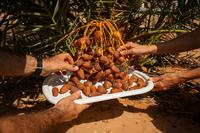
Ancient Judean Dates
A date tree planted in Ketura, Israel from 2000 year old seeds found at an archeological site in the Judean wilderness has finally bore fruit earlier this month (September 2020). The harvest was hailed a modern miracle of science. “In these troubled times of climate change, pollution and species dying out at alarming rates, to bring something back to life from dormancy is so symbolic,”... Date palms were praised in the Bible and the Quran, and became symbols of beauty, precious shade and succulent plenty. -
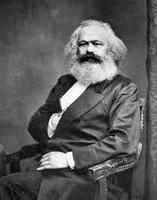
What Karl Marx has to say about today's environmental problems
Ted Benton, a Professor of Sociology at the University of Essex, writes about how Marx's theories can be applied to modern environmental issues such as climate change. He talks about how Marx's ideas about capitalism relate to current exploitation of nature, and specifically about soil degradation which was an issue during the 1860s when Marx was alive. He also includes problematic parts of Marx's attitudes towards nature, such as his praise of increased productivity of land that may have inspired Stalin. -

How Buddhist monks in Ladakh are fighting climate change
Buddhists Monks in the Himalayas are taking a stand to climate change. On Earth Day 2018, thousands of people came together in the village of Yerat to plant trees. The region is rapidly losing glaciers, causing a shortage in water supply to the villages in the area who rely on snowmelt for water. The volunteers were inspired to participate due to their devotion to His Holiness Kyabgön Chetsang Rinpoche and his vision for "a more verdant and organic Ladakh." -

Seeing true nature: Buddhism and the environment
John Worthington-Hill describes how Buddhism can encourage environmental awareness and sustainability. Embracing individuality is our disconnection from the natural world. In order to live in unity with the earth, we must find the 'middle way' (a buddhist morality based on self-discipline). "Self-centeredness is the great illness from which all imbalance, insensitivity and abuse ultimately stem – an illness directly linked to the Buddha’s ‘three poisons of greed, ill-will and delusion’. These poisonous mentalities seep into the collective consciousness and are instilled in the norms and structures of culture and society, helping to direct how politics and economics deal with the environment." "Environmental destruction is therefore an outer manifestation of an inner affliction. If our thoughts are polluted, then our actions will be polluted too, and so will their consequences." -
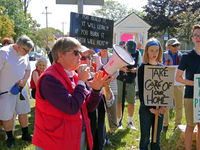
Episcopalians bring spiritual urgency to youth-led climate strikes
The Episcopal News Service shares stories of Episcopalians from around the country engaging in climate strikes. Episcopal leaders spoke on behalf of the environment, bringing the Christian responsibility to protect the earth into the discussion. Episcopal bishops, priests, and students all stood in support of climate change, citing the urgency of the threat. -
Five Years After Speaking Out on Climate Change, Pope Francis Sounds an Urgent Alarm
This article covers Pope Francis's reaction to the world governments responses to climate change. The Pope writes to unite people through religion in an effort to bring awareness to the movement. The article details how the church is divesting in fossil fuel companies. The article also focuses on the political divide and how it affects people's views on the climate crisis. -

Environmental Stewardship and Conservation
An article under the Mormon Newsroom from the official website of The Church of Jesus Christ of Latter-day Saints that explains the Church teachings and stance regarding environmental stewardship and conservation. The article also links other Church video resources, as well as a few articles, resources, and a book titled, “Stewardship and the Creation: LDS Perspectives on the Environment”. The book is a compilation of 17 essays that aim to inspire Latter-day Saints to strongly consider the importance of being environmental stewards and protecting God’s creations. -

GOP Rep. Mike Simpson: "It’s my party, and I’ll fight climate change if I want to"
An article published on Grist.org that covers Congressman Mike Simpson's views on salmon conservation. Simpson's statements are noteworthy for sustainability and religion as he is going against Republican party views by acknowledging an issue with climate change and the environment with his religious views. It is reported that his speech was obviously fueled by a spiritual obligation to preserve salmon as he describes salmon as incredible God created creatures and that their cycle of life should not be messed with. It is also important to note he was already elected for his 11th term in the house, so it is less likely that his more left leaning statements come from a desire to secure votes. -
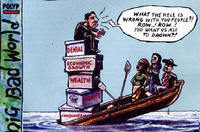
Overpopulation and the Lifeboat Metaphor: A Critique from an African Worldview
Many scientists have warned that the earth is nearing overpopulation or has already reached its carrying capacity. Garret Hardin proposed the lifeboat ethics metaphor to address this crisis and proper resource distributions. Okyere-Manu comments that this metaphor does not take into account the African political and cultural worldview. Hardin's metaphor is also reliant on inequality which disproportionately affects vulnerable communities. -

Religion and animal welfare: Evidence from voting data
This article, written by Julio Videras, works to analyze the factors that contributed to a 2002 ban on farming practices in Florida that were deemed cruel to pigs. Not only is religion taken into account (specifically Catholicism and Evangelical denominations), but political and socioeconomic factors are also considered. Videras argues that political affiliation and socioeconomic factors play more of a role in people's opinion of the ban than religious factors do. -

How to Green your Parish
This article is about the importance of parishes to participate in environmentally sustainable actions based on Pope Francis’s Laudato Si’. It encourages parishes to strive to become more eco-friendly by taking work together as a community and focusing on change one issue at a time. The article focuses on three main areas: reducing the parishes greenhouse gas, sustaining food and land use, and preserving water. -

The Wisdom of Houseplants
There has been a recent rise in the popularity of houseplants. This resource relates aspects of tending to houseplants to different ways you can be more mindful about your own life. Through caring for the houseplants, this web page reminds you to be adaptable, to be patient, and to expand yourself. While also additionally reminding the reader that letting go and paying attention to your physical health are both key in positive personal growth. -

15 Green Religious Leaders
This article contains a list of spiritual leaders that openly advocate for the protection of the environment. The 15 names are listed then followed by a description of their faith and views on the natural world. The article portrays that throughout different religions, many leaders are starting to encourage a sort of "eco-gospel." -
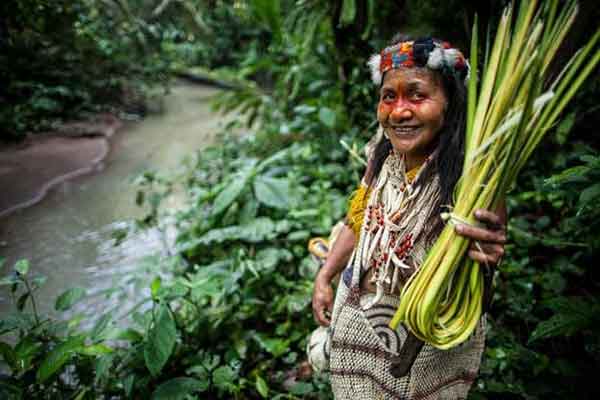
Indigenous peoples and local communities offer best hope for our planetary emergency
Indigenous peoples steward 80 percent of the world’s remaining biodiversity, yet their voices are often excluded from decision-making. Moreover, such environmental defenders remain a vulnerable group that is troubled by intimidation and torture. In this article, the authors cover a few organizations, such as Nature for Life Hub and Youth4Nature, established to empower and defend the voices of indigenous peoples, local communities, and the youths.