
Search
52 items
-
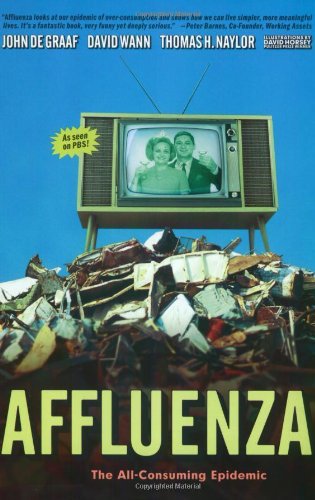
Affluenza Documentary (1997)
A one-hour PBS documentary which analogizes materialism and consumption to an epidemic. The term 'affluenza' is a combination of 'affluence' and 'influenza.' This an educational and socially critical piece that discusses the harmful affects of overconsumption, and provides ways to 'treat' it. -
Saving Buffalo Reef
This 11-minute video, by the Great Lakes Indian Fish & Wildlife Commission (GLIFWC), informs the viewer of the natural, cultural, and economic importance of Buffalo Reef. This reef is located off the Keweenaw Peninsula, Michigan, in Lake Superior. Buffalo Reef is currently under ecological distress due to local mining activities. Current Tribal, State, Federal, and Academic efforts are underway to help restore this significant environmental feature, as documented in this video. -

Rising conservative voices call for climate change action
PBS NewsHour Weekend Special Correspondant Stephanie Sy reports about Young Evangelicals for Climate Action (YECA) and other republican supporters of taking action on climate change. -
Christians and Climate Change YouTube Channel
The Young Evangelicals for Climate Change (YECA) created a YouTube channel for religion and environment related videos. They are not produced by YECA, but are still specific to Christians and Climate Change -

Religion and Environment Songs: Connect to Nature (Beatrice Dossah) music video
From the YouTube video description: "The Song, '' Connect to nature' talks about connecting children to nature using creative medium such as the arts.
The song is part of a research work by Beatrice Dossah with sponsorship from the United Nations University Land Restoration Training Programme in Iceland. The research work was supervised by Dr. Ellen Gunnarsdottir and Dr. Ásthildur Björg Jónsdóttir of the Iceland Academy of Arts." -
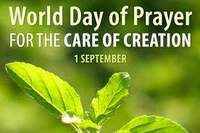
Tomorrow (Sept. 1) is World Day of Prayer for the Care of Creation: Pope Francis calls on believers and unbelievers to care for our common home
Thursday, September 1, 2016, has been declared a shared World Day of Prayer for the Care of Creation by Catholic and Orthodox Christian communities. This year, Pope Francis issued a video invitation to prayer in which he calls believers and unbelievers alike to work together to care for our common home. In August of 2015, the pope issued a letter
(https://w2.vatican.va/content/francesco/en/letters/2015/documents/papa-francesco_20150806_lettera-giornata-cura-creato.html) declaring Sept. 1 as an annual day of prayer for the care of creation, joining the Orthodox Church, which has been doing so since 1989. Citizens are urged to pray and join a local prayer service, or if no local service is offered, representatives from Catholic, Protestant, Orthodox and Episcopalian churches will offer an online prayer service (https://seasonofcreation.org/2016/08/25/sept-1-online-prayer-service/) at 8am US EDT. -
Dalai Lama's Message to World Leaders
Before COP-21, the Dalai Lama recorded a message for all people to see, addressing the world leaders who were going to meet in Paris. In his message, he urged people to take responsibility for what we have done to the planet and start to live more sustainably. He also noted that Tibet is effected much more drastically by climate change than other regions of the world. Tibet has long been considered the rooftop of the earth, and is much more susceptible to environmental degradation. -

Religion and Environment Songs: Mitakuye Oyasin by Nahko and Medicine for the People
Mitakuye Oyasin is a song by Nahko and Medicine for the People that relates to spirituality and nature. The phrase comes from the Lakota language and reflects the world view of interconnections held by the Lakota people of North America. The English translation is “we are all related.” The song lyrics start with being thankful for receiving great wisdom so that we as people can help all living things. The subsequent lyrics describe being thankful for all that we have been provided. -

A Buddhist Perspective on the Eco-Crisis from David Loy
This short video consists of David Loy discussing the Buddhist perspective on the Eco-crisis. He begins by describing anata, the belief that all things are constantly changing and there can be no such thing as a permanent self. He then talks about dukkha, which is the idea that human experience is short-lived and suffering results from excessive desire. These ideas come together to describe the Buddhist idea that there is no “self.” Loy maintains that, “our sense of self is usually haunted by a sense of lack.” This sense of lack and false sense of “self,” create issues for people that can be related to consumerism, the Eco-crisis, and more. -

Catholic Climate Covenant Earth Day Video
Catholic Climate Covenant has created their 2018 Earth Day video Beyond a Throwaway Culture. The focus of the video is the harm that comes from single-use disposable plastics - how it contributes to both land and marine pollution. -

Reducing Waste and Moving Beyond a Throwaway Culture Webinar
This hour-long webinar was created by Catholic Climate Covenant and Earth Day Network to address the exponential growth of plastics and how it is threatening the survival of our planet. Earth Day Network discusses the resources they offer to help end plastic pollution and their Earth Day campaign: A World Without Plastic Pollution. The webinar then discusses Catholic Climate Covenant’s program, Beyond a Throwaway Culture: Reduce Waste–Grow Community, and describes how faith communities can celebrate our common home on Earth Day and every day. -
Let’s Talk Faith and Climate: Communication Guidance for Faith Leaders
Let’s Talk Faith and Climate: Communication Guidance for Faith Leaders is a webinar designed to present findings and explanations on climate action as a moral imperative. Their website includes tools to assist in making an impact and success stories. It also includes a guide to deepen engagement on climate action. -
Just Transition: Shrinking our Carbon Footprint While Leaving No One Behind
Just Transition: Shrinking our Carbon Footprint While Leaving No One Behind is a webinar offered by the Catholic Climate Covenant. It focuses on how the poor feels the greatest impacts and consequences of climate change, how to address the challenge of switching from a fossil-fuels based economy to a clean energy economy, and what Catholic social teachings have to say about a transition to a clean energy economy. -
Creation Television Series
Salt + Light Media produced a free television series called Creation. It contains personal stories, clerical teachings, and Biblical truths. Its goal is to help answer the fundamental question, why do Catholics need to care about the environment? -
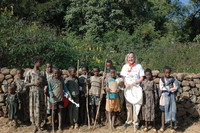
Ethiopia’s Church Forests
The beautiful forests of Ethiopia are rapidly disappearing due to human activity. However, the forests around the Ethiopian churches remain intact and teeming with diverse life. Dr. Margaret D. Lowman, known as Canopy Meg, has teamed up with one of these churches to study and survey the wildlife, mostly insects in the area. The children of the church community are being engaged to become the next generation of stewards in order to ensure that the forests and creatures are preserved. Project leaders also aim to help build walls in order to keep these forest areas more protected from human development. -
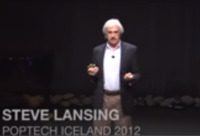
Balinese Water Temples
Balinese Water Temples have been an integral part of the agricultural rice paddy systems in Bali for over 1,000 years. Water is distributed from the Supreme Water Temple of Bali throughout the land. This distribution cycle involves neighbors meeting in a democratic subak to discuss the synchronization of their planting.
Steve Lansing's video link below goes into further detail about the Bali water temples. -

The People’s March
In addition to the People’s Pilgrimage, the People's March was another religious based event that took place during COP-21. The People’s March, was an organized demonstration in major cities around the world. For those who could not attend the convention in Paris, marches were held around the world to demonstrate solidarity for environmental stewardship and justice. Many people who participated in this march in Paris were also members of the People’s Pilgrimage. However, in Paris there was also conflict due to lingering tensions from the November 13th terrorist attack. -
The Big Church Switch
A movement has started in the United Kingdom to get more renewable energy usage in churches and individual homes. This is due to many Christians joining together and giving up fossil fuels for lent this year. There is a simple process to get involved, which can be seen in the video. -
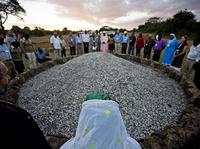
Sacred Earth
Sacred Earth is a resource that was created by the World Wildlife Foundation. It helps teach and inspire faith communities to take proper care of their resources, especially the ones hold special importance to their specific faith. -

Pope Francis on the Amazon
Pope Francis attended World Youth Day in Rio de Janeiro in 2013. While there, he addressed the issues that the people there face in preserving the rainforest and the need to act as stewards of the environment. He spoke to the youth and encouraged them to become active in preserving the environment and carrying out holy missions. -
Islamic Practices and Sustainability
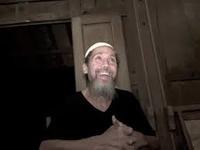
Mr. Iskandar Waworuntu is working with Islamic faiths in Indonesia to incorporate sustainability with forgiveness. Much of the Muslim traditions have to do with purification. Waworuntu is hoping to incorporate these two ideas with each other, linking sustainability as a form of purification. -
United Methodist Agency Green Roof
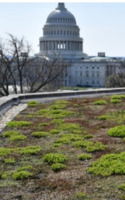
John Hill, from the Board of Church and Society at the United Methodist Agency, narrates the video below about their recent green roof addition. The series of squares used covers the entire area of the flat roof, reducing energy consumption, making the building cooler in the summer and warmer in the winter. In addition, and equally important, it reduces storm water runoff. When it rains, the water remains in the roof rather than adding pollutants into the nearby watershed, which feeds into the Chesapeake Bay. -

Caring for Creation Today
This video, put forth by the Evangelical Church in America, encourages individuals to act as stewards by both assisting those in need and caring for our land, as God had intended. The salient message is to do what you can to work for change and care for God's creation, as this is our duty as humans. -

Existentialism an the Ecological Crisis
This segment of The Philosopher's Zone with David Routledge (on the Australian Broadcasting Corporation) focuses on the importance of existentialism in modern times. Specifically, how existentialism can help us understand current relationships between the self and others, as well as with nature. Likewise, the podcast’s contributor, Dr Dalia Nassar points out that existentialism implies a sort humanism (as Sartre argued) that connects each individual to all of humanity through their actions. It is the fact that each of our actions can affect one another is why the existentialists place so much emphasis on how we act. Furthermore, the podcast extends this to the ecological crisis by explaining how this radical humanism can inform how we make environmental decisions. The important point here is that we can derive environmental values based on the inherent freedom that humans have, there is a constant need for action. As the interviewer explains in the podcast, the individual determines the moral future of humanity and nature. Thus, each person has a moral obligation to transcend the current situation and make better choices for the environment. Likewise, there is a special attention to art and literature as a mode of connection, to hopefully shape others moral and environmental values. Therefore, existentialism provides a framework (much like religion) for guiding our actions based on a mutual care for the environment. Finally, I should note that the key points of the podcast (concerning the environment) starts at the 18-minute mark, while the latter half provides background knowledge on existentialism. -
One World, Our Coalition: Religion and Environmentalism Larry Linenschmidt
The One World, One Coalition interview guest of various backgrounds about climate advocacy. In the first episode Matthew Kim and Isla Ferguson interview Larry Linenshcmidt of Hill Country Institute. Hill Country Institute is a Christian organization focused on addressing important issues while encouraging safe discussions on topics like human rights, education, and the environment. As the executive direction Linenschmidt lectures about holistic environmental stewardship in the Christian community.