
Search
294 items
-
The Kitchen as a Classroom: Recipe to Unearth Life’s Simple Virtues
This chapter from the student-written book “Emerging Perspectives on Religion and Environmental Values in America” explores how the connection between cooking, appreciation of nature, and spirituality. It discusses how food can connect you to family, yourself, and your religion. Below is the first paragraph of the chapter to introduce the discussion.
"The art of cooking is a timeless practice, a ubiquitous unifier since time immemorial: in an age of limitless diversification of pressing demands, eating remains one of the few things that we all must do. This venerated act is crucial for cultural continuance and deep spiritual exploration for people all over the world, a practice whose rich appeal and infinite adaptability esteem it a craft for all to enjoy. The delicious epitome of self-care, deliberate preparation of whole ingredients is the antidote to thoughtless consumption of mass-produced, ultra-processed foods, whose impersonality and generally unhealthy nature worsen physical and mental well-being (Lin et al., 2018). The benefits of spending quality time in the kitchen, alone or with others, permeate myriad aspects of life: by choosing to cook, one is 'unplugging to plug back in' by engaging with a simple, mindful practice to restore personal and familial health, build connections and instill a strong sense of community, preserve ethnic heritage, challenge a growing dependency on corporations, and fix our broken food system." -

Shifting Focus: Meditative Reflection on the Self and Connectedness
This chapter from the student-written book “Emerging Perspectives on Religion and Environmental Values in America” explores how connecting with the environment and the self can improve mindfulness and meditation. Additionally, it discusses how meditation and mindfulness can improve one's connection with nature and the self. Below is the first paragraph of the chapter to introduce the discussion.
"In the beginning of a meditation, focusing on breathing provides rhythm and a connection between body and mind. My experiences in both guided and solitary meditation begin this way to ground myself and clear my mind, accepting any thoughts that may come through but not dwelling on them. From this awareness of breath, attention is then shifted throughout the body, gradually working from the feet to the forehead. Now that I have pushed up against the boundaries of my body, the next step is to reach out just past myself and focus on the space around me. But what are these boundaries? Meditation practices have roots in various religious ideologies, which analyze these boundaries and deconstruct the notion of the self. While I usually avoid having an end goal in my own meditation, learning about the dissolution of the self has changed my perspectives and techniques when meditating, as well as how I think about myself and my place in the world in general. Meditation now serves as a way of opening my mind and breaking down the perceived barriers around me, in a way that allows me to grow and ground myself." -

The Meaning of Music
This chapter from the student-written book “Emerging Perspectives on Religion and Environmental Values in America” explores how music and the arts can help connect you with the environment and your spirituality. The author discusses his personal relationship with music and how it has impacted his spirituality and connection to the world around him. Below is the first paragraph of the chapter to introduce the discussion.
"From a young age there have only been a few constant presences in my life: school, sports, and music. The importance of school was instilled in me at a very young age, and while I hope to graduate one day and make a career out of something I love, the reality is that school is more of a job than it is an interest. What about sports? I have participated in and watched sporting events all of my life, however, now that I am no longer playing in officially organized sports, the love for them has shifted more to spectating rather than participating. So what is left, music? Music is weird, where all other things have seemingly lost some significance or taken on more serious responsibility, music is just as interesting now as it was when I was younger. Having become far more interested in self-evaluation and exploration as of late, I have taken a serious interest in attempting to understand why music has not only remained important in my life but is actually becoming more and more so. Music has been around for roughly fifty thousand years, so it is no wonder that it has become almost a universal language of the world." -
My Spiritual Journey: Dissolving Barriers through a Conscious Connection with Nature
This chapter from the student-written book “Emerging Perspectives on Religion and Environmental Values in America” explores the author's experience with nature and gaining new perspectives. She discusses how doing service and building a connection with nature and other people helped shape her identity and grow as a person. Below is the first paragraph of the chapter to introduce the discussion.
"I am constantly inspired by nature and the idea that taking care of myself means taking care of the environment. Whether I realized it or not, religion has always shaped my beliefs about personal identity and responsibility in the world. I went to Catholic school my entire K-12 career, but never truly resonated with the beliefs taught to me. It was not until high school that I became more connected to a higher power. A service retreat to Louisville, Kentucky, sparked this spiritual awakening. That was nearly four years ago, and today I am still exploring topics like animal welfare, environmental ethics, death, the need to control, and unselfing." -
The Consequences of the Ego and the Potential of Unselfing
This chapter from the student-written book “Emerging Perspectives on Religion and Environmental Values in America” explores consumption, human ego, and the relationship between these and our environment. It discusses human nature and how we interact with each other, technology, and nature. Below is the first paragraph of the chapter to introduce the discussion.
"Consumption is one of the favorite pastimes of our developed society, but it is also the source of many environmental problems. As technology has advanced, our society and economy have developed into one dependent on the mass consumption of things. Our habits of mass consumption have acted as a vehicle of destruction by increasing the amount of resources we use and waste we produce, leaving parts of our environment severely degraded. As a result, the people who have more and seem to be successful make more environmental impact, while the environmental consequences of their actions tend to be felt by the have nots. Our symbols of success that we prop up seem to be part of the problem as they have serious environmental downsides, and even though we recognize these downsides we continue to glorify consumptive habits that are destructive. But have you ever considered the roots of our need to consume?" -
Houseplants and the Balance of Life
This chapter from the student-written book “Emerging Perspectives on Religion and Environmental Values in America” explores how participating in the act of growingplants, even house plants, can help connect you to nature and spirituality. The author shares her own experiences with growing plants and how her views were shaped. Below is the first paragraph of the chapter to introduce the discussion.
"Growing up I was not a particularly religious person. I grew up in a Christian household, but we rarely went to church. My siblings and I were still somewhat involved in the church, we attended Vacation Bible School. When I outgrew the program, I volunteered as a group leader for the kindergarteners and first graders. I did this for about 4 years but was unable to continue volunteering due to my jam-packed high school schedule and extracurricular activities. Although I grew up learning the very basics about the bible, my knowledge and understanding are limited to the lessons taught to younger children. When asked about my specific denomination, I do not know how to reply. I simply say my church is the Ridgeway Church of Christ." -
The Gardener’s Ethic: Countering Alienation from Nature
This chapter from the student-written book “Emerging Perspectives on Religion and Environmental Values in America” explores Michael Pollan's idea of a gardener's ethic and compares it to the wilderness ethic. It assesses texts and philosophies concerning how humans interact with the environment, as well as incorporating the author's thoughts on these ethics. Below is the first paragraph of the chapter to introduce the discussion.
"In my first reading of Second Nature: A Gardener’s Education, Michael Pollan challenged the environmental ethic that I have unconsciously held for as long as I can remember. His chapter, 'Nature Abhors a Garden,' particularly sparked this evaluation. In this chapter, Pollan states that, 'gardening quickly teaches you to distrust…absolutes, to frame the question a little differently' (p. 49). To me, the broader absolute Pollan challenges is that many Americans have grown up with a ‘wilderness ethic’ but do not know exactly how they came to hold it, or the implications that come along with it." -

President Carter’s Environmental Roots
This chapter from the student-written book “Emerging Perspectives on Religion and Environmental Values in America” explores the environmental history and values of former President Carter. It discusses how Carter's religion impacted his environmental views and how he acted on those values during his career. Below is the first paragraph of the chapter to introduce the discussion.
"Former President Carter, the peanut farmer turned president, has a long and well-known record. He’s been everything from a farmer, navy man, state senator, then Governor of Georgia, President of the United States, Noble Peace Prize winner, and bible study teacher. What’s not as recognized as his noble peace prize winning post-presidency, or his political career, is his strong environmental policies. In his 4 years in the White House, President Carter did more for the environment than many presidents before and after him. He faced many challenges throughout his presidency, most notably the hostage crisis, and the energy crisis. These major challenges in his tenure have hogged much of the attention of his presidency, and people seem to forget his message of good environmental attitudes. The question is, where did his environmental attitudes come from?" -
Nature as the Compass of the Heart: A Poetic Autobiography
This chapter from the student-written book “Emerging Perspectives on Religion and Environmental Values in America” uses a collection of the author's poetry to explore his relationship to nature and religion. It explores self-expression and how the arts can help motivate environmental action. Below is the first paragraph of the chapter to introduce the piece.
"Dear Reader, How shall you live today? Will you watch the sunrise? The sunset? Will you drive your car with the windows down, sticking your hand out the window to catch the fresh air passing through your outstretched fingers? Maybe cook a meal with a friend in a kitchen filled with delicious smells and sounds? Or will you call a loved one? Hear their voices, their stories." -
A Glimpse at the Reality Existing After Ours through Near-Death Experiences
This chapter from the student-written book “Emerging Perspectives on Religion and Environmental Values in America” explores the phenomenon of near death experiences through several first-hand accounts. The author explores the spiritual aspect of these experiences and compares and contrasts each instance. Below is the first paragraph of the chapter to introduce the discussion.
"Near-death experiences (NDEs) are gateways for the soul—a profound, transformative experience that has taken place for some who have kissed death and returned. It is estimated that NDEs affect 1 in 10 people (The European Academy of Neurology, 2019). At best, these experiences are dismissed as wild dreams or hallucinations, but we struggle to make sense of what they are. One way some scientists have been trying to explain the reality of near-death experiences is in the connection between psychedelics and psychology. Dr. Rick Strassman (2001), a psychologist who has done extensive research on the topic, is one among many hypothesizing that NDEs are a result of the hallucinogenic chemical dimethyltryptamine, or DMT for short. He suspects that DMT is produced in the pineal gland of the brain, which is an area of the brain we still know little about. Because of the pineal gland’s connection to light (what we do know is that it produces melatonin, a hormone that regulates both the reproductive system and the circadian rhythm), it has been spiritually associated with many ideas of a higher conscious and enlightenment such as the third-eye, crown chakra, and the seat of the soul. Strassman infers that DMT is produced in times of birth, near-death, death, and intense pain." -

An Unfamiliar Outlook: The Partnership of Ecofeminism and Daoism
This chapter from the student-written book “Emerging Perspectives on Religion and Environmental Values in America” explores the interactions between Daoism and environmentalism, feminism and environmentalism, and Daoism and feminism. The history of these philosophies are explored and the author includes her own experiences and thoughts to help discuss the perspective. Below is the first paragraph of the chapter to introduce the discussion.
"It’s not clear how many Daoist ecofeminists are in the world, but I think I may be one of them. Though I was raised as a Baptist Christian, I have found the insights of Daoism, the predominant religion of the homeland of my family, and ecofeminism, the perspective that centers women’s relationship to nature, as complementary to my Christian faith and concern for the environment. I have been able to incorporate this philosophy into my life and found that they are interrelated. My interest in these thoughts was partly sparked by applying to the China Program summer internship with Environmental Defense Fund (EDF), which piqued my interest in learning more about Chinese cultural beliefs. Daoism has played a huge role as a philosophy within Chinese culture for thousands of years, and I am interested in ecofeminism because it is a topic that strongly resonates with me being a woman and its relation to the earth. As someone who grew up having a spiritual and personal relationship with the natural world, I find that many of my values align with the Daoist ecofeminist perspective." -

The Intellectual Martian Society of “Stranger in a Strange Land” by Robert Heinlein
This chapter from the student-written book “Emerging Perspectives on Religion and Environmental Values in America” explores the environmental ethics and spirituality of the book Stranger in a Strange Land. Specifically, the author discusses the importance of water and the environmental impact of the book. Below is the first paragraph of the chapter to introduce the discussion.
"In 1961, the accomplished science fiction author Robert A. Heinlein shared his latest work with the world. In the fashion of a fairytale, Stranger in a Strange Land begins 'Once upon a time,' and goes on to describe the fantastic culture of Mars and its impact on human society. The timing of its publication in the early 1960s allowed for a short digestion period, so that it was ripe in the mind of the counterculture in the latter half of the decade. Themes of religious reform, free love, and a oneness with the cosmos permeate the book, and coincidentally rose to popularity during this time. The alignment of the novel with the counterculture cannot be understated: in 1967, the Freak Scene recorded a song entitled 'Grok!,' an homage to the word coined by Heinlein in Stranger in a Strange Land, and a year later the Byrds referenced water brotherhood in their song 'Triad.' The verb 'grok' even found its way into the vernacular of the counterculture (Blackmore, 1995). Messages about the sanctity of clean water and the positive potential of religion reached tens of millions, securing the legacy of Stranger in a Strange Land as one of the books which shaped religious and environmental values in the United States (Library of Congress, 2012)." -
Finding Waters: Spirit of Fly Fishing
This chapter from the student-written book “Emerging Perspectives on Religion and Environmental Values in America” explores the practice of fly fishing and pursuing your passions as a way to connect with the environment. The author shares his own experiences with fly fishing and how it affected his relationship with nature to frame the discussion. Below is the first paragraph of the chapter to introduce the discussion.
"One of my greatest memories is from a trip up to the northern region of Michigan. It was mid-October and in the prime of fall. The leaves were fluorescent oranges, yellows, and browns. Water clearer than the Bahamas. There were king salmon free-swimming up and down taunting me to throw a fly at one. But I just had to sit back and embrace this moment of true peace between the fish and their home habitat. I just could not throw a line in without admiring the beauty that was painted on a natural canvas in front of my own eyes. These are moments that stay with you and make you rethink your place on this Earth. Fly fishing has given me many different moments just like this one. Fly fishing is not just a hobby for me, but it is an escape from the concrete jungle of everyday life. When you fly fish, it gives you a form of peace within your life and a sense of spiritual solitude that stays with you. Sometimes, the beauty of nature simply awes us, and lifts us up; at the same time, there is a lot of history and technique that make fly fishing such a worthwhile pursuit." -
Pilgrim’s Progress: A Spiritual Journey Along the Appalachian Trail
This chapter from the student-written book “Emerging Perspectives on Religion and Environmental Values in America” explores the Appalachian Trail and the experiences of those who hike it. The author describes his own experience on the trail and how it created further connections to his environment and a spiritual experience. Below is the first paragraph of the chapter to introduce the discussion.
"The Appalachian Trail meanders 2,190 miles through the forest between Springer Mountain, Georgia and Mount Katahdin, Maine. Of the more than one-thousand hikers that attempt to walk the entirety of the trail in one year, known as thru hikers, only about a quarter will complete their trek. Despite the grim odds of success, every person that attempts a thru hike—whether they finish or not— comes away from the experience changed. Time in the wilderness, particularly on long adventures such as a thru hike, is spiritually impactful and life changing. The changes aren’t always readily apparent, but it is impossible to embark on a thru hike and not walk away a different person. Hikers may view these changes through a religious or spiritual lens, or they might not notice them at all, but regardless, Appalachian Trail thru hikers partake in a spiritually transformative experience during their four- to six- month crusade." -
Humans as Part of Nature: The Benefits of Time Spent Outdoors for Mental Health
This chapter from the student-written book “Emerging Perspectives on Religion and Environmental Values in America” explores the impact of connecting with nature and the environment on mental health. The author describes their own experiences with mental health problems and healing through activities in nature to frame this issue. Below is the first paragraph of the chapter to introduce the discussion.
"In the summer of 2019, I was a high-school junior going to be a senior the coming year, going on a SCUBA trip out of state with my specialized environmental science class so that I could finish up my certification. This time in life at the end of high school but before college is widely regarded as the most fun and free time for a young person. A time where you’re so close to the end of the life that your parents and the state have laid out for you and still far from the stresses of choosing for yourself in life and dealing with the repercussions of those choices. This expectation was far from where I was at that point in my life." -

Near Death Experiences and their Implications for the Afterlife
This chapter from the student-written book “Emerging Perspectives on Religion and Environmental Values in America” explores the science as well as the spirituality behind near-death experiences. The author assesses hypotheses behind this phenomenon and describes some examples of them occurring. Below is the first paragraph of the chapter to introduce the discussion.
"What happens after death is a mystery that humans all over the world have speculated on since the beginning of time. In many religions, there is a sense of certainty among the followers regarding what to expect when they pass, as promised by God or a higher power they worship. Although no one really knows for sure, the closest we have come to proving the reality of the afterlife are the stories told by people who have had near death experiences, or even died temporarily and came back to life. Spiritual revelations during these incidents are a cross-cultural phenomenon felt all over the world, with details that overlap and hint at the answer to this unsolved mystery." -

An Insight into Wilderness Therapy
This chapter from the student-written book “Emerging Perspectives on Religion and Environmental Values in America” explores the benefits of nature and being in the wild for mental health. The author uses research on wilderness therapy as well as her own experiences to discuss this relationship. Below is the first paragraph of the chapter to introduce the discussion.
"Nature has so many captivating qualities. Whether it be the rustle of summer green leaves, the indescribable blue of the sky on a clear day, or the countless creatures that scurry across the earth’s floor, I always find myself amazed by its peculiar yet familiar structure. Nature is something that is often taken for granted. Yes, individuals are constantly reminded of its presence, but do we often think of its value? For me, the wilderness has been a place of refuge and comfort. Somewhere that I look to when I am feeling lost and confused." -

Earth Friendly Habits: Putting Your Catholic Faith into Action
"We all want to have clean air and water. We all want to leave a healthy planet for our children and grandchildren but the challenges we face can feel overwhelming. This booklet will guide us in the process of creating earth friendly habits. Every week it will feature a quote from a saint, Pope Francis, or Laudato Si’, the encyclical written by Pope Francis, along with a simple idea to consider implementing. Often, there will be information about why we need these changes. Some ideas will be familiar but are worth revisiting. Some will be new. The suggestions might appear small but once enough people act in their own lives, it will start a chain reaction that can only end in a healthier planet Earth. Many of the ideas cost nothing. Some require a small initial investment but will save money in the long run. These steps can improve the environment over the course of a lifetime. Spend some time each week thinking about implementing the suggestion. Learn and adopt strategies that work for you." -
Season of Creation 2023: Let Justice and Peace Flow
"Prophet Isaiah proclaims: 'Listen carefully, I am about to do a new thing, now it will spring forth; will you not be aware of it? I will even put a road in the wilderness, rivers in the desert.' (Isaiah 43: 19) Biodiversity is being lost at a rate not seen since the last mass extinction. The futures of young people are threatened by the cascading impacts of the loss of biodiversity and a changing climate.
The urgency grows and we must make visible peace with Earth and on Earth, at the same time that justice calls us to repentance and a change of attitude and actions. As we join the river of justice and peace with others then hope is created instead of despair.
We invite you to use these resources and share them with your church, pastor or other regional authority to join the Season of Creation, and even spread the word to local media." -

A Call for Climate Justice this Season of Creation
"2023 Season of Creation Call to Action: Ask the Biden Administration to stop fossil fuel expansion and consider the forgiveness of debt of developing nations at COP 28. You can:
1. Organize a prayer service in an ecologically impacted place near you
2. Sign the forgiveness of debt letter (online) during the prayer service, or anytime during Season of Creation, and share it widely
3. Take a picture of the place and people gathered at the prayer service
4. Post your prayer service to social media tagging President Biden, Special Envoy Kerry, and Secretary Yellen (social media links and language here), and let them know we are #PrayingForYou to take strong action on fossil fuels and debt relief." -
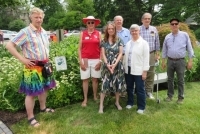
Fairmount Presbyterian Church achieves another environmental milestone
"Each year, the Cleveland 2030 District and the NEO Local Leadership Team of USGBC (U.S. Green Building Council) Ohio host a friendly green building challenge to recognize exemplary new green construction and renovation projects in this region. In May, the winning entries were announced and—among recipients such as Oberlin College, the Progressive Insurance Campus, and the Maltz Performing Arts Center—Cleveland Heights Fairmount Presbyterian Church (FPC) was recognized for its work in achieving a 50% electricity use reduction." -
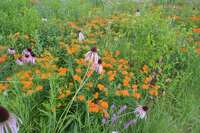
In Minnesota they’re paying homeowners to replace lawns with bee-friendly wild flowers
"Minnesota lawmakers set aside $900K to assist homeowners convert traditional lawns by planting wildflowers, clover and native grasses in an effort to slow the collapse of the state’s bee population." -

Laudato Si' 2.0: Pope announces new document ahead of 'Season of Creation'
This article talks about the upcoming release of Pope Francis' next document about the Christian faith and honoring our planet. In his new book, Laudato Si' 2.0, Pope Francis is tackling the current climate crisis. His main goal for this piece is to expand on the climate crisis issues that have come to front since his 2015 version of Laudato Si'. This anticipated release comes with the beginning of the "Season of Creation", a time to reflect and honor our planet. -

Reducing Eco-Anxiety
"There are days when I feel that climate change is the only thing that matters and that the tragedy of it is unbearable. I feel simultaneously like screaming on the street and hiding under the covers.
At least I know that I’m not alone. According to a 2020 study by the American Psychiatric Association, over half of Americans said they were somewhat or extremely anxious about the impact of climate change.
And they – we – are right. There aren’t enough words in this newsletter to describe the scope of this tragedy, which has just begun to unfold. Massive species and habitat loss. At least 250,000 deaths each year from 2030-2050, according to WHO projections. Up to a billion climate and food refugees, with attendant conflicts and disasters. Increased wildfires, floods, hurricanes, and pandemics. Covid-19 is a picnic compared to what’s in store for our children.
So what can we do?..." -
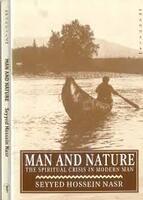
Man and Nature: The Spiritual Crisis in Modern Man
Written by a man considered to be one of the founders of the discussion on Islamic environmentalism, this book explores the relationship of man and nature in relation to religious traditions.