
Search
294 items
-

Religions of the World and Ecology
"Enroll in these free self-paced courses from Yale University and Coursera to explore the answers to these questions and experience the rich ecological teachings and dynamic practices of religious traditions across our planet Earth." -
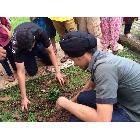
Sikhism and Caring for the Environment in Practice
This article describes Sikh values and how they relate to Sikh environmental beliefs. The Sikhs believe that every man and woman, regardless of status or creed, is born with unalienable rights to happiness and liberty. This belief leads to the Sikh stance on environmental ethics, arguing that fighting climate change is a universal effort that can only be achieved with love and compassion for humanity in mind. -

Querida Amazonia
This post-synodal exhortation by Pope Francis draws and continues from Laudato Si'. It specifically addresses the region of the Amazon and Pope Francis' ideals for supporting its environment. In summation, he says, "I dream of an Amazon region that fights for the rights of the poor, the original peoples and the least of our brothers and sisters, where their voices can be heard and their dignity advanced.
I dream of an Amazon region that can preserve its distinctive cultural riches, where the beauty of our humanity shines forth in so many varied ways.
I dream of an Amazon region that can jealously preserve its overwhelming natural beauty and the superabundant life teeming in its rivers and forests.
I dream of Christian communities capable of generous commitment, incarnate in the Amazon region, and giving the Church new faces with Amazonian features." -

Querida Amazonia Beloved Amazon Study Guide on Select Themes
"This reflection/discussion guide, for use with Pope Francis’ apostolic exhortation, Querida
Amazonia [Beloved Amazon], can help individuals and small groups explore and dialogue with
aspects of this important document related to listening to “the cry of the poor,” the rights of
indigenous persons, solidarity, and action to care for God’s creation. It does not cover all themes in
the apostolic exhortation. The guide includes a template for small group discussion, as well as
questions for either individual or small group reflection on particular themes in the document." -
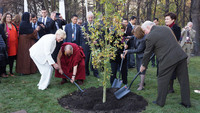
Practical Steps Towards Protection of the Environment
"These days the environment- the source of life for all beings in the world including Tibet, the Land of Snows- is undergoing extensive degeneration. At this time it is extremely important that every human being, according to his or her ability, consistently puts effort into ensuring the conservation and protection of this planet's environment and its inhabitants." -

Hindu Faith Statement on the Environment
This statement consists of three sections reflecting the major strands of Hindu thought: Sustaining the Balance, Sacrifice and Protection, and Breaking the Family. It was compiled as a statement of the stance of the Hindu faith on environmental issues and how to approach nature. -

Saving India’s Rivers: Ecology, Civil Society, Religion, and Legal Personhood
"Abstract: In recent decades, India’s environment has been severely compromised by riverine pollution combined with large-scale dams and exacerbated by diversion for irrigation. Most prominent among the rivers so affected has been the Ganges and its tributaries in northern India, which for Hindus include the country’s most sacred bodies of water. This paper examines three campaigns opposing dam construction, arguably the most widely publicized and analyzed efforts of this kind since independence in 1947. One campaign was essentially secular with virtually no religious component, the second mostly secular with some religious support, and the third almost totally a religious initiative. In the end, only the third attained any real success, and that rested on circumstances unlikely to be replicated. The possibility that future campaigns of this scale can be taken up again appears remote. Meanwhile, riverine pollution has continued to increase everywhere despite massive governmental programs to reduce it. Theoretically, it would seem that environmentalists and Hindu devotees with their veneration of nature should be able to work in common cause to reduce pollution, but any large-scale cooperation seems unlikely between these two disparate realms. More recently an effort to protect rivers by endowing them with legal personhood enjoyed an initial success, holding the promise that lawsuits could be brought on behalf of a river against those polluting it. The paper concludes that while the legal personhood strategy is currently stalled, it offers the best chance for eventual success in attenuating riverine pollution. In the course of the paper, a comparative theoretical framework for assessing anti-dam protests will be tested." -
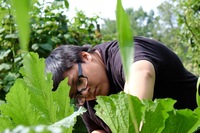
All Education is Environmental Education
"[This is the final article in a series about the connection between Jewish identity, food, and the natural environment, written by grantees and partners of The Covenant Foundation.]
As we too slowly wake up to the human-made climate emergency, it’s critical to consider the role of the Jewish educator. We know that the answer to this crisis is not simply the acquisition of more knowledge. Rather, the question becomes:
How can we teach our students in ways that help them become better equipped to engage with the climate emergency and other environmental crises?" -

Environmental Sustainability in Islam
"Islamic beliefs, traditions and values provide an effective and comprehensive solution to the current environmental challenges faced by the human race. Islam has a rich tradition of highlighting the importance of environmental protection and conservation of natural resources. According to Islamic law, the basic elements of nature – land, water, fire, forest, and light – belong to all living things, not just human beings.
The Holy Qur’an and Sunnah are a guiding light to promote sustainable development in Islamic countries as well as around the world. Allah (Subhanahu Wa Ta’ala) commands human beings to avoid doing mischief and wasting resources as these acts cause degradation of the environment. The privilege to exploit natural resources was given to the mankind on a guardianship basis, which implies the right to use another person’s property on the promise that it will not be damaged or destroyed." -
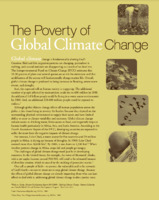
The Poverty of Global Climate Change
"Global climate change poses one of the greatest threats to the most vulnerable among us, especially people in poverty. The impoverished and vulnerable do not have the economic and technological resources to adapt to the expected impacts
of climate change. Heat waves, droughts, storms, and consequent economic costs fall most heavily upon those in poverty. Addressing climate change must involve addressing the plight of those in poverty to be successful, while addressing poverty must involve environmental sustainability to be a long-term solution." -

The Delicious Story of the Jewish People, Connected by Food, and Ever-Evolving
"Time and again, I am reminded that food is not just a means to feed ourselves, but a visceral connection to our culture, carrying on memories and traditions that tell the delicious story of where we’ve been, and where we’re going." -
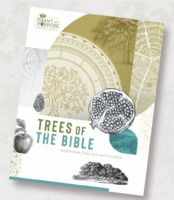
Trees of the Bible
"What does the Bible have to say about trees?
A lot, actually. In this guide, we explore nine trees of significance in Scripture to better understand the context of the passages and our relationship with the Creator (of trees and people)." -

At Catholic climate conference, Paris Agreement architect challenges US church to commit to net-zero emissions
National Catholic Reporter covered the Catholic Climate Conference for Earthbeat. The architect of the Paris Agreement challenged the US church to commit to net-zero emissions. -

Wholemakers
"We're thrilled to introduce Wholemakers, a groundbreaking resource for young adults focused on creation care and integral ecology. Developed for young adults, by young adults, this resource weaves together the latest climate science with insights from the Catholic tradition to equip young adults to be the faithful protagonists of transformation the world needs." -

The Black Church & the Environmental Age
This course, created by Green the Church, aims to help people learn about the relationship of Black Churches and their congregations with the environmental movement. It discusses environmental issues specific to Black communities and how Black Churches can be involved and mobilize around them. -

Climate Pastoral Care Course
"Faith communities are equipped with their own traditions and tools that can help us face the climate emergency. Learn more about the physical, emotional, mental health, and spiritual impacts of the climate crisis and how to address them through the practice of pastoral care in this new thirteen-module course." -
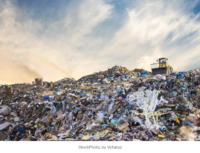
Stop getting your modest clothes from fast fashion brands
"The hijab and modest fashion are not immune from the global mainstream shift to fast fashion. Ironically, in light of celebrating diversity and inclusivity, fast fashion businesses have created new niches for underserved audiences, including the Muslim community. Often these businesses outsource production to Muslim majority countries in the Global South. Here garment workers are exploited for less than a living wage..." -
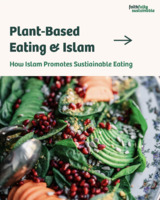
Plant-Based Eating & Islam
"As Muslims, when we look at plant-based eating it might be surprising to know that many of the currently popularized health, social and environmental benefits are founded in Islamic Principles. In this article, we will discuss plant-based eating with a focus on agricultural systems in the Western world, the general implications of this diet and how it relates to Islam. This article will only discuss the diet of plant-based eating, However, to learn more about veganism in relation to Islam read our previous two blogs of our series ‘Ethical and Sustainable Living in Islam’" -
UN Environment Programme Faith-Based Activities Compilation
"The World Environment Day is a UN day celebrated to promote awareness and inspire action. It has been celebrated since 1974. The event has grown to become a global platform for public outreach that is widely celebrated in over 100 countries...In the celebration of World Environment Day, 482 faith-based related activities were organized all around the world" -

Its promised land drying, Mormon Church works to save the Great Salt Lake
Due to overuse and climate change, the Great Salt Lake is drying and is estimated to disappear in about five years. In response to this, the Mormon Church of Jesus Christ of Latter Day Saints has started public conservation and water-saving efforts. This article describes these efforts and the role of the Great Salt Lake in the local environment and culture. -

"Tell the EPA"
This email was sent out on the Interfaith Power and Light newletter asking for support in limiting coal ash pollution. It asks readers to reach out to the EPA to advocate in favor of stricter guidelines for coal burning power plants to clean up the pollution that is produced. -
Indigenous Americans: Spirituality and Ecos
A brief article about the indigenous peoples' traditions and characteristics regarding their religions and religious beliefs and the connection to the environment. Author Jack D. Forbes goes over the "indigenous cosmic visions" and their "conception of creation as a living process, resulting in a living universe in which a kinship exists between all things". He goes through different entries and quotes of indigenous figures in the Americas and their thoughts and connection to land and religion. -

Environmental Stewardship In Columbus Catholic Schools
This article highlights environmental actions being taken by students at a variety of grade levels in Catholic schools in the Diocese of Columbus following the release of Pope Francis’s “Laudato Si’: On Care for Our Common Home,” in 2015. These actions include the creation of a greenhouse and gardens, city cleanup days, energy audits, and natural play areas for younger children. -

Catholics look to mindfulness practices to ground climate action, quell eco-anxiety
Eco-anxiety is a fear revolving around the awareness of the climate crisis and the loss of hope for solving environmental issues. Many Catholics have started practicing the role of mindfulness, which is rooted in Buddhist practices. Mindfulness is the act of being present and keeping oneself grounded. The news article discusses how mindfulness leads to an appreciation for the natural world and will push people to pursue ways to help the environmental crisis. -

Going Green at Camp
This article is written by Colleen Earp, a director at Camp Hanover, which aims to practice Environmental Ministry. Earp writes a bit about her own experiences growing up with camp and how they shaped her interest in environmental conservation. The piece discusses the importance of stewardship and a spiritual connection with creation. It also quotes the executive director Doug Walters, who explains the camp's modeling of environmental practices that are easy for campers to pick up and repeat once they have returned home.