
Search
1263 items
-
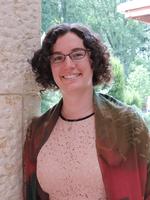
The Jewish Cantor Raises Up Themes of Thanksgiving
Before the Thanksgiving holiday fades entirely from memory, I wanted to share a thoughtful op-ed published in the Richmond Times-Dispatch by Rachel Rhodes, a Jewish leader in Virginia. The link below discusses her reflections on Jewish links to the natural world and good tidings from the mountains. -

The United Methodist Women: Be Just. Be Green.
Part of the mission for the United Methodist Women organization includes promoting economic and environmental stewardship and sustainability. Their national office has made climate justice one of its four social justice priorities. More specifically, they focus on how climate change impacts people in different ways, depending upon the geographic region where they reside.
The Women’s Carbon Fund is dedicated to carbon issues, focusing on aid to women and children, who make up 70% of the world’s poor according to unitedmethodistwomen.org. They aim to account for gender roles and to incorporate women’s voices because they believe policy makers fail to do so. This organization supports women-led projects that lower CO2 emissions, communities whose lives have been affected by climate change, and climate and energy advocacy initiatives led by women for women.
Their focus on environmental justice stems from their theological belief from the United Methodist Book of Discipline, “All creation is the Lord’s, and we are responsible for the ways in which we use and abuse it. Water, air, soil, minerals, energy resources, plants, animal life, and space are to be valued and conserved because they are God’s creation and not solely because they are useful to human beings. God has granted us stewardship of creation. We should meet these stewardship duties through acts of loving care and respect (Social Principles, 160).” -
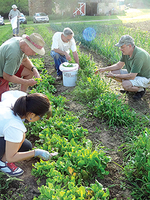
Living the Laudato Si'
Pope Francis encourages all people to take to heart what is written in the Laudato Si' encyclical. The Catholic Multicultural Center in Madison, Wisconsin has strived to live out the message of Laudato Si' even prior its release. This community seeks to live as stewards of the environment and care for their less fortunate neighbors. Some examples of how they are achieving their goals include installing solar panels to cut costs and reinvest the money in charitable programs and running a local food garden. Members of this community have also helped to install rain gardens and find innovative ways of serving their neighbors. These activities help to bring people closer together as well as care for the planet. -
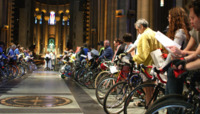
The Blessing of Bikes
In recent history, a new event has been occurring all over the world. In an attempt to generate environmental awareness, various congregations of different faiths have encouraged their members to commute to church via bicycle. This movement has often been stimulated by a blessing of bikes ceremony. Special services have been held in churches and temples all over the world to bless the bikes, keep the cyclists safe, and remember those who have died in accidents.
They are hosting a virtual blessing May 9th, 2020 during the COVID-19 Pandemic, details can be found on their website. -

Engaged Organizations: Caretakers of God’s Creation
Caretakers of God’s Creation is a grassroots community of the United Methodist Church General Board of Global Ministries. Part of their central belief is the scriptural and Wesleyan theology that the earth belongs to God, not us, and we are given the responsibility to be good stewards of it. The caretakers are on a mission to reveal God to others through creation and motivate people to act on behalf of environmental wholeness and justice. Their website shares more of who they are and what they’ve done.
The General Board of Global Ministries recently launched their new Earthkeeper Program (or brochure) where individuals can engage the movement to face ecological challenges in their congregations and communities. The caretakers share their stewardship stories and encourage others to share their story about protecting and caring for God’s creation. They also provide films, books, information about other faith-based environmental organizations and other resources about how to care for the earth on their website.
Caretakers of God’s Creation will be having their Annual Caring for God’s Creation Conference on April 28/29, which will be folded into the People’s Climate Movement March. -

Environmental Statement – United Methodist Church
The Bishops of the United Methodist Church released a statement entitled: God’s Renewed Creation: Call to Hope and Action. In this statement, they urge individuals to view themselves as a part of creation, and make the necessary adjustments to stop inflicting harming the environment. One salient message is that individuals should take on the roles of being stewards for the planet if there is any hope of redeeming earth from destruction. -

The Little Minyan Kehilah/Sukkat Shalom
The Little Minyan is a Reconstructionist/Jewish Renewal congregation located in the Clintonville neighborhood of Columbus, Ohio. In this article, Rabbi Jessica K. Shimberg, the congregation’s spiritual leader, discusses the recent name change to Sukkat Shalom. She offers that the congregation has grown to the extent that they chose a new name that does not include the word "little" in it. The congregation is heavily involved in community outreach and provides an outlet for community service and spirituality. It is committed to sharing resources to help the planet. -

Dharma Gaia
Dharma Gaia is an organization that aims to nurture awareness of the relation between Buddhism and ecology. They generate funds for Buddhist-inspired ecological projects in Asia and the developing world, motivate Buddhist communities to actively engage in the ecological challenges of the time, and publicize the efforts of engaged Buddhists working on environmental projects. -

Muslims and Water Conservation
The United Nations recognizes World Water Day on March 22. The Muslim community is taking this message to heart with discussions of water conservation. The following excerpt provides a brief summary of the Muslim khutbah with regard to the topic of water scarcity:
"The purpose of today’s khutbah is to remind us that the conservation of water and more broadly environmental consciousness should be an integral part of what it means to be a conscientious Muslim. An environmentally conscious Muslim is someone who lives in reverence and harmony with nature and uses water and all other natural resources frugally and sparingly." -

Earth Day Network
The Earth Day Network is an organization with a mission to diversify, educate, and activate the environmental movement. As they continue forward with their mission of building the world’s largest environmental movement, they recognize that faith leaders have been a driving force behind some of the most important social movements. They provide a plethora of resources to guide faith leaders and faith communities in their efforts of stewardship of the planet. -
Faith in Water
Faith in Water is an online resource that helps involve faith communities with water problems all over the world. Faith communities are excellent at creating support for the needs of the poor and people in need. Faith in Water is helping these faith communities focus their efforts on providing clean drinking water to people as well as information on sanitation or hygiene. -

How Can Church Members Increase Their Environmental Awareness?
Many churches and groups have started excellent initiatives to promote sustainability within their congregations. However, it does not need to stop there. Taking a look at your individual lifestyle can help further the impact you have on the environment. The BYU Religious Studies Center has an excerpt written by Danielle Montague-Judd, "How Can Church Members Increase Their Environmental Awareness?" that gives advice and tips to promote sustainability. -

The Importance of Forests to Faith
The Alliance of Religions and Conservation is working with faith communities all around the world to help them manage and preserve sacred forest lands. In almost every religions, trees have a powerful symbolic role. Partnering with churches will allow ARC to further promote conservation of trees and the rapidly disappearing forested lands on the earth. -

Water Shield
Water Shield is a program hosted by GreenFaith that helps congregations learn how to conserve water as well as maintain high water quality. This program promotes stewardship, and can help gain a community recognition for their efforts in the environmental awareness world. Water Shield is an eco-merit badge that is bestowed upon faith-based institutions that have taken steps to conserve water, protect water quality, and mobilize its members and community to do the same at home. -

Changing the Columbia River Treaty
Many groups, including faith communities, have called for a restructuring of the Columbia River Treaty. The original treaty was written in 1964, and has become outdated. The people calling for the change want the river to be valued for its ecosystem services that were not included in the original treaty. -

World Help Providing Water for Kirinda, Uganda
World Help, a Christian organization, is raising money to provide clean drinking water to the people of Kirinda, Uganda. They are attempting to fund three major projects, a water well, piping, and irrigation. The lack of clean sources of water for the people who live here is causing diseases and additional hardships. -

A Sermon for World Water Day
Susan Barnett, founder of Faiths for Safe Water, brings attention to World Water Day by highlighting award-winning filmmaker and photographer, Haik Kocharian. Haik recently releasing, “Blessed by Water,” showing rare images of water in tradition, ceremony and spirituality as celebrated by the Christian Orthodox community in Ethiopia. Susan continues to discuss the concerns of clean water worldwide: 663 million men, women and children are forced to drink low quality water; and one third of the world's population don’t even have the dignity and safety of toilets. The article concludes by encouraging church leaders to use their collective voices to advocate for increased access to safe water and sanitation in order to improve global health, nutrition, poverty, gender equality, food security, human security, and peace. -

World Water Day Synopsis
The United Nations and the global community in general recognize World Water Day as a reminder that much of the world faces a global water, sanitation and hygiene crisis. 663 million people—comprising mostly the poorest and most marginalized in the world—live without access to safe drinking water. In addition 2.4 billion people lack access to improved sanitation. The article suggests various ways that individuals can contribute to improving the water conditions in these areas. -

Christians and Endangered Species
Throughout time, it has often been difficult to reconcile concepts from both biology and theology. This article focuses on the critical impact of endangered species with regard to various Christian religions. Citing biblical text, especially the story of Noah’s Ark, many religions have deemed the preserving and caring for all living creatures to be of utmost importance. -

Sustainable Weddings in Columbus
Weddings are typically large events to celebrate the union of two people. Regardless of how beautiful the celebration is, weddings can still generate a lot of waste. In fact, the average wedding can generate 500 pounds of trash. Recently, there has been a movement to have local sustainable weddings that cut environmental impacts significantly. -

Laudato Si’ in Columbus: Bishop Campbell Regales OSU Students with Historical Overview of Catholic Tradition
Bishop Campbell spoke to OSU students about Laudato Si', specifically regarding how Catholic tradition develops the context for it.
"Bishop Campbell highlighted four themes in his talk, including how Catholicism has considered nature for 2,000 years, a Catholic imagination of nature, historical trends of alienation from nature in the Western world, and a discussion of how sin – light and shadow of the world together – plays a role in our ecological situation."
Please click on the link below to view the entire article. -
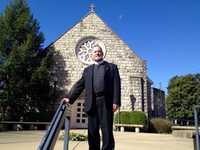
Anamchara Faith Community Celebrates Earth Day 2016
This year, the Anamchara Faith Community will be providing an Earth Day celebration in the woods at Bernheim Forest in Bullitt County, Kentucky. The service will include biblical passages that give honor to the importance of trees, with the plan to plant at least one during this time. This service will draw from different faiths and cultures, ranging from the Catholic faith to Native American customs and traditions. -
Iowa Interfaith Leaders and Earth Day 2016
A group of religious leaders met at the Iowa statehouse today to discuss a call for action on climate change. The event was organized by Reverend Susan Hendershot Guy, the executive director of Iowa Interfaith Power and Light. Regardless of the political debate between the two parties regarding climate change, Gerald Sorokin of the University of Iowa Hillel Foundation said he and the other faith leaders at the capitol that day can find some consensus on the issue. -

Surpassing Political Parties
Environmental issues have increasingly become a partisan problem. However, faith groups are trying to build bridges by advocating that environmental issues not only affect the planet, but all humans as well. They offer that environmental protection and economic prosperity can go hand in hand if political parties attempt to work in harmony. -

Trees for the Earth
The Catholic community is joining with the Earth Day Network to help reach the goal of planting 7.8 billion trees by 2020. This would equate to one tree per person on earth. Pope Francis's recent encyclical, Laudato Si, focuses on the importance of trees and their benefits to the environment as well as human kind.