
Search
1263 items
-

Religion and Environment Songs: Mitakuye Oyasin by Nahko and Medicine for the People
Mitakuye Oyasin is a song by Nahko and Medicine for the People that relates to spirituality and nature. The phrase comes from the Lakota language and reflects the world view of interconnections held by the Lakota people of North America. The English translation is “we are all related.” The song lyrics start with being thankful for receiving great wisdom so that we as people can help all living things. The subsequent lyrics describe being thankful for all that we have been provided. -

A Hymn for Hurrican Relief
This article was written to showcase the hymn that was a tribute to prayers for the damage from the recent severe storms in Texas, Louisiana, Nepal, India, Bangladesh, the Caribbean, Florida, Georgia, and South Carolina. In addition to comforting those impacted by the storms, the hymn also serves as a message for government leaders to work for policies that help to counter climate change. -

6 Ways to Green Your Holiday
6 Ways to Green Your Holiday is a graphic made by the Sierra Club. It gives 6 easy ways make Christmas traditions more sustainable. To view the image, click below or *download* -
Care for Creation Check List
This Care for Creation Check List is a conversation created by the nonprofit organization New Community Project. The Care for Creation Check List is meant to be read between two people or performed as a skit. One person reads the Genesis creation account while another person uses the list to gauge how other species are doing during the Age of Humans. -

Creation Care Hack: Train Yourself to use Reusable Shopping Bags
Creation Care Hack: Train Yourself to use Reusable Shopping Bag is a post from Evangelical Environmental Network MOMS. The article discusses how using a reusable shopping bag is only easy if you make it a habit, which can be difficult. It then gives a few tips on how to make this sustainable practice a habit. The article also has a graphic on how plastic bags are killing the planet, which can be found below. The author finishes by saying, “If the 70% of Americans who identify as Christians practiced using less disposable plastic bags what a witness and difference that could make.” See additional attached media for an infographic (.jpg) for visual information on plastic bag use. -

Faith in Place
Faith in Place is an Illinois based organization that empowers people of all faiths to be leaders in caring for the Earth. They strive to make their programs diverse and relevant to faithful people of any religion, race, age, and socio-economic class. They design their programs to be adaptable and engaging so that they can inspire action in as many people as possible. To read more about their work, click below -
The Regeneration Project
The Regeneration Project was created as the parent project of Interfaith Power&Light. It is meant to help deepen the connection between ecology and faith and to help people of faith recognize and fulfill their responsibility for the stewardship of creation. They do so through educational programs for clergy and congregations -
When Mother Calls
When Mother Calls is a 20-minute skit from New Community Project, a nonprofit organization that focuses on community care, peace, and justice. The skit portrays a trial in which earth’s creatures testify about human impacts on the environment. The prevailing theme is the call to respect and nurture the earth. The skit can be easily adapted for performance in congregations, youth camps, retreats, or other church or youth events. -

Wade in the Water
Wade in the Water is a worship resource from the New Community Project. It calls for the stewardship of water and is a 20 minute worship service, including a hymn, about water as a precious resource. To read or download Wade in the Water, see below. -

Environment and Islam
Climate Change: A Call for Personal Changes is an article about the Islamic faith and the environment. The author, Imam Shabir Ally, discusses conservation, the sanctity of planting trees, the equilibrium of all life, man’s purpose, and a call for change. He pulls quotes directly from the Quran and explains their relationship to creation. -

12 Days of Christmas Recycling
12 Days of Christmas Recycling is an article from Evangelical Environmental Network about all the “stuff” that accumulates over Christmas. December is the highest month for landfill deposits with household waste increasing by 25% between Thanksgiving and Christmas. An average of 30 million Christmas Trees will end up in landfills and 4 million tons of wrapping paper and gift bags will be used. The article gives 12 ways to “reduce the overuse” and to move the focus of Christmas back to the birth of Jesus. -

Skits & Readings - Creative Arts and Educational Resources
Worship resources on the themes of justice, peace, and care for creation curated by the New Community Project. This is a list of activities to engage and educate students on christian and sustainability teachings. -

Fasting for Climate Justice
Fasting for Climate Justice is a resource from Global Catholic Climate Movement (GCCM ) on the practice of fasting for climate action through two initiatives: meatless Fridays and monthly fasting. The GCCM encourages abstinence from meat on Fridays as a way to reduce one’s negative impact on global climate change. The GCCM also promotes fasting for the climate which takes place the first day of each month. -

Homily Help
Homily Helps is a resource from Catholic Climate Covenant that offers resources that help to integrate the insights of Laudato Si’ and caring for creation into Sunday mass. It includes highlights from the Scripture, relevant quotations from Laudato Si’, sample applications, and more. -

Start 2018 by Speaking Up for God’s Creation
Young Evangelicals for Climate Action posted an article on how to speak up for God’s creation. The article focuses on The Clean Power Plan and how to effectively speak up to stop the repeal and replace of the plan. -

Tu' B'Shvat: The Green of Judaism
Tu B’Shvat: The Greening of Judaism is a handout from Interfaith Family. It offers a brief overview of Tu B’Shvat and different activities to celebrate the holiday. It also offers examples of how to be caretakers of the earth. To read the entire handout, click below. -

Tu B’Shvat Seder Leader’s Guide
Hazon has created a handout on Tu B’Shvat and how to properly celebrate the holiday. The guide offers a history of Tu B’Shvat, activities, songs, and more. The program is meant to aid people in celebration of the holiday by giving them important information and history. -

Quotes on the Preservation of Israel’s Environment
The Green Zionist Alliance has created an article of quotes that focus on Israel’s environment. All of the quotes come from a variety of speakers and from several points in time. All of the quotes were compiled to raise awareness for environmental justice. -

The Green Zionist Alliance
The Green Zionist Alliance offers a place for all people who care about humanity’s responsibility to preserve the Earth, specifically the Jewish peoples responsibility to preserve the ecology of Israel. They work to educate and mobilize people around the world for Israel’s environment and to improve environmental practices by working for positive change in all people. -

Tu B’Shvat: Trees’ ReBirth Day
The Jewish festival of Tu B’Shvat, also known as the New Year for Trees, celebrates the ReBirthDay of earthly trees and of the sacred and supernal Tree of Life. The celebration begins on January 30th and ends January 31st. It is celebrated with a Seder in which the menu is the fruits and nuts that are given by the trees. As a special aspect of their climate-crisis work, The Shalom Center is inviting people to create a special Trees of Life Fund for reforestation in the US. -

A Buddhist Perspective on the Eco-Crisis from David Loy
This short video consists of David Loy discussing the Buddhist perspective on the Eco-crisis. He begins by describing anata, the belief that all things are constantly changing and there can be no such thing as a permanent self. He then talks about dukkha, which is the idea that human experience is short-lived and suffering results from excessive desire. These ideas come together to describe the Buddhist idea that there is no “self.” Loy maintains that, “our sense of self is usually haunted by a sense of lack.” This sense of lack and false sense of “self,” create issues for people that can be related to consumerism, the Eco-crisis, and more. -
The Worship of Nature
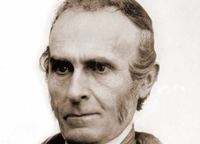
The Worship of Nature is a poem by John Greenleaf Whittier published in 1867. The poem describes nature and forests as a holy place and Whittier makes a comparison to it being an altar. He describes the winds as hymns of praise and the blue sky as the temples arch. -

Sikh Statement on Climate Change
EcoSikh has created the groundwork for a Sikh environmental theological foundation, and the inspiration to connect Gurbani (hymns in the central text of the Sikhs) to the state of the environment today. This is the first of its kind from the Sikh community and it outlines new actions Sikhs can take to strengthen their connection to their faith through environmentalism. The following quote is an excerpt from the statement:
“You, Yourself created the Universe, and You are pleased…You, Yourself the bumblebee, flower, fruit and the tree. You, Yourself the water, desert, ocean and the pond. You, Yourself are the big fish, tortoise and the Cause of causes.” -

Evangelical Environmental Network: Trump Budget would harm National Parks and the Protection of God’s Other Creatures
The president of the Evangelical Environmental Network, Rev. Mitch Hescox, made a statement saying that the budget proposed by the Trump administration is a “devils bargain,” which would harm national parks and the protection of God’s creatures.
“The Trump Administration’s budget, if implemented, would be an abdication of our stewardship of our public lands, which are entrusted to each generation to pass on to their children.” -

Becoming a CreatureKind Institution
“Having compassion for others begs the question of who ‘the others’ are. The animals whom we farm are sentient beings and individuals in their own right, even when they are crowded together in barren cages or windowless sheds. They are surely – in their billions – ‘others’ who deserve and desperately need our compassion. I wish CreatureKind great influence in bringing compassion to these fellow-beings of ours.”
– Joyce D’Silva, Ambassador Emeritus,
Compassion in World Farming
CreatureKind is a Christian animal welfare group that works to help institutions improve their practice as it impacts farmed animals, with benefits for humans, animals, and the environment. Becoming a CreatureKind institution means committing to a cycle of reviewing current sourcing, setting goals for improved practice, and acting on them, together with engaging your community about the program. The program have two major goals: reduce consumption of animal products and obtain remaining animal products from higher welfare.