
Search
1263 items
-
Let’s Talk Faith and Climate: Communication Guidance for Faith Leaders
Let’s Talk Faith and Climate: Communication Guidance for Faith Leaders is a webinar designed to present findings and explanations on climate action as a moral imperative. Their website includes tools to assist in making an impact and success stories. It also includes a guide to deepen engagement on climate action. -

Creation Justice Ministries Downloadable Resources
Creation Justice Ministries offers downloadable resources to help educate on faith and climate change. They have resources on climate and energy, Earth Day, environmental health, and land & water stewardship. There is also a free download on how to build a creation friendly church. -
Season of Creation
The Season of Creation is an optional season for the church year. For the most part, the seasons of the church follow Advent, Christmas, Epiphany, Lent, and Easter and the remainder of the year encompasses Pentecost Season. The Season of Creation, also known as “Creation Time,” can be celebrated at different points in the church year. The purpose is to help turn the attention of religious followers to their relationship with God and all of creation and to strengthen the relationship with God through his creation. -
Engaged Organizations: Jewish Food Movement: Hazon
Hazon, which means vision, is an organization that works to create a healthier and more sustainable Jewish community. They do so through three effective changes: transformative experiences, thought-leadership, and capacity building. They are all intensive multi-day retreats or workshops that encourage people to make a difference in the world, and in the process enable them to renew their Jewish journeys. -

Engaged Organizations: National Religious Coalition on Creation Care
The National Religious Coalition on Creation Care is an organization that strives to meet four main goals: to hold conversations about the human responsibility to God and his creation, to provide a moral test for whether or not an action is right before God, to establish an easily communicated religious and spiritual basis for a just society, and to reveal a vision on how society must transform its attitude and become one with the ecosystem of the planet. They represent an array of religious denominations that are all united in certain principles concerning human responsibility toward God’s Creation. Their website includes resources for all lifestyles and perspectives that one may be searching for. -
Engaged Organizations: Blessed Earth
Blessed Earth is an organization that inspires faithful stewardship of all creation. They believe that the Bible is the Word of God and holds wisdom for today and are motivated by the biblical mandate to care for God’s creation. They work on promoting actions that encourage responsible stewardship of resources, and they believe in building bridges within and beyond the church that serve the Kingdom and glorify God. They offer and promote educational materials, resources, events, and a monthly newsletter for creation care stories, tools, and links on their website. -

Sojourners Magazine: Creation Care
Sojourners is a magazine that covers the intersection of faith, politics, and culture. They focus on social justice, life and peace, and environmental stewardship. Their topic of creation care encompasses stories on the ecological disruptions that affect the poor and vulnerable more than others. They strive to tell the stories of those who are most affected and keep the public updated on policy changes and sustainability advancements. -
Engaged Organizations: Food, Faith, and Farming
Food, Faith, and Farming, previously known as Churches’ Center for Land and People, uses an interfaith collaboration approach to integrate earth stewardship, economic justice, community and spirituality around issues related to agriculture and food. They aim to strengthen rural life and the connection between farmers, their land, and their communities. They do so by offering a prayerful and spiritual perspective in rural communities, raising awareness of rural spirituality in our culture, and providing resources for those in church life and beyond. -
Just Transition: Shrinking our Carbon Footprint While Leaving No One Behind
Just Transition: Shrinking our Carbon Footprint While Leaving No One Behind is a webinar offered by the Catholic Climate Covenant. It focuses on how the poor feels the greatest impacts and consequences of climate change, how to address the challenge of switching from a fossil-fuels based economy to a clean energy economy, and what Catholic social teachings have to say about a transition to a clean energy economy. -

Engaged Organizations: United Religions Initiative
The United Religions Initiative is a coalition with the purpose of promoting interfaith cooperation, to end religiously motivated violence, and to create cultures of peace and healing for the Earth and all living beings. Their program specific to solving ecological programs is called Cooperation Circles and it focuses on fixing these issues through cooperation instead of violence. Some of their work has included installing solar panels on the roofs of houses of worship, reforestation and native species planting, climate change awareness campaigns, and many more environmentally friendly campaigns. -
Engaged Organization: Alliance of Religions and Conservation
Founded in 1995 and closed in June of 2019, the Alliance of Religions and Conservation worked with multiple faith communities worldwide. They believed that religious organizations have an immense influence on social, educational, political, and cultural issues around the world. This influence makes these organizations one of the most powerful in social changes in society. Therefore, the Alliance of Religions and Conservation worked with religious organizations to care for the environment and use their own unique relationships with the natural world to do so. The work of ARC is carried on by a number of other organizations. -

The Poverty of Global Climate Change
Interfaith Power & Light offers The Poverty of Global Climate Change, a National Council of Churches Eco Justice resource on the impacts of climate change, especially on the poor and vulnerable population. This document states background information on climate change, how humans make it worse with our daily habits, and how to start on the path to making it right. It also offers sermon starters and other resources to help teach the relation between faith and the environment. -
Engaged Organizations: Carbon Covenant
The Carbon Covenant, a program of Interfaith Power & Light, supports faith communities directly addressing the problem of carbon emissions and deforestation. They currently have programs in Cambodia, Cameroon, Ghana, and Tanzania that work with small villages in these areas to reduce illegal logging. In Ghana, the program is known as Trees& Eco-Clubs that supports Presbyterian youth programs by teaching them about trees and deforestation. In Tanzania, the program is known as Trees of Kilimanjaro and they are supported by the Lutheran church and work to plant trees near Mt. Kilimanjaro. In Cameroon, the program focuses on establishing interfaith collaboration between Christians and Muslims to plant trees and is knows as Interfaith Collaboration. The last project is known as Monk Patrol in Cambodia and helps Buddhist eco-monks in their daily work to stop illegal deforestation. -
Presbyterian Church adds Caring for Creation to Constitution
On June 25, 2017, the amendments added to the constitution of the Presbyterian Church will go into effect. Included in these provisions is the addition of caring for God’s creation as a responsibility for all church members. The amendment received the needed 86 affirmative votes for ratification. -

Event: Family Fun for a Clean Planet
The youth at First Presbyterian Church in Delaware are celebrating Earth Day on Sunday, April 23 from 11:30-2:00 at Blue Limestone Park with games nature walks and recycled artwork. -
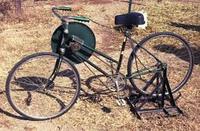
Enagaged Orginazation: Technology for the Poor
Technology for the Poor is a non-profit, charitable organization started by the current president, Dr. Job Ebenezer. Based on the philosophy of George Washington Carver, their work strives to serve communities by providing them with sustainable technologies. These sustainable technologies include human powered energy systems, urban agriculture, and sustainable building technologies. Specific examples of their work includes a dual-purpose bicycle, wind energy generators, low-cost construction techniques, and container gardening. Dr. Ebenezer’s container gardens have made it much easier for urban buildings, such as churches and community buildings, to have their own gardens. -

Urban Agriculture and Container Gardens
Technology For the Poor is a non-profit organization started by Dr. Job Ebenezer. Their mission is to develop, innovate, and disseminate sustainable technologies to the poor all over the world. While Dr. Ebenezer has designed and implemented many different sustainable practices, one of the most notable is his work with urban agriculture and gardens. Using inexpensive containers and suitable soil mix, he has created container gardens in urban areas such as rooftops and unused parking lots in places such as Chicago and Washington D.C. Locally, he has created these gardens at Ascension Lutheran Church, Faith Mission Men’s Shelter, and a soup kitchen in Franklin. -

Crown Point Ecology Center
Crown Point is an ecology center in Bath, Ohio. Their mission is to demonstrate the applications of ecology and connect them to spirituality, social justice, and environmental protection. They work to be a role model for food security and sustainable land use through farm stewardship, advocacy, and education. Their goals and mission are achieved by integrating their four core values into everyday life. Their four core values include community, justice, spirituality, and sustainability. -

Profile: Nigel Savage
Nigel Savage, originally from Manchester, England, founded Hazon in 2000, with a Cross-USA Jewish Environmental Bike Ride. Since then, Hazon has grown the range and impact of its work in each successive year; today it has more than 60 staff, based in New York City, at Hazon’s Isabella Freedman campus, and in other locations across the country. Hazon plays a unique role in renewing American Jewish life and creating a healthier and more sustainable world for all.
Hazon is one of a tiny handful of groups to have been in the Slingshot 50 every year since inception, and in 2008, Hazon was recognized by the Sierra Club as one of 50 leading faith-based environmental organizations.
Nigel has spoken, taught, or written for a wide and significant range of audiences. He has twice been named a member of the Forward 50, the annual list of the 50 most influential Jewish people in the United States, and is a recipient of the Bernard Reisman Award. He has given Commencement speeches at Wagner (NYU, in 2011) and at Hornstein (Brandeis, in 2014). In 2015 he was awarded an honorary doctorate by the Jewish Theological Seminary.
Before founding Hazon, Nigel was a professional fund manager in London, where he worked for NM Rothschild and was co-head of UK Equities at Govett. He has an MA in History from Georgetown, and has learned at Pardes, Yakar, and the Hebrew University. He was a founder of Limmud NY, and serves on the board of Romemu.
Nigel executive produced the British independent movies Solitaire For 2 and Stiff Upper Lips and had an acclaimed cameo appearance in the cult Anglo-Jewish comic movie, Leon The Pig Farmer. He is believed to be the first English Jew to have cycled across South Dakota on a recumbent bike. -

Evangelical Lutheran Church in America Downloadable Resource
The Evangelic Lutheran Church in America offers downloadable resources to help encourage others to care for creation. The resources include Hunger & Climate Change, Awakening to God’s Call to Earthkeeping, Poverty and Hunger in a Changing Climate, and more. -
School of Sustainable Faith
Sustainable Faith is a collective of spiritual directors and pastors working to create a spiritually healthy culture among leaders and communities. They aim to guide people in honoring the Sabbath and living a healthy, embodied spiritual life. They have established schools in twenty-four American cities and the Netherlands. They also work to place qualified spiritual directors in local churches and grow the practice of group spiritual direction in churches. -

Environmental Statement: Evangelical Lutheran Church in America
Caring for Creation: Vision, Hope and Justice is a social statement that explains the Evangelical Lutheran Church in America’s (ELCA) teachings on ecology and the environment, grounded in a biblical vision of Gods intention for the healing and wholeness of creation. This statement provides a Christian understanding of the human role to serve in creation. The ELCA believes in caring for creation through active participation, solidarity, sufficiency, and sustainability. -

Engaged Organization: Evangelical Lutheran Church in America World Hunger
The Evangelical Lutheran Church in America World Hunger is an initiative with domestic and international Lutheran churches to reach communities in need. They recognize the universal human right to food and work to provide immediate relief to those who are hungry. They strive to not only give food, but to connect people with the resources they need to produce food and gain access to clean water, education, health-care and sources of income. -
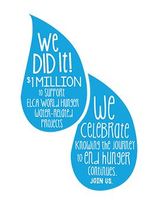
Walk for Water
In 2015, The Evangelical Lutheran Church in America Word Hunger held Walk for Water which was a youth-led fundraiser challenge to raise 500,000 dollars for water projects around the world. They exceeded their goal and raised one million dollars to support water related projects. Their website offers facts and tool kits to help others start their own walk for water. -

Engaged Organization: Lutheran Disaster Response
Lutheran Disaster Response brings God’s hope, healing, and renewal to people whose lives have been disrupted by disasters in the United States and around the world. They strive to provide emotional and spiritual support, coordinate volunteers through their local affiliates, assist refugees in a holistic way, and provide long-term recovery efforts. They are currently assisting with the drought in Africa, flooding in West Virginia, refugee crisis in the Middle East, and more.