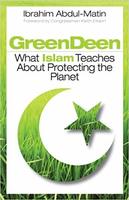
Written by Ibrahim Abdul-Matin, this book goes into the Islamic Faith’s connection with the environment. It discusses Islamic followers’ responsibility to the earth as stewards, as well as some of the ways that Muslim communities are taking action.
A research study was conducted on how faith communities view environmental degradation in Northeast Nigeria. 18 congregations throughout the states in the area were interviewed to see how they view these issues. Almost all said that they environmental degradation as an issue, and source the blame to human activity. The human activities that are to be blamed range from corrupt politics to a lack of social responsibility. However, they all agree that through spirituality, these problems can be overcome.
Sustainable fishing has been a huge topic for the past decades. One man, Neville Palmer, makes nets that are specifically designed to capture prawns without harming other aquatic life such as sea turtles or tuna. Making nets that specifically capture prawn can help to restore ecological balance to the food chain, while still having a sustainable food source for a Good Friday meal.
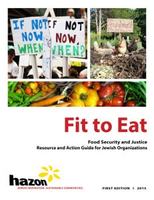
Hazon has recently released a guide to help Jewish Communities come together to more effectively fight food shortages. This guide shows how a better food system can be made to benefit everyone.
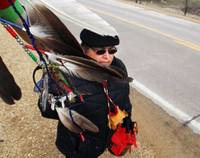
Sharon Day, a member and leader in the Ojibwe community, has started a movement to raise awareness for the water issues in the United States. She, as well as anyone who wants to join, are walking hundreds of miles on the banks of the Minnesota River. As they walk, they are praying to and for the water.
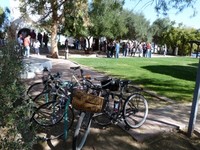
When it comes to meeting for a religious service or ceremony, some people are beginning to switch their mode of transportation to a more sustainable option. More and more people are switching to riding their bikes to their respective houses of worship, as they feel that this is more in line with what their faith teaches.
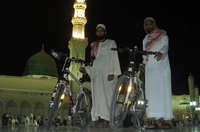
Two South African men, Haron and Cairncross, went on a typical pilgrimage in an untypical way. These young Muslim men road bicycles all the way from South Africa to the holy city Mecca. Not only was this physically invigorating, but it was spiritually rewarding as well. This was also an extremely sustainable way to travel.
The Jewish ways teach members of its community to care for the earth and all of God’s creations. With so many species becoming endangered, the Jewish faith has made cited scripture to show that all animals are to be valued.
Indonesian religious leaders have released a statement confirming that killing endangered species is no allowed in their faith. Most people have already agreed to this concept, but this push from religious leaders will have an effect on farmers and fishermen who don’t always care about whether or not they kill endangered species.
Tu B’Shevat is the Jewish Arbor Day. Students of Temple Emanuel of the Pascack Valley Religious School have recently prepared for and decorated the building to get ready for the holiday.
Buddhists have many beliefs when it comes to the environment. They believe that man and nature need to coexist, and that nature is neither good nor evil. Buddhists have a respect for all life, and therefore they value everything in nature.
Green Muslims is a resource for the Muslim community. It hopes to teach people about the environment and how to care for it. It also hopes to reach out and connect different people in a common cause of environmental stewardship.
Every religion has its own special rules and considerations on food. Each religious teaching also addresses the idea that people should share with their neighbors and eat healthy and moderate amounts of food. The difficulty now lies in connecting today’s food shortages with these teachings.
Fracking is, and has been, a highly controversial and political issue. Various religious leaders of many different faiths have come out within the past few years to advocate against the use of this practice. Most, if not all, are citing the need in their religious text to preserve and care for the earth. They are all getting very involved in their communities, which range from New York to Colorado.
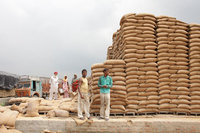
Many farmers from Punjab, India are beginning to speak out against the high levels of pesticide use that are occurring in the area. These farmers feel guilty because they are donating these chemical laden crops to the poor as part of a religious custom. They are pushing for a reform to go back to producing crops organically.
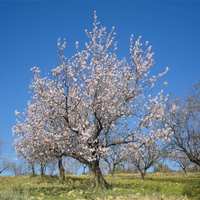
As Arbor Day approaches, it is interesting to look at how trees are used symbolically in different religions. For example, trees are mentioned many times in the various religious teachings in the bible.
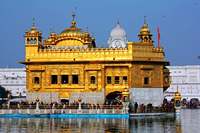
The level of air pollution India, where the Golden Temple stands, has risen to extreme levels over the past years. The pollution is dulling the golden walls, as well as causing huge health impacts on the Indian people who live there. To combat this, the government is beginning to regulate fossil fuel use as well as change various environmental standards throughout the area.
Sacred Earth is a resource that was created by the World Wildlife Foundation. It helps teach and inspire faith communities to take proper care of their resources, especially the ones hold special importance to their specific faith.
Pope Francis attended World Youth Day in Rio de Janeiro in 2013. While there, he addressed the issues that the people there face in preserving the rainforest and the need to act as stewards of the environment. He spoke to the youth and encouraged them to become active in preserving the environment and carrying out holy missions.
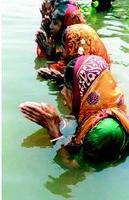
Water is an important element in all religions. Whether you look at the Muslim faith, Christianity, or the beliefs of American Indians, water has constantly played an important role in purification and creation. Because of its high importance to all religions, as well as its necessity to sustain human life, it is essential that water is conserved and used in a sustainable way.
Almost all religions share some common roots and bonds. A program called Teaching and Learning For a Sustainable Future is helping to show people how faith can be used to promote and advocate for sustainable living by living within religious teachings.
Religion has been used for both the preservation and the destruction of the environment. On one hand, most religions teach stewardship and care for all of creation. On the other hand, with the prospect of the world ending, people are less inclined to take care of something that may not exist in the future. This is why it is important to educate people on the importance of studying sustainability. One program that has done an excellent job of this is a course offered at Cornell.
When groups share a common cause, they can see past their differences to work towards a goal. This is what has been happening recently when it comes to conservatives and liberals. These two groups are bonding over caring for the earth in their own ways.
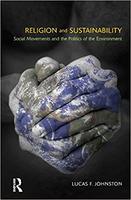
Religion and Sustainability: Social Movements and the Politics of the Environment by Lucas F. Johnston has been heralded as an invaluable resource on the movement in religions to focus on environmental care. It takes a look at the similarities and differences that various religions have with each other when it comes to stewardship, as well as the social and political implications behind them.