
Search
1263 items
-

Columbus Catholic School becomes Designated GreenSpot School
The GreenSpot School designation indicates that a school has taken initiatives to educate their students and staff about sustainability, water issues, conserving energy, reducing waste, and green transportation. St. Mary School Catholic school has become the first in Columbus to earn this designation. They have implemented a recycling program, local garden, and composting, which qualified them to become a GreenSpot School. They have created a short video of students discussing their engagement and staff discussing the impact of becoming a GreenSpot School. -
Columbus bonds with Ghana sister city through agriculture project
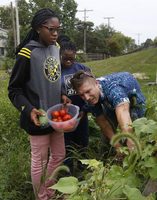
Roman Catholic Cardinal Peter Turkson spoke at Mershon Auditorium at The Ohio State University in 2015. The proceeds from his talk with OSU President Michael Drake were used as matching funds in a grant from the Initiative for Food and Agricultural Transformation (InFACT) discovery theme program. The proceeds funded an agricultural exchange between Accra, Ghana, and Columbus, Ohio. -

Learn More about Climate Change in Ohio
This article from The Columbus Dispatch discusses the facts pointing towards climate change specifically in Columbus. It also offers scientific hypotheses of what will happen in Columbus in the future if our temperatures continue to rise and the climate continues to change at the current rate. -
God’s Creation, Our Common Home
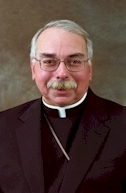
The Bishop of Columbus, Bishop Campbell, will be presenting a series of speeches this March titled God’s Creation, Our Common Home. He will reflect on the encyclical, Laudato Si, which speaks of the relationship with God through creation. He will speak about social, environmental, and moral issues facing all creatures of God. He will also discuss the suffering caused by the opiate addiction crisis. -
Dr. Greg Hitzhusen
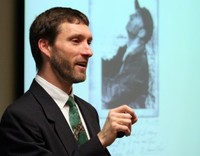
Greg Hitzhusen is an Assistant Professor of Professional Practice of Religion, Ecology and Sustainability in the School of Environment and Natural Resources at The Ohio State University (OSU); he was the founding Director and then Board Chair of Ohio Interfaith Power and Light. His work and research center on the intersection of faith and the environment and on developing partnerships between scientific and faith communities; his teaching focuses on religion and ecology, environmental communications, and community sustainability projects. He sits on the Sustainability Education and Learning Committee and is a former member of the President and Provost’s Council on Sustainability at OSU; he serves as Faculty Fellow for the Environment and Natural Resources Scholars program, advises Students for a Sustainable Campus and the Au Sable Graduate Fellows chapter at OSU, and is a member of the faculty steering committee for the Center for Ethics and Human Values. His students’ research on sustainability projects at Ohio State has helped to establish the Campus as a Living Laboratory project and digital archive, and he is currently completing an online textbook titled: Religion and Environmental Values in America (forthcoming, 2019). Dr. Hitzhusen completed his B.S. at Cornell University (biological sciences/ecology, with honors), his MDiv (eco-theology focus, cum laude) at Yale Divinity School while jointly studying at the Yale School of Forestry & Environmental Studies, and his PhD at Cornell focusing on environmental education and ethics in North American faith communities. He has previously worked for the National Wildlife Federation, the National Religious Partnership for the Environment, and the National Council of Churches Eco-Justice Programs. He is past Vice-Chair of the Environmental Justice Section of the Ecological Society of America, where he coordinated the Scientists Speakers Bureau for Earth Stewardship Outreach to Faith Communities. He lives with his wife, Erica, and two sons in Worthington, Ohio. -

The Necessity of Environmental Concern
A group of 20 Muslim youths worked to clean up an area in Columbus as a community service event. The event helped one Columbus-area Muslim leader realize that demonstrating concern for the environment is not a luxury, but a necessity. Many people prioritize a number of worldly things ahead of environmental care. Increasingly, faith groups are demonstrating that environmental concern and care needs urgent attention throughout the world. -

The Ministerium of Ideas
The Ministerium of Ideas is an interfaith group of church leaders from various churches around Columbus. These leaders gather to discuss ideas and intellectual thought, with a focus on religion, environmental topics, and philosophy. If you are interested in learning more about the group and how you can become involved, they will be hostin a meeting on climate change on Tuesday, April 19th from Noon – 1:30 at the Newman Center. -
Giving Back to the Community on Earth Day 2016
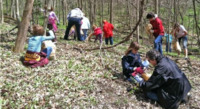
This year on April 22 for Earth Day, many organizations are working in conjunction with Metro Parks Officials to clean up five parks within the Columbus area. Leaders hope to encourage involvement of congregations within local communities. A day of services can be a great teaching moment as well as an opportunity to give back. -

January 11 EPN Breakfast to Feature Home Energy Savings Information and Resources
January’s Environmental Professionals Network (EPN) breakfast will highlight climate change and opportunities to save energy in your home. Professor Lonnie Thompson of OSU’s Byrd Polar and Climate Research Center will deliver a keynote talk, followed by several speakers offering assistance, examples and resources to help empower energy savings in your home, including:
Megan Melby, Columbia Gas of Ohio
Dr. Neocles Leontis, BGSU Professor of Chemistry, and member of Peace Lutheran Church in Bowling Green, OH
Eric Romich, OSU Asst. Professor and Extension Field Specialist, Energize Ohio Signature Program -
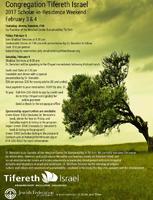
Congregation Tifereth Israel
What: Congregation Tifereth Israel 2017 Scholar-in-Residence Weekend. Congregation Tefereth Israel will be sharing Judaism and Environmentalism/Sustainability this weekend.
Where: 1354 E Broad St, Columbus, OH 43205, USA
When: February 3rd, 5:30pm – 9:30pm & February 4th, 9:30am – 9:30pm -

Caring for Creation Using LED Lights
Since the release of Laudato si’, many Catholic churches have made caring for creation a priority. About a year ago, the Catholic Diocese of Columbus started The Creation Care Team to help in their task of caring for creation. Their main role is to promote the church’s teachings on care for creation and in particular how it was articulated in Laudato si’. They assemble groups of people with specific initiatives who work on spreading awareness, educating, and developing practical ways for Catholics to live. While their work has impacts that spread far and wide, one distinct person who has made a difference is Bruce Boylan, the Director of Facilities for the Catholic Diocese of Columbus.
Around a year ago, Bruce and his team started looking for ways to help Catholic schools in the area reduce their energy costs. They came upon the idea of LED lights and obtained a few samples that were first tried in the cafeteria of St. Mary’s church. An example of the difference between a normal fluorescent bulb and an LED bulb can be seen below. They found that there was a significant improvement in lighting and cost, but the payback time took about nine months. The problem was in that nine months; if a parish or school did not have the money to invest right away, then nine months was too long to wait for saving money. Along with the payback time being delayed, the price of the LED bulbs were about sixteen dollars apiece and they were difficult to install. All these problems were holding them back, until they found a local realtor.
Late last year, they found a local realtor who was selling LED bulbs for six dollars apiece and they were much easier to install. With this new price, the payback time was reduced from nine months to only three and a half months. With this lower price and easier installation, these bulbs caused a 73% reduction in an energy bill for lights after just three and a half months. The math done to calculate these figures can be seen below. Now, the idea of LED lights became much more plausible for everyone.
Bruce placed his first order for 500 LED bulbs to replace the lights in the Catholic Diocese building in Columbus. The cost was 3,000 dollars and they have an expected rebate of 1,500 dollars. Even without the rebate, within three and a half months they will be saving enough money to make the purchase worth it. After the increase of confidence in these bulbs, they started to spread the word to buildings across the area. Schools have the highest interest because they have the most to gain. They have an immense need for lighting and have their lighting in use more often compared to parishes and other buildings. A school in the area has recently placed an order for 100 LED bulbs to sample. They found them to be well worth it and have since placed an order for 400 more bulbs. The success of these LED bulbs is astronomical and with the continued work of Bruce and The Creation Care Team, it will only continue to grow. -

GreenSpot and St. Mary School
GreenSpot was founded in 2008 by former Columbus Mayor Michael Coleman as a place where people of the city can go to learn how to live, work, and commit to being green. Becoming certified as A GreenSpot is open to anyone from households, to businesses, to community groups. There are a list of commitments that must be made depending on the type of organization, but once they are met the application process can begin.
Recently, on January 30th, Columbus St. Mary School became a GreenSpot. The conversation first started in October of 2016 with Rebecca Mellino and the GreenSpot program. Between October of 2016 and January of 2017, members of GreenSpot, and Jerry Freewalt, head of the Catholic Creation Care team, came and spoke to the students about the program. Once the students became engaged and excited about the program, the school has had no difficulties keeping up with the responsibilities.
The students recycle and compost after breakfast and lunch. They rotate during recess and walk through the halls collecting the recyclables into bigger recycling bins. It is more than just the students that have gotten involved though. Teachers were given information on how to teach the different grade levels on how being green related to each of the students. Additionally, the staff members take turns delivering the recycled materials from the school to a drop off at Kroger about four times a week. Parents play an essential role as well, as they pitched in to buy small recycling bins for the classrooms and bigger bins for the cafeteria. The school also has plans to start a garden next to their building. Once it is built, they will have Boy Scouts, 4-H groups, and Night to Columbus to help care and maintain for the garden.
Christina Hickey is an art teacher at the school who is also in charge of marketing. She spearheaded the GreenSpot program and got staff members and students involved. The school’s student council is comprised of 4th through 8th graders that meet once or twice a month to talk and help out with recycling. Stepheny and Stephen are 6th grade student council members at St.Mary school who both recycle and compost at home. When interviewed, they both stated that they’re excited about the garden that is going to planted next to their school. Rose, a 4th grade student council member, was asked what it means to care for God’s creation and responded by saying “It’s really important. He made this for us. I don’t think we should trash it. I think we should cherish it.” Along with making the school a greener place, this program has made lasting impacts on students as well. Eayual, an 8th grade student council member that helps out every day stated that everyone should “think of the Earth as your life, take care of our life and don’t slowly destroy it.” He plans on attending Bishop Hartley high school where he aims to get students involved in recycling and caring for the Earth there as well.
Additionally, Christina Hickey who lead the GreenSpot initiative at St.Mary School can be reached at chickey@cdeducation.org for information on how to implement this program. To keep updated on St.Mary School and GreenSpot, follow their Twitter accounts at @stmaryschoolgv and @greenspotcbus. -
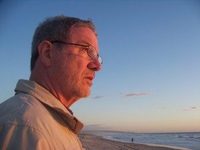
Profile: Rev. Craig A. Foster, P.E.
Craig Foster, the Founder and President of Foster Energy Management, has over 33 years experience as an engineer and manager. His experience spans many areas of facility design, optimization and management including Energy Management Auditing and Implementation, Utility Management, Building Design and Operation, Water Treatment and Waste Water Treatment Plant Design and Operation, and Solar Thermal Installations. Craig has worked for a gas and electric utility, as an engineering consultant, and in facilities management and engineering for a major manufacturer. In addition, he has 15 years experience managing Environmental, Health, and Safety programs in an industrial setting. He graduated from the University of Iowa in 1977 with a Bachelor of Science in Mechanical Engineering and is a registered professional engineer in the State of Ohio.
Craig is also a Deacon in the Episcopal Church. Ordained in 2007, he serves St. John’s Episcopal Church in Columbus where he is involved in ministry to the homeless and marginally housed through Street Church and His Place. He has helped lead an effort of the BREAD organization in Columbus to reduce neighborhood blight through formation of a funded Community Land Re-utilization Corporation. Craig is also deeply committed to Kairos Prison Ministry and the issues surrounding those returning to society after being incarcerated. He dreams of having the Chapel at North Central Correctional Complex become a member of OhIPL.
Craig has spent 17 years committed to Kairos Prison Ministry and the issues surrounding those returning to society after being incarcerated. He helped found Franklinton Community Solar, a new non-profit dedicated to bringing solar energy to the Franklinton community in Columbus. The groups goals are solarize the community to provide environmental resiliency, to provide local jobs for those facing employment barriers, and to educate the neighborhood about the impacts of climate change in the inner city.
Craig is married to Kathy. They live in Columbus and together have five daughters, eight grandchildren and one dog. They enjoy being together, whether puttering in their yard, traveling, or just hanging out at home. -
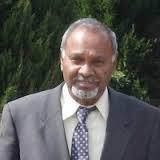
Profile: Dr. Job Ebenezer
Dr. Job S. Ebenezer is the president of a nonprofit organization called Technology for the Poor. He is a retired professor of engineering. He started Technology for the Poor to design, innovate and disseminate simple technologies for less income people. He designed a dual purpose bicycle that can enable an ordinary bicycle to power small scale agricultural implements and other mechanical devices. He served as the director of the department of Hunger Education and Environmental Stewardship of the Evangelical Lutheran Church in America (ELCA). In 1993, he established a roof top garden at the ELCA building using wading pools. He established container gardens in several cites in the US as well as in Africa, Costa Rica, Belize, Ecuador and India. Recently, he is promoting vertical gardening appropriate to slum dwellers and apartment dwellers. He established container gardens at the Ascension Lutheran church, Faith Mission Men’s shelter, Columbus Academy for Humanities, Arts, Technology, and Science and in a soup kitchen in Franklinton. He lives in Westerville and has three children and five grandchildren. -

Profile: Jared Boyd
Jared Patrick Boyd is a pastor (Vineyard USA ), spiritual director, and founder of The Order of Sustainable Faith, a missional monastic order for the 21st Century. He is the author of Invitations & Commitments: A Rule of Life. He and his wife have four daughters, and are planting and pastoring Franklinton Abbey, a new faith community on the west side of Columbus, OH. -

The Diocese of Southern Ohio: Earth Day Video
Reverend Thomas Breidenthal, Bishop of The Diocese of Southern Ohio gave an Earth Day message from a butterfly garden by St. Johns Town street in Columbus. He reminds the audience of the privilege and responsibility that comes with caring for the earth, noting also that Earth Day is the only secular holiday that is observed around the world. -
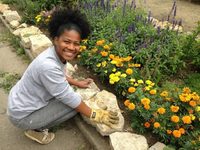
Profile: Kamara Willoughby
Kamara Willoughby is a lifetime resident of Columbus, Ohio. She grew up in the Ephesus Seventh-Day Adventist Church and was a believer in God and his creation of the earth. Though Kamara no longer attends that church she still considers it home. Kamara always had a passion for people. Even as a young lady she created various activities, with the help of her mother, for the kids in her neighborhood which at the time was Winchester Station. She also loved nature. She spent a lot of time outside as a kid and was able to ride her bike on the trail near her home when she got older. There was a creek near her house and along with friends and family they would sneak down and play in the creek and look for different things that they didn’t see on the playground and was in awe by nature.
Kamara attended Metro High School and they went on a lot of field trips and one particular trip to Camp Lazarus is where she learned about the career field of Environmental Science. She attended Columbus State Community College (CSCC) to receive her Associates of Science degree and there she helped start the Cougars for the Community volunteer club. Through this club and her job with the Peer Advocates in the Connect 2 Complete program she wanted to engage people with nature. She is now attending The Ohio State University at the School of Environment and Natural Resources. She was Majoring in Environmental Science and because of her experiences at CSCC and her involvement in her neighborhood she switched her major to Environmental Economic Development and Sustainability (EEDS). She now gets the best of both worlds.
In her neighborhood, Milo-Grogan, she is an Area Commissioner and a member of the Milo-Grogan Civic Association. Each group holds monthly meetings to discuss revitalization plans for the neighborhood. They are currently working on housing plans, job plans and engaging neighbors in community clean-ups. The Civic Association is working on a community garden where people can sit and enjoy the scenery, hold various activities and harvest produce from the raised beds.
“This country will not be a good place for any of us to live in unless we make it a good place for all of us to live in.” ~Theodore Roosevelt
“I alone cannot change the world, but I can cast a stone across the waters to create many ripples.” ~Mother Teresa
“To give real service you must add something which cannot be bought or measured with money, and that is sincerity and integrity.” ~Douglas Adams -
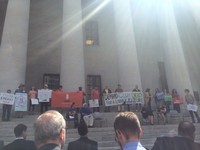
Climate Action Rally
Today (4/20/16), I attended the Climate Action Rally that was held at the Statehouse in Columbus, Ohio. This event was organized and ran by the Climate Action Coalition with help and sponsorship through organizations like Ohio Interfaith Power and Light as well as Simply Living. The Rally included different speakers about a “freeze” that has possibly been put on by the State of Ohio’s legislature in regards towards action surrounding climate change policy. The speakers represented a variety of religious backgrounds ranging from Judaism, Catholicism, and various sects of Christianity.
Despite the difference in particular religious beliefs amongst the speakers, a common theme emerged around how we all had a moral responsibility towards taking actions in response to climate change. This theme resonated well with recent events in the field of religion and the environment with the most influential being Pope Francis’ Encyclical on the Environment, Laudato si’. It is this Encyclical that sets the framework for not just Catholics to follow, but all people. Events like this Rally today show the support and efforts people have towards the not only religious beliefs but also environmental care. -
Faith & Climate Action Day 2017
Faith & Climate Action Day will be held on October 12th at the Ohio Statehouse in Columbus. There will be an interfaith prayer gathering from 11-11:45 AM then from 12 to 3 PM state legislators will be speaking on the importance of climate change. -

Speaker: Jason Cervenec
Jason Cervenec is the Education and Outreach Director for the Byrd Polar and Climate Research Center at The Ohio State University. The diverse outreach portfolio of the Center reaches approximately 12,000 individuals annually and includes programs in cutting edge science, science education, history, and the arts. The most common request for information that Jason receives from the public is on climate change. Jason currently has two NSF-funded projects, one to develop an engaging and interactive educational tool to explore Earth’s polar regions, atmospheric phenomena, and oceanographic conditions and a second to create an immersive web application to visualize and explore Earth’s diverse glacial systems. Jason also leads the Columbus Climate Change Action Plan Task Force.
Jason earned a B.S. in Biology and M.Ed. in Secondary Science Education from The Ohio State University and began his career as a high school science teacher where he taught for more than a decade. In 2010, Jason took part in a Fulbright Teacher Exchange in Mumbai, India where he witnessed firsthand the challenges faced by most of the world’s population. Jason and his wife have a two-year-old daughter, enjoy hiking, and recently rehabilitated a 1908 house in the Franklin Park area. He is a parishioner of Christ the King Catholic Church in Columbus and volunteers with Franklin County’s Restorative Justice Circles.
Speaking Topics: climate change preparedness and resiliency, climate change education, climate change impacts, and carbon reduction at home and in communities. -
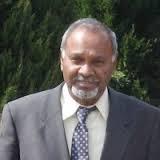
Speaker: Job Ebenezer
Job S. Ebenezer Ph.D, is the President of Technology for the Poor, which is a non-profit organization based in Columbus, Ohio. Their mission is to “develop, innovate and disseminate sustainable technologies to the poor all over the world”. He is a retired professor and previously taught engineering at Messiah College and the University of New Mexico. He created a course called ‘Global Sustainability – A Christian Perspective’ as well as taught the course himself at Messiah College in Pennsylvania. He earned his Ph.D in Mechanical Engineering.
He designed a dual purpose bicycle that can enable an ordinary bicycle to power small scale agricultural implements and other mechanical devices. He served as the director of the department of Hunger Education and Environmental Stewardship of the Evangelical Lutheran Church in America (ELCA). In 1993, he established a rooftop garden at the ELCA building using wading pools. He established container gardens in several cities in the US as well as in Africa, Costa Rica, Belize, Ecuador and India. Recently, he is promoting vertical gardening appropriate to slum dwellers and apartment dwellers. He established container gardens at the Ascension Lutheran church, Faith Mission Men’s shelter, Columbus Academy for Humanities, Arts, Technology, and Science and in a soup kitchen in Franklinton.
Through Technology for the Poor, he has travelled all across the world to conduct workshops on sustainable technologies for the poor in 4 African, 3 Central AMerican, 2 South American, and 2 Asian countries. He has spoken at numerous conferences, including Ohio Interfaith Power and Light, Master Gardeners Association of Ohio, Ohio State University Extension Services, and 4-H Club of Ohio. He has also given lectures at Ohio State University and Otterbein University.
His involvement in earth keeping activities is based on Genesis 2:15, “The Lord God took the man and put him in the garden of Eden to till it and keep it.”
Speaker Topics: global sustainability with a Christian perspective, technologies for the poor, urban agriculture, and environmental degradation and hunger. -
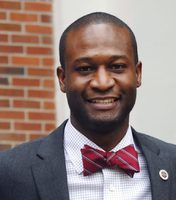
Speaker: Kareem Usher
Dr. Kareem Usher is an Assistant Professor of City and Regional Planning in the Austin E. Knowlton School at The Ohio State University. Dr. Usher received his Bachelor of Arts degree in Sociology from Spalding University in Louisville, Kentucky, a Masters of Urban Planning degree from the University of Louisville also located in Louisville, and a doctoral degree in Urban and Regional Planning from Florida State University in Tallahassee, Florida. His research interests focus on urban food systems and he engages this topic at the intersection of food access, social justice, regional governance and community economic development. Dr. Usher’s work involves utilising mixed-methods and community-based participatory research methodologies to explore perceived as well as objective measures of access to healthy food of food-insecure families in low-access (‘food gap’) communities.
The long view of Dr. Usher’s life’s work would embody the idea of Planning to Reduce Human Suffering. This theme fuses two branches – Spirituality in Planning and Food as the Foundation for Sustainable Settlements. As suffering is an inescapable fact of our material existence, the goal of planning and the work of planners is to reduce human suffering. He interprets this connection between material plans and the intangible feelings of suffering as a ‘spiritual’ connection. From this perspective, making beautiful plans alone is not sufficient; plans must address the suffering of the people it hopes to serve and balance in the environment it purports to protect. One question that develops from this is, how do we create plans that are ‘connective’ and ‘connected’ to us?
The second branch, Food as the Foundation for Sustainable Settlements, involves work being done in communities regionally and internationally, including his native Belize. In general, Dr. Usher is involved in measuring and modelling healthy food access, working with communities to increase food access and addressing food and economic injustices. His projects connect rural and urban communities for mutual development and peace, such as, food aggregators and food processing hubs that would provide employment and reduce food-related illnesses for central-city communities while providing markets and incomes for rural communities. Exemplars include: Dr. Usher is currently leading a project in the (South) Linden neighbourhood of Columbus, Ohio that aims to develop a ‘food processing hub’ that would provide employment for previously incarcerated persons while supporting Ohio State University’s efforts to increase the amount of local and sustainable food served to its students. He is also collaborating on a ‘food aggregator’ initiative in Mansfield, Ohio, and a project in the Toledo District of Belize where Dr. Usher and collaborators explore the drivers of food insecurity and agroecological change in the Maya milpas of southern Belize.
Affiliated Faculty Positions: Initiative for Food and AgriCultural Transformation (InFACT) – Discovery Theme, Environmental Sciences Graduate Program, Kirwan Institute for the Study of Race and Ethnicity
Speaking Topics: Urban Food Systems – Food Access, Food Justice, Participatory Research, Equity Planning, Regional Governance, Alternative Food Economies, Neighbourhood Development and Sustainable Local Economic Development -

Earth Day statement from ELCA presiding bishop
The Reverend Elizabeth A. Eaton, Presiding Bishop of the Evangelical Lutheran Church in America (ELCA), issued an Earth Day statement on behalf of the ELCA. A salient excerpt from the statement is shown below:
"The effects of the warming climate are felt in nearly every corner of the globe. These include increased migration, food insecurity due to changing agricultural landscapes, national security issues and health problems. As bad as it is for all creation, the most vulnerable people around the world are suffering the most. Yet they have contributed the least and, as noted in the United Nation's 2030 Agenda for Sustainable Development,[iii] are ill equipped to adapt to or mitigate the effects of a changing climate to build resilient communities." -

Caring for Creation:Vision, Hope, and Justice
The Evangelical Lutheran Church in America has put forth this social statement, which emphasizes their stance on care for creation. The statement focuses on our place in creation, the current environmental crisis, and hope through action. In addition, they emphasize becoming an advocate for change. -

Presbyterians and Climate Change
This article posted on Yale Climate Connections discusses grassroots efforts of Presbyterian organizations, and notes specific time frames of salient Presbyterian accomplishments with regard to climate change. The following excerpt provides a general overview of their goals and mission:
"Presbyterians are engaged in many activities to combat climate change, from Earth Forums to hunger programs addressing food and climate crises and protests against practices that encourage reliance on coal. Since 2010, the Presbyterian Church has given 80 congregations an Earth Care Congregation Certification for demonstrating a strong commitment to environmental care."