
Search
1263 items
-

Protecting Water and Your Place of Worship
"Protecting Water and Your Place of Worship" is a webinar hosted by Faith and the Common Good with speakers Alix Taylor, Andrea Prazmowski, and Alan Coughlin. In the webinar, they discuss humanity’s relationship to the Earth and water. This webinar was held on November 18, 2015. -

Wanted: Innovative Farmers to Help Slow Algal Bloom on Lake Erie
The Christian Science Monitor has written an article discussing how agricultural nutrients in the Maumee River, Lake Erie’s biggest source of pollution, are reaching record proportions. Most nutrient pollution is caused by large storms, and with climate change, these storms are becoming increasingly more common. The USDA reports that farmers are making headway toward reducing nutrient pollution on a voluntary basis, but many researchers say that these efforts are not sufficient. A recent report suggests additional outreach, an increased focus of conservation dollars, and mandated soil testing.
Wetland restoration – bringing back bits of the Black Swamp— can play a pivotal role in clearing algal bloom in Lake Erie. The Black Swamp Conservancy is currently working on turning 60 acres back into swamp in northwestern Ohio. William Mitsch, a retired Ohio State University professor and wetlands expert, hopes to eventually restore a tenth of the Black Swamp (about 100,000 acres) to provide a substantial cleaning of Lake Erie. -
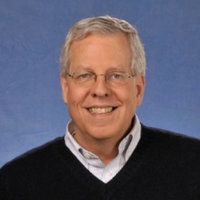
Profile: Tom Denbow
Tom Denbow is a scientist who reflects on his relationship to religion and how it is interconnected with his work on Biohabitat's blog. From the interview;
"Both BIOLOGOS and the Presbyterian Association on Science, Technology, and the Christian Faith bring a Christian perspective, but I feel strongly that other religions, such as Islam, Buddhism, and Judaism, can carry on a dialogue that allows each of us to respect our traditions but also our shared notion of stewardship of the earth and all of nature." -
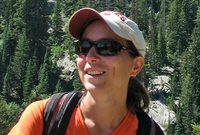
Profile: Meghan Gloyd
Meghan Gloyd is a water resources engineer who reflects on religion's relationship to her work on Biohabitats' Blog. She discusses dominion versus stewardship in the book of Genesis. In her reflection she says;
"I believe that the created world has an inherent value that is not based solely on what it can provide. This inherent value should be protected and upheld". -
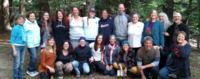
Engaged Organizations: Lake Erie Institute
Lake Erie Institute (LEI) is an environmental education organization that was formed through world visions of forward thinking environmentalists, activists, ecological leaders and educators. Over the years, they have designed workshops, retreats, and professional training programs that empower participants to become leaders to engage in re-visioning their own lives, other organizations, communities, and the world. Their offerings provide opportunities for individuals to connect more deeply with one's true self, by strengthening their ties to the Earth and relationships with others in order live more whole, healthy, and harmonious lives. -

Cleveland's St. Casimir Church Implements Green Infrastructure Practices
St. Casimir Church of the Cleveland Catholic Diocese wins the Northeast Ohio Regional Sewer District's Green Infrastructure Grant! The church will be implementing permeable pavers, and rain water basins with the grant. This effort helps give stormwater new life and redirect water pollution. St. Casimir's expresses gratitude for their community's support. Read more at the link below. -

The Importance of Water to Faith Communities, and How to Conserve it!
The Ohio Interfaith Power and Light provides information on the spiritual importance of water, along with a teaching activity for the topic. The attached also includes tips on how to help your congregation conserve water. -
Saving Buffalo Reef
This 11-minute video, by the Great Lakes Indian Fish & Wildlife Commission (GLIFWC), informs the viewer of the natural, cultural, and economic importance of Buffalo Reef. This reef is located off the Keweenaw Peninsula, Michigan, in Lake Superior. Buffalo Reef is currently under ecological distress due to local mining activities. Current Tribal, State, Federal, and Academic efforts are underway to help restore this significant environmental feature, as documented in this video. -
Profile: John Hill
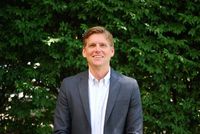
John Hill is a member of the General Board of Church and Society (GBSC) for The United Methodist Church. His work there includes overseeing their advocacy and organizing department. He also directs the economic and environmental justice program work. Having previously worked as a lobbyist in the private sector, John soon realized the difficulty of integrating faith into his occupation. Since joining The United Methodist Church in 2002, John enjoys the opportunities he has to work with individuals in ways that allow them to integrate faith more fully into their daily lives.
One example of John's passion projects, building a green roof for the United Methodist agency, can be found here https://www.umc.org/en/content/green-roof-reflects-united-methodist-care-for-earth. John discusses how this type of project is a way to show the organization's faith in action, serving as environmental stewards that can be seen by many throughout the D.C. area. In addition, their administration has switched to 100 percent renewable energy and installed water bottle fillers to reduce waste. -
Engaged Organization: United Methodist Women
Over the years, the United Methodist Women organization has grown to become the largest denominational faith organization for women. Maintaining a membership of approximately 800,000, these women have a mission of fostering spiritual growth and developing leaders, while also advocating for justice. They have excelled at fundraising, raising approximately $20 million each year to go to programs and projects related to women, children and youth in the United States and also in more than 100 countries around the world.
Some examples of resources from their website includes tools to aid in sustainable living and advocacy in a theological way, a carbon footprint calculator, articles on climate justice, and a simulation experience to better understand environmentally downgraded communities. The following section from their website provides an overview of their principles and values in action:
"United Methodist Women and The United Methodist Church's principles and values include:
Promoting the empowerment of women, children and youth.
Promoting anti-racism and multiculturalism.
Promoting inclusion and equity.
Promoting fair labor practices.
Promoting economic and environmental stewardship and sustainability." -

Profile: Shantha Ready Alonso
Shantha Ready Alonso serves as Executive Director of Creation Justice Ministries. Since the start of her appointment in 2015, Shantha has prioritized racial-ethnic equity in support of protecting, restoring, and more rightly sharing God's creation. Shantha's work has appeared in The Hill, the Colorado Gazette, The Day, Sojourners, Patheos, and Justice Unbound. She has also been interviewed by NPR, Religion News Service, U.S. Catholic, and various podcasts.
Shantha has taken the initiative to arranged numerous stakeholder meetings between people of faith and policymakers. She has testified before the US Environmental Protection Agency, the US Department of Interior, and the White House Office of Management and Budget. Shantha is listed among the 2018 “Grist 50 Fixers," an annual list of emerging leaders from across the U.S. who are working on fresh, real-world solutions to our world’s biggest challenges. -
Engaged Organizations: Church of the Brethren
The Church of the Brethren is an organization that has its roots in Germany. Formed three centuries ago, the church continues to draw people who want to continue Christ's work of faithful and loving service. There is no formal "creed" or set of rules to follow. Their focus is on trying to emulate what Jesus did for the world.
Living a peaceful lifestyle and promoting peace among all people is a central tenet of the faith. When encountering conflicts such as warring nations, racial discord, theological disputes, personal disagreement, or mere misunderstanding, Brethren listen conscientiously, seek guidance in the scriptures, and work toward reconciliation.
Years ago, Brethren members were more easily recognizable due to their plain dress and reserved lifestyles. The church continues to maintain a sense of simplicity and modest living. However, Brethren members today live very much in the world, work in a broad range of occupations, and make use of the latest technology. -

Engaged Organizations: Friends Committee on National Legislation
The Friends Committee on National Legislation (FCNL) was founded in 1943 by members of the Religious Society of Friends (Quakers). FCNL is a nonpartisan organization that seeks to live their lives based on values of integrity, simplicity, and peace as they build relationships across political divides to move policies forward. FCNL is comprised of an expert team of lobbyists on Capitol Hill who work with a grassroots network of tens of thousands of people across the country. They lobby Congress and the administration in order to advance peace, justice, opportunity, and environmental stewardship. -

Christian Reformed Church
The Christian Reformed Church is a congregation that seeks to spread the gospel with a five-fold calling with roots in the Reformation of the 16th century. The individual churches collaborate through regional assemblies, uniting the church. The five-fold calling includes faith formation, servant leadership, a global mission, mercy and justice, and gospel proclamation and worship. The Christian Reformed Church serves its community with a number of ways to get involved. They are a binational congregation having churches both in the United States and Canada, with 230,000 members. -
African Methodist Episcopal Zion Church
The African Methodist Episcopal Zion Church was officially formed in 1821, but has roots in the 1700's. Several African Americans left the John Street Methodist Church due to discrimination and formed their own congregation. The first church built by AMEZ was named Zion. This church grew and more congregations developed. The AMEZ church has been named the Freedom Church because of its ties to the emancipation of slaves and role in the Abolitionist movement.
Today the church works with the global community with mission work and volunteer service with the goal to spread the gospel and God's love. They have information on the COVID-19 pandemic and links to online webinars and worship. -

The Armenian Church in America
The Armenian Church was brought to America through Armenian immigration in the 1800's and 1900's. The first Armenian Church was built in Massachusetts in 1891, and the Armenian Church of America was established officially in 1898. It is divided into two dioceses, the eastern and western. The church is involved in service, community engagement, and mission trips. Information on their website includes how to get involved, online worship services, and prayers. -
Interfaith Center on Corporate Responsibility
The Interfaith Center on Corporate Responsibility is an organization that advocates for better labor laws, financial services, sustainable development, and accessible health care. It is their mission to incorporate social values into corporate actions. Founded in 1971, the ICCR has been an integral part of advocating for resilient and sustainable corporations, but has been met with pushback from industries that do not want to follow regulation and social values. More information about programs, resources, and membership is available on their website. -
-
Environmental Resources from the Religious Action Center of Reform Judaism
This website features resources collected by the Religious Action Center (RAC). RAC is a branch of the US Reform Judaism that focuses on social actions. The resources listed on this site includes news articles on current legislative actions for the environment. The website also provides ways to get involved, including contacting Congress about current related bills. Lastly, this website provides links to Citizens' Climate Lobby; Coalition on the Environment and Jewish Life; Environmental Defense Fund; Greenfaith; Interfaith Power and Light; Kibbutz Lotan; Natural Resources Defense Council; Sierra Club; and the Union of Concerned Scientists. -
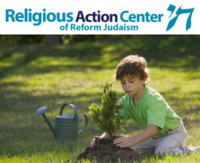
TuB'Shevat Holiday Guide
This interactive resource provides lots of information and guides to celebrating and teaching about TuB'Shevat, the Jewish holiday celebrating the New Year of Trees. This website includes links to religious texts, prayers and stories; worship tools; and ideas for programs to create in celebration of the holiday. -

Poverty and Hunger in a Changing Climate
Poverty and Hunger in a Changing Climate is a fact sheet from the Evangelical Lutheran Church in America. It describes the impact of climate change on hunger, food security and agriculture. This downloadable resource contains facts and quotes to help better understand the huge impact our actions have on the world. A quote from this document, “The great paradox of climate change is that those least responsible for the emission of pollutants harmful to the earth will be most severely affected and least able to adapt to changing conditions.” -

Awakening to God’s Call to Earthkeeping
Awakening to God’s Call to Earthkeeping is a four-session small group study from the Evangelical Lutheran Church in America. It’s purpose is to encourage, empower, and equip Lutherans in their calling to care for creation. It contains leadership resources, educational resources, and helpful ways to get people more involved. -

Rising conservative voices call for climate change action
PBS NewsHour Weekend Special Correspondant Stephanie Sy reports about Young Evangelicals for Climate Action (YECA) and other republican supporters of taking action on climate change. -
Earth Ministry Caring for All Creation
Earth Ministry has a two-part Caring for All Creation program that encourages individuals and communities to live with God’s creation. These two modules contain resources and worship aids that address specific environmental issues. At the Table and By the Waters were created to help change behaviors in these places in order to protect and restore the gift of God’s beloved creation. -
Earth Ministry: At the Table
At the Table is one of the two-part Caring for Creation program from Earth Ministries. It is meant to teach people of the impact planting, fertilizing, and watering crops can have on creation. It also teaches the importance of appreciating and celebrating the gift of “daily bread.”