
Items
-
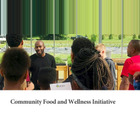 MTSO and the intersection between faith and food. At the Methodist Theology School in Ohio, there are several different organizations that focus on the act of sustainability and pro-environmental behaviors, one of these is the Community Food and Wellness Initiative. According to their website, their objectives included creating a stronger connection between the land, ourselves, and the community, as well as "supporting local participation in national and global food justice campaigns". The Community Food and Wellness Initiative also focuses on offering experiences to the community that will further their knowledge of the earth and food production.
 -
 Evangelical Christians and the Environment: “Christians for the Mountains” and the Appalachian Movement against Mountaintop Removal Coal Mining This source deals with past research that connects Evangelicalism with anti-environmental values. The organization “Christians for the Mountains” seems to be contradictory to this prior research. Through a variety of qualitative methods, this research paper goes into the actual attitudes at play and how this might apply more broadly
 -
 The Grail and Environmental Sustainability This website page can lead women in Cincinnati to the crossroads of environmentalism and Christianity. The Grail looks to empower women and environmentalism. The Website offers information on sustainable groups, anti-fracking activism, and group studies of eco-theological literature. The Grail also advertises their learning labs, reforestation and current member's work.
 -
 Indigenous Americans: Spirituality and Ecos A brief article about the indigenous peoples' traditions and characteristics regarding their religions and religious beliefs and the connection to the environment. Author Jack D. Forbes goes over the "indigenous cosmic visions" and their "conception of creation as a living process, resulting in a living universe in which a kinship exists between all things". He goes through different entries and quotes of indigenous figures in the Americas and their thoughts and connection to land and religion.
 -
 Magic Mushrooms in Religion and Alchemy This book discusses the roles that the fly agaric mushroom played in human perceptions of God through many religions. The same religious practices and stories present in some of the most prevalent religions of today can be explained by the beliefs held about Amanita muscaria. As it was thought to be eaten by the Gods, when humans consume it, they become closer to the divine.
 -
 Environmental Stewardship In Columbus Catholic Schools This article highlights environmental actions being taken by students at a variety of grade levels in Catholic schools in the Diocese of Columbus following the release of Pope Francis’s “Laudato Si’: On Care for Our Common Home,” in 2015. These actions include the creation of a greenhouse and gardens, city cleanup days, energy audits, and natural play areas for younger children.
 -
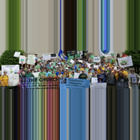 United Church of Christ Environmental Justice Ministries "From the birth of the environmental justice movement in the 1980s to the local ministries of churches throughout the country today, the United Church of Christ has been making a profound difference in caring for God’s creation. Learn more about our history, the Creation Justice Church program, Earth Day resources, the Pollinator newsletter, Creation Justice Webinars, and the work of the UCC Council for Climate Justice."
 -
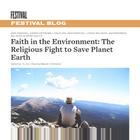 Faith in the Environment: The Religious Fight to Save Planet Earth An article discussing the interfaith panel “Ways of Knowing, Ways of Living: Exploring Faith and Conservation” at the 2022 Smithsonian Folklife Festival. The author introduces the four panelists, their faiths, and their respective perspectives on encouraging intersections of faith and environmentalism, with Imam Saffet Abid Catovic representing Muslim faith, Jakir Manela representing Jewish faith, Michael Nephew representing Native American faiths, and Dr. Rachel Lamb representing (Evangelical) Christian faith.
 -
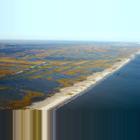 Religious Groups Combatting Rising Sea Levels in Louisiana Donald and Theresa Dardar have made it their mission to save the the susceptible coasts of Louisiana from rising sea levels due to climate change. Joining forces with the local Presbyterian church, Donald and Theresa have preserved sacred mounds, refilled oil field canals, and have built elevated greenhouses. Numerous faith groups in Louisiana have prioritized saving the environment as impoverished people experience heightened effects of climate change. Preserving the community around these faith groups drives individuals to maintain the unique and celebrated environment of Louisiana.
 -
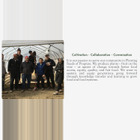 South Side Family Farms, Columbus Ohio Minister Aaron K. Hopkins started Southside Family Farms as a way of addressing the food desert on Columbus's South Side. The farm utilizes Columbus's Land Bank program to grow fresh produce for distribution within the community. The farm works to connect locals to their land and grow their appreciation for fresh food and the growing process. The farm is rapidly growing and has plenty of volunteer projects to help out with.
 -
 Nature & the Environment This statement, from the World Zoroastrian Organization, details the environmental perspectives, values, and practices in Zoroastrianism. The web page makes it clear that Zoroastrianism is largely grounded in a heightened environmental consciousness.
 -
 Dayenu: A Jewish Call to Climate Action Dayenu is an American Jewish organization that aims to create environmental change through political action. Dayenu members contact and persuade politicians to pursue climate change solutions. In addition, they partner with businesses and work to realign their investments to stop financially backing the fossil fuel institution.
 -
 The Pope is Concerned About Climate Change: How Do U.S. Catholics Feel About It? This recent study performed by Pew Research Center found that contrary to popular belief, Catholics in the United States are no more likely than Americans overall to view climate change as a serious issue (57%). Additionally, similar to splits observed in the wider U.S. population, views among Catholics differ based on age, race, and political views. Adults in the U.S. who are 49 or younger, Democratic, or identify as a race or ethnicity other than non-Hispanic White, are generally more likely than those who are 50 or older, Republican, or White to express concern about climate change. They are also significantly more likely to believe climate change is primarily caused by human activity. Ultimately, this study provides evidence that climate concern is more strongly tied to political partisanship rather than religion.
 -
 Protecting nature, act of faith: Muslim women are leading the charge on climate activism In this news article and accompanying interview, by the Canadian Broadcasting Association (CBC), they highlight a Muslim women, Memona Hossain, who identifies as a Muslim activist. In her research, she has found that religion can play a significant role in climate activism, often viewing it as empowerment, as a lot of the Muslim women she interviewed were involved with climate action because of their faith. These women believed that protecting nature was a form of worship and that they needed to take care of this gift from Allah, the Arabic word for God.
 -
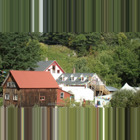 Vermont Tibetan Buddhist Center to Host Commercial Solar Array The Milarepa Center, a Tibetan Buddhist retreat located in Vermont, is entering the clean energy scene through their partnership with a local solar panel company. The proposed initiative is to host approximately 500-kilowatts of solar panels on the retreat's property, an endeavour that will provide clean energy to 135 homes in the neighboring area. The retreat center is a force for sustainability in the region, not only with this initiative, which passed unanimously by its board members, but in its commitment to the Buddhist tradition of bodhicitta, which is to bring peace and good will to all. It is important to note; however, that the Buddhist community, while being present within the environmental movement, does self-proclaim their need to improve, such as in attending protests or furthering initiatives like these solar panels on a greater scale.
 -
 A Movement Is Born: Environmental Justice and the UCC After the ban of PCBs in the late 1970s, a landfill in Warren County, North Carolina had been designated as a place of disposal. This county had one of the highest rates of black residents, as well as poverty rates. This sparked leaders in the United Church of Christ including Dollie Burwell, Rev. Leon White, Rev. Benjamin Chavis Jr. and the UCC’s Commission for Racial Justice to become a leading force in the environmental justice movement. This article highlights the work of these leaders in fighting against environmental racism.
 -
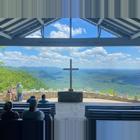 Symmes Chapel The Fred W. Symmes Chapel is chapel in Greenville, South Carolina. This place of worship is better known as the "Pretty Place" for the beautiful views. The chapel is a part of a YMCA camp and is used for worship, meetings, and environmental education. The chapel overlooks the Blue Ridge Mountains and bears the verse "I will lift my eyes to the hills..." Palm 121:1 along the beam.
 -
 Creation Care and Climate Justice Event Hosted by North Broadway United Methodist Church on March 15th The North Broadway United Methodist Church is holding a creation care and climate justice event on March 15th, 2023 centered around pressing environmental issues and the actions needed to address them. The event will feature keynote speakers, breakout sessions, a panel discussion, and lunch. Local sustainable organizations and businesses will also be featured, including The Compost Exchange, REWASH Refillery, Sustainable Columbus, and The City of Columbus GreenSpot. Pre-registration is required for the event and more information can be found at: https://north-broadway.org/creation-care
 -
 Rabbi and Eco-Chaplain Katy Z. Allen Rabbi Katy Z. Allen is the founder and spiritual leader of Ma'yan Tikvah - A Wellspring of Hope. She began her career as a biology teacher, turned to writing and editing educational materials, then started teaching Hebrew school and became involved in family and adult education before entering rabbinical school. She received a Masters of Arts in Jewish Studies from Hebrew College in Newton, MA, in 1999, and rabbinic ordination from the Academy for Jewish Religion in Yonkers, NY, in 2005 and is a Board Certified Chaplain through Neshama: Association of Jewish Chaplains. For ten years, Katy served as a staff chaplain at the Brigham and Women’s Hospital in Boston and then as a hospice chaplain. She is the co-founder of the Jewish Climate Action Network and consideres herself an eco-chaplain. Rabbi Katy writes about matters of the spirit and the world (and encourages others to write) and blogs at here. She is certified as a Bibliodramatist by Peter and Susan Pitzele, and has published Loss and Transformation: One Women's Journey Out of Grief to Opportunity, which is based on her senior rabbinic project, and Earth Etudes for Elul: Spiritual Reflections for the Season, with reflections on Earth and t'shuvah by many writers. She is a member of the Advisory Boards of Jewcology.org, Jewish Veg and Shomrei Bereshit: Rabbis and Cantors for the Earth. Rabbi Katy's most recent book, A Tree of Life: A Story in Word, Image, and Text is “a meditation on our universal journey through trauma toward healing.” A series of about 60 double-page spreads unfolds a story from innocence to despair to understanding through a combination of poetic moments, quotes from Jewish tradition, and black-and-white photographs of trees.
 -
 Mid-Atlantic Coast Ducks Unlimited is a conservation organization that primary purpose is to restore and protect native duck populations. The article about the MId-Atlantic Coast project is one of Ducks Umlimited biggest ongoing projects currently. The project is to restore and protect the wetlands from Chesapeake Bay to Long Island. The wetlands are a vital location for ducks because of the food, shelter, and safety that they provide. Ducks Unlimited is currently restoring damaged areas and working with local governments to legally protect these areas. Further Ducks Unlimited is working with locals on what they can do to protect and restore the wetlands. The article talks about the focuses of the project along with the partners.
 -
 Mid-Atlantic Coast Ducks Unlimited posted an article on their website about the MId-Atlantic Coast, the article breaks down Ducks Unlimited plan to restore thousands of miles of coastal wetlands from the Chesapeake Bay to Long Island. The article explains the importance of coastal wetlands to waterfowl populations, and the extreme drop in wetlands habitat due to human development. The article finishes with the focuses of the conservation plan and how its impact will be able to benefit waterfowl populations .