
Items
-
 The Presbytery Earth Care Program The Presbyterians for Earth Care group has created The Presbytery Earth Care Program, which was announced at the “Green Your Presbytery” webinar, as a way to promote the protection of the planet. The Presbytery Earth Care Program includes the Presbytery Earth Care Team Toolkit and resources to be used by all of the Presbyterian Churches. The goal of the program is to encourage individuals and congregations to become better stewards of creation.
 -
 Presbyterians for Earth Care Presbyterians for Earth Care (PEC) is a national ecological justice network working to care for God's creation by promoting creation care as a central tenant of the Presbyterian church. Through grassroots organization, members are able to connect and work together to promote advocacy, Earth care, and action in and outside of the walls of the Church. PEC provides members with resources to further connect them to the eco-theological studies behind eco-justice issues and further inspires them with personal recounts of those who have answered the call to care for the Earth.
 -
 Buddhists Must Awaken to the Ecological Crisis David Loy's article analyzes the connection between Buddhist teachings and their inherent detachment to the current mounting ecological crisis. Loy argues that the Buddhist religion allows for a joint individual and social transformation known as the Bodhisattva. He emphasizes that instead of adhering to the principles of traditional Buddhism and modern Buddhism that undervalue environmental and social involvement, Buddhists should adhere to the teachings of Bodhisattvas.
 -
 Sustainability and Climate in Religion: A case of study of the Green Churches Network in Africa (toile des Églises vertes en Afrique) TEVA This article is about the consciousness of the World Council of Churches and the engagement of the churches in Africa. The article highlights ecological issues of churches, specifically churches in Africa. The article goes into The Green Church Network in Africa (TEVA) and their commitment to care for the Earth while. The article points out socio-economic, political, and pastoral difficulties in the network of churches and the Green Church's commitment to communities.
 -
 Indigenous environmental justice and sustainability Current Opinion in Environmental Sustainability Volume 43, April 2020, Pages 35-40
 -
 Sustainable Consumption Research and Action Initiative (SCORAI) The Sustainable Consumption Research and Action Initiative (SCORAI) is a knowledge network of professionals working at the interface of material consumption, human well-being, and technological and cultural change. We aim to foster a transition beyond the currently dominant consumer society. SCORAI provides a forum for scholars and practitioners striving to understand the drivers of the consumerist economy in affluent technological societies; to formulate and analyze options for post-consumerist lifestyles, social institutions, and economic systems; and to provide the knowledge for emergent grassroots innovations, social movements, and public policies.
 -
 The U.S. Baha'i Office of Public Affairs The Office of Public Affairs for the Baha’is of the United States was founded in 1985 to represent the American Baha’i community on the national stage. Today, we collaborate with governmental and non-governmental organizations, individuals, and groups to advance thought around our focus areas, which currently comprise racial unity & justice, the environment, economic justice, human rights, the role of media in society, and gender equality & the advancement of women. Our Office operates under the auspices of the National Spiritual Assembly of the Baha’is of the United States, the elected governing body of the American Baha’i community.
 -
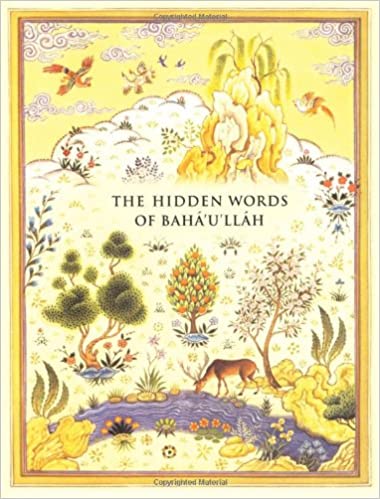 The Hidden Words of Bahá’u’lláh A collection of spiritual teachings which is intended for all religious persuasions and those who seek a spiritual life. These meditational verses which were composed by Baha'u'allah, about the year 1858, while in exile to Iraq, explore the relationship between God and man.
 -
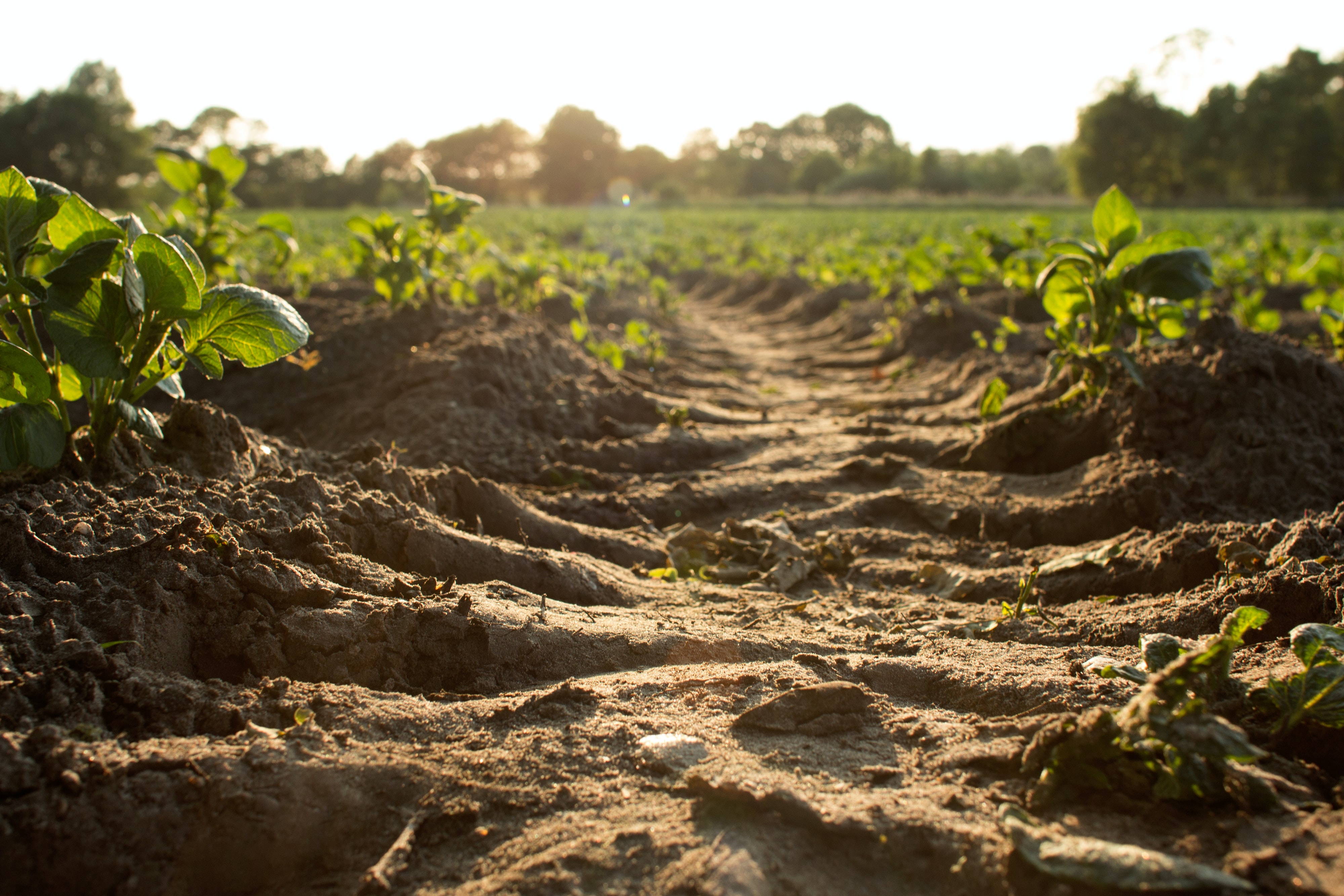 A Bahá'í Compilation on Soil and Earth This compilation gathers a selection of references to soil, earth and minerals in the Bahá'í Writings, including the ways these are referred to both symbolically and literally. Contents: Mineral Kingdom Agriculture Metaphorical Uses Humility Earth as Tomb Rain on Soil Fertile versus Barren Cultivation - Divine Education
 -
 International Environmental Forum The International Environment Forum, as a Bahá'í-inspired professional organization for environment and sustainability, shares and upholds the principles and ideals of the Bahá'í Faith and supports its efforts to establish and promote peace, the unity of the human race, and an ever-advancing world civilization that preserves the ecological balance of the planet. The Bahá'í Writings warn of the dangers of material civilization carried to excess, enjoin moderation, emphasize the oneness of humankind, and support ecological principles such as the interrelatedness of all things, unity in diversity, and the fundamental reality of increasing levels of cooperation, complexity and reciprocity across the vast extent of creation. The Bahá'í Faith considers the preservation of the ecological balance at all levels in the world to be of vital concern to all humanity, and urges action for the environment and sustainable development from the local to the global level in ways that are in harmony with the rhythm of life in the community. Our inner life cannot be separated from the environment around us, the two being intimately interrelated, requiring that environmental and sustainable development issues also be addressed at the level of fundamental ethical and moral values and principles.
 -
 Books on Religion and Climate Change This list includes 37 titles (and counting) that examine climate change and our connection to the environment from multifaceted religious perspectives. This could serve as an inspiration for anyone who's interested in learning more about the philosophy of environmentalism. The list updates as new books are being published.
 -
 Patagonia's Environmental Activism Page From mission statements to multimedia resources to annual reports, this page displays projects essential to Patagonia's sustainability efforts as a business as well as an environmentalist community. The site can serve as an inspiration template for organizations and businesses when seeking ideas for storytelling and communications with a wider audience.
 -
 The Story of Stuff Project The Story of Stuff Project is: Community-Minded Our global, online Community of over 1 million Changemakers includes parents, community leaders, teachers and students, people of faith, entrepreneurs, scientists and others interested in creating a more healthy and just world. The interests and needs of our Community members deeply informs our work, and your passion and support enable our small team to have an outsized impact. Solutions-Focused We know all about the problems — from climate change to income inequality to political corruption. Our movies and other media focus instead on the big, exciting innovations driving the environmental and social change we need, as well as the little things individuals and communities can do to make a difference. We call it ‘Growing Solutions’. Action-Oriented We believe that dramatically increasing civic participation — not just refining our consumer choices — is the key to unlocking the profound challenges we face. Our four-week Citizen Muscle Boot Camp program equips participants with the basic skills they need to organize and lead a local project. And our campaigns provide diverse, engaging opportunities for our Community members to get involved, from the global level down to where they live and work.
 -
 The Story of Stuff (Documentary) The Story of Stuff is a short animated documentary about the lifecycle of material goods. The documentary is critical of excessive consumerism and promotes sustainability. Filmmaker Annie Leonard wrote and narrated the film, which was funded by Tides Foundation, Funders Workgroup for Sustainable Production and Consumption, Free Range Studios and other foundations. Free Range Studios also produced the documentary, which was first launched online on December 4, 2007. The documentary is used in elementary schools, arts programs, and economics classes as well as places of worship and corporate sustainability trainings. By February 2009, it had been seen in 228 countries and territories. According to the Los Angeles Times as of July 2010, the film had been translated into 15 languages and had been viewed by over 12 million people.
 -
 Solstice Celebration 2021 June 20, 7:00 PM ET FREE EVENT — Registration Required! From time immemorial, humans have honored the winter and summer solstices, as sacred and rich times, to align our personal and collective lives with the movement of celestial bodies. Some of us are heading into the darkness of winter while others are headed into summer and longer days. Wherever you are, the solstice is a planetary event. A solstice occurs when the Sun reaches its most northerly or southerly excursion relative to the equator. Two solstices occur annually, around June 21 and December 21. The term solstice can also be used in a broader sense, as the day when this event occurs. The day of a solstice in both hemispheres has either the most sunlight of the year (summer solstice) or the least sunlight of the year (winter solstice) for any place other than the Equator, where the days and nights are equal in length all through the year. Here’s how we’ll celebrate: • Experience live music • Express and be moved • Awaken your senses • Discover new insights • Connect with others across the globe • Celebrate the Sun!
 -
 Deeptime Journey Network DTN’s mission is to orient humanity to an evolving interconnected universe as expressed in our vision. We bring together science, ancient wisdom and the arts inside community to share learning, global conversation, celebration, and action. The significance and profound power of a deeptime perspective — when shared in community — inspires, guides and motivates us to create a flourishing future. DTN is a project of The Deep Time Journey Network, a 501(c)(3) non-profit in Princeton New Jersey, founded to build a global community, offer courses, and share resources. It’s a vision of community in which everyone is source and where connecting and collaborating mirrors the way the universe itself evolves through new partnerships.
 -
 Green Shinto Green Shinto is a blog by John Dougill operating out of Kyoto, Japan, which is dedicated to the promotion of an open, international and environmental Shinto. It seeks to celebrate the rich heritage of the tradition, from sacred rocks and shamanistic roots to bawdy myths and fertility festivals. It believes Shinto to be essentially diverse, localised, and community-oriented. It looks to a Shinto free of borders, liberated from its past to meet the demands of a new age. It looks in short to a Shinto that is green indeed as well as in word.
 -
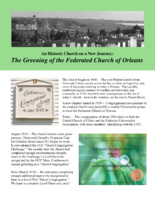 The Greening of the Federated Church of Orleans The church began in 1646 – That year Pilgrim families from Plymouth Colony moved across the Bay to settle on Cape Cod, and some of the group ended up in today’s Orleans. They quickly established regular patterns of worship and fellowship, and eventually, in 1718, they built their meetinghouse on the site of today’s church – next to the cemetery, on the road to Nauset Beach. August 2016 – The church started a new green journey. Federated Church's 10-person Care for Creation Team (aka C4C) began its work. It soon adopted the UCC “Green Congregation Challenge.” Ten months later the church had completed enough environmental-friendly steps in the Challenge’s Level One to be recognized by the UCC Mass. Conference's annual gathering as a “Green Congregation.” Now (March 2018) – We anticipate completing enough additional steps to be recognized in June as a Level Two “Green Congregation.” We hope to complete Level Three next year!
 -
 Sacred landscapes: religion and ecology around the Pacific To mark World Environment Day, on June 5, we begin a new series on religion and ecology. From the church forests of Ethiopia to the mountains of Chinese Daoism, the sea-scapes of Pacific theology to the forest monasteries of Theravadin Buddhism, the three-part series of sacred landscapes will explore how religion and spirituality might matter in the Anthropocene. How do the places we love shape our sense of the sacred? And how are our spiritual lives nurtured by the bush, the mountains —or even the sea? In the first episode, Mary Evelyn Tucker, co-founder and director of the Forum on Religion and Ecology at Yale University introduces us to the series. We also hear from Rev Dr Jione Havea, a pastor from Tonga about what it means to belong to the islands and to their seas. Rev Havea works at the forefront of postcolonial hermeneutics and Pasifika theology. His books include ‘Indigenous Australia and the Unfinished Business of Theology’.
 -
 Soul Search with Dr. Meredith Lake Soul Search explores contemporary religion and spirituality from the inside out — what we believe, how we express it, and the difference it makes in our lives. Airs Sunday 6 pm Repeated: Wednesday 11 pm, Thursday 12pm. You can listen to this podcast on platforms such as Apple Podcasts, Google Podcasts, and ABC Listen App.
 -
 The Cape Cod Climate Change Collaborative Established in 2016, the Cape Cod Climate Change Collaborative is a coalition of Cape and Islands-based organizations, businesses and citizens whose mission is to unite available knowledge, resources, talent and tools to mitigate climate change impacts on Cape Cod, reduce greenhouse gas emissions, and work toward achieving “net zero”-based goals for the Cape & Islands. We seek to create conditions to foster innovative, feasible, cross-sector solutions to the climate crisis. Board members include community leaders from across the region representing organizations such as the Association to Preserve Cape Cod, Cape Air, Cape Light Compact, Center for Coastal Studies, Friends of Pleasant Bay, Outer Cape Energize, Woods Hole Research Center, and numerous faith, educational, non-profit and business entities.
 -
 Faith Communities Environmental Network (FCEN) We are a community of diverse faith traditions networking together to advance the environment & Eco-justice through: - Advocating for environmental and climate action including racial, economic and social justice in all of our work - Learning together and sharing best practices - Building a diverse community that inspires hope and action to protect the interdependent web of life
 -
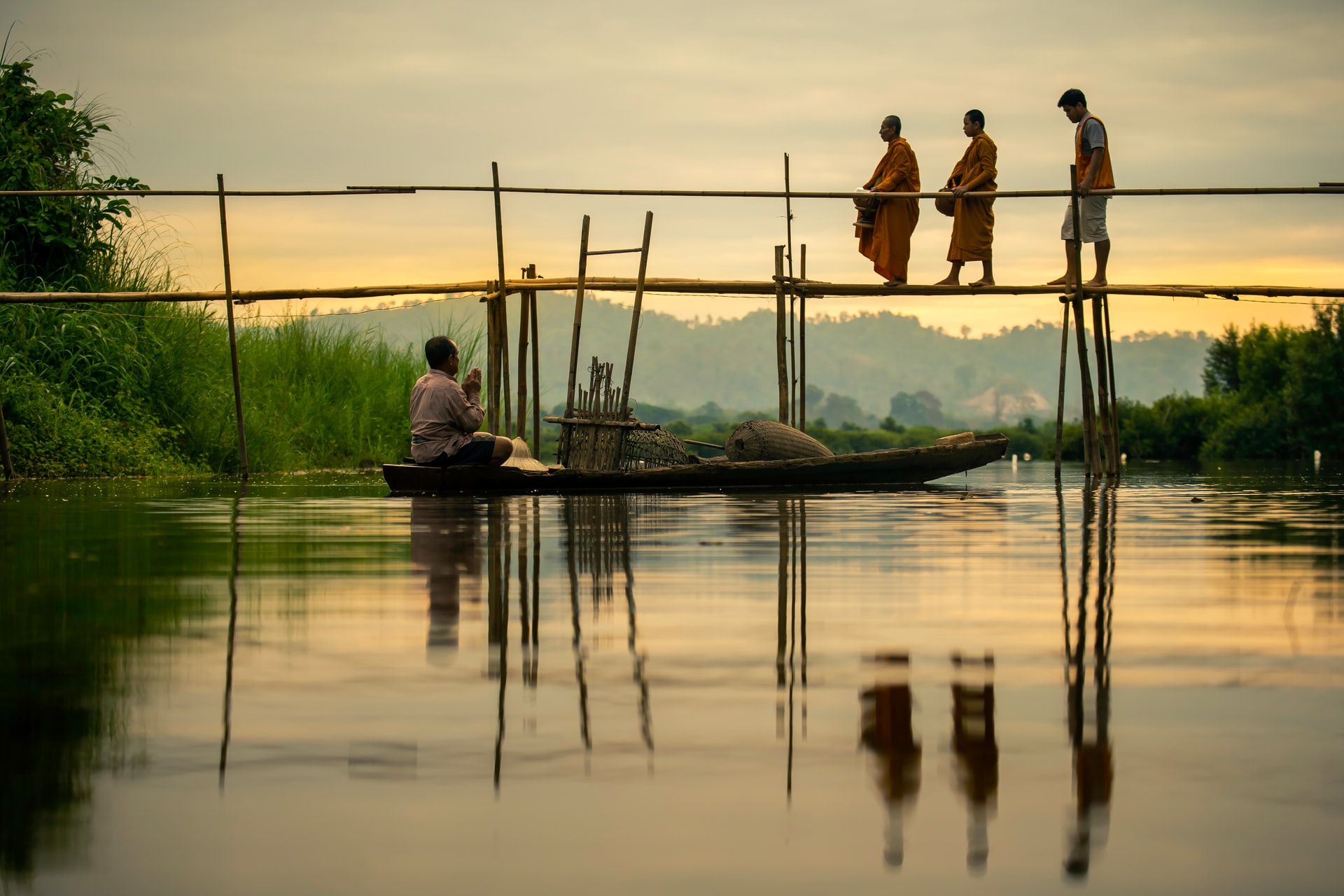 How faith-based organizations are restoring nature Many ecosystems around the world, from forests to coral reefs, are in decline, victims of pollution, climate change and resource extraction. But faith-based organizations are increasingly stepping in to help repair these natural spaces. From projects to save Ethiopia's forests to yogic farming in India to botanic gardens in Qatar, in many cases, religious leaders have become environmental influencers, championing nature-based solutions that experts say are crucial to saving the ecosystems that underpin human society.
 -
 On Being with Krista Tippett The On Being Project is a nonprofit media and public life initiative. We make a public radio show, podcasts, and tools for the art of living. Six grounding virtues guide everything we do. We explore the intersection of spiritual inquiry, science, social healing, community, poetry, and the arts. We’re offering ongoing special content for this moment, including conversations about race and healing, “care packages” for care givers and uncertain times, and a new way to experience poetry. A Peabody Award-winning public radio show and podcast. What does it mean to be human? How do we want to live? And who will we be to each other? Each week a new discovery about the immensity of our lives. Hosted by Krista Tippett.