
Items
-
 Engaged Organizations: United States Conference of Catholic Bishops: Migration and Refugee Services United States Conference of Catholic Bishops: Migration and Refugee Services provides its mission statement on its website: "Grounded by our belief in Jesus Christ and Catholic teaching, Migration and Refugee Services (MRS) fulfills the commitment of the U.S. Catholic bishops to protect the life and dignity of the human person. We serve and advocate for refugees, asylees, migrants, unaccompanied children, and victims of human trafficking."
 -
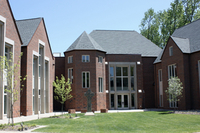 Engaged Organizations: Union Presbyterian Seminary, Charlotte Union Presbyterian Seminary, Charlotte, participates in the Green Seminary Initiative. In addition to their larger mission (as stated on their website at https://www.upsem.edu/alumni-connect/charlotte-campus/), the GSI website describes their environmental efforts: "Union Presbyterian Seminary at Charlotte is a part-time, non-residential seminary extension of Union Presbyterian Seminary in Richmond, Va. We have a brand new campus located in the fast-growing South Park area of Charlotte. While our home campus is pursuing a partnership with Shalom Farms, incorporating a community garden and classes in the ethics of food and eco-justice, the Charlotte campus is pursuing its commitment to “church and the world” in several different ways. Having just completed our energy audit, we are committed to making an already efficient building more so. We are Including new course offerings that focus on faith and environmental issues, such as Paul Galbreath’s upcoming class on “Ecology and Worship.” Rodney Sadler is challenging us to step up as advocates in areas such as the use of solar energy in congregational and seminary facilities. We look forward to learning from our colleagues in the GSI in the years ahead." Union Presbyterian Seminary, Charlotte strives to infuse care of the earth into all aspects of theological education.
 -
 Engaged Organizations: Universidad Biblica Latinamericana Universidad Biblica Latinamericana participates in the Green Seminary Initiative. In addition to their larger mission (as stated on their website at http://ubl.ac.cr/), the GSI website describes their environmental efforts: "Universidad Biblica Latinoamericana joins the Seminary Environmental Certification Program from San Jose, Costa Rica. The school elected two years ago to make “planetary life” a key aspect of teaching, research, and community life, and believe that the certification program will assist them with incorporating these goals. “It is our desire to make this a learning experience for faculty, staff and especially students who can reproduce these process in their churches and communities,” writes Rectora Elisabeth Cook. “Our location in Central America, an area of the world that is highly vulnerable to the effects of climate change, offers a privileged contexts from which to address environmental justice through theological reflection and missional action.” The UBL brings to the certification program numerous ties to the international, national, and regional communities, along with a network of students and graduates throughout the region who are committed to issues of environmental justice." Universidad Biblica Latinamericana strives to infuse care of the earth into all aspects of theological education.
 -
 Engaged Organizations: Trinity Lutheran Seminary Trinity Lutheran Seminary participates in the Green Seminary Initiative. In addition to their larger mission (as stated on their website at https://www.capital.edu/trinity-lutheran-seminary-at-capital-university/), the GSI website describes their environmental efforts: "Located in Columbus, OH, and a seminary in the Evangelical Lutheran Church of America, Trinity has engaged in a number of steps required in the certification process, including an energy audit, updating the seminary’s HVAC system, tracking campus energy use, and enhancing recycling efforts. The student group SEEDS held a retreat in April at Lutheran Memorial Camp and students have participated in a Faith Climate Action Rally at the Ohio Statehouse. In addition, Trinity students have been active in cleaning up the Alum Creek watershed that borders the seminary property. The school has cultivated a garden, and students, faculty, and staff held a worship service to bless it. The school engages with the natural landscape surrounding the campus through hikes and excursions." Trinity Lutheran Seminary strives to infuse care of the earth into all aspects of theological education.
 -
 Engaged Organizations: The Samuel DeWitt Proctor School of Theology The Samuel DeWitt Proctor School of Theology participates in the Green Seminary Initiative (GSI). In addition to their larger mission (as stated on their website at https://www.vuu.edu/theology), the GSI website discusses their environmental efforts: "Located in Richmond, VA, the Samuel DeWitt Proctor School of Theology, Virginia Union University (STVU) has developed a commitment to ecology and theology in caring for creation which is rooted and grounded in the school's historical commitment to social justice, civil rights, and activism. STVU offers students the opportunity to engage ecological issues across many areas of its curriculum. As early as 2010, ecology was included as an important theological issue in required systematic theology courses."
 -
 Engaged Organizations: Pacific Lutheran Theological Seminary Pacific Lutheran Theological Seminary participates in the Green Seminary Initiative. In addition to their larger mission (as stated on their website at https://www.plts.edu/), the GSI website describes their environmental efforts: "Pacific Lutheran Theological Seminary (PLTS) is a seminary of the Evangelical Lutheran Church in America, a graduate school of California Lutheran University, and a founding member of the Graduate Theological Union interfaith consortium in Berkeley, CA. PLTS decided to enter the Certification Program soon after their president Dr. Chris Kimball signed the Second Nature Climate Commitment, committing both the university and seminary to achieving carbon neutrality and developing strategies for resilience. PLTS has moved recently to a new urban campus in the heart of Berkeley, and is committed to exploring the relationships between earth care and justice issues of race, class, and gender." Pacific Lutheran Theological Seminary strives to infuse care of the earth into all aspects of theological education.
 -
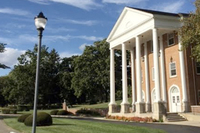 Engaged Organizations: Methodist Theological School in Ohio Methodist Theological School in Ohio participates in the Green Seminary Initiative. In addition to their larger mission (as stated on their website at https://www.mtso.edu/), the GSI website describes their environmental efforts through the following excerpts: "MTSO has a Sustainability and Land Initiative, which includes Seminary Hill Farm, a certified organic farm that makes it possible for MTSO to incorporate environmental learning into student life. This farm plays a prominent role in the school’s Ecology and Social Justice specialization." "The Sustainability and Land Initiative seeks to further MTSO’s aspiration to 'prepare and invigorate transformational leaders to engage the church and the world in leadership and service' by creating a 'sustainable campus plan which establishes a model for theological education through the cultivation of sustainable teaching and learning communities on our land.' Current practices in sustainability include 90% of all food served in Dunn Dining Hall being sourced from organic and humane farms within 50 miles of campus, a Community Supported Agriculture (CSA) program, and commitments to urban farming partners in nearby Columbus. The campus has also installed geothermal heating/cooling and solar panels to power its administration and academic buildings." Methodist Theological School in Ohio strives to infuse care of the earth into all aspects of theological education, including its offering of eight distinct religious-environmental courses.
 -
 Engaged Organizations: Garrett-Evangelical Theological Seminary Garrett-Evangelical Theological Seminary participates in the Green Seminary Initiative. In addition to their larger mission (as stated on their website at https://www.garrett.edu/garrett-evangelical-theological-seminary), the GSI website describes their environmental efforts: "Garrett-Evangelical Theological Seminary has offered five courses, taught by Assistant Professor of Theology and Ecology Dr. Timothy Eberhart, which incorporate ecological teachings into seminary education. A founder of the Seminary Stewardship Alliance (SSA), Garrett-Evangelical has been a leader in environmental education in Evangelical seminaries and is committed to integrating ecological perspectives and sustainable practices throughout the curriculum, the school’s worship, and spiritual life, programming, buildings and grounds, and administrative operations." Garrett-Evangelical Theological Seminary strives to infuse care of the earth into all aspects of theological education.
 -
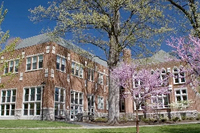 Engaged Organizations: Drew Theological School Drew Theological School participates in the Green Seminary Initiative. In addition to their larger mission (as stated on their website at https://www.drew.edu/theological-school/), the GSI website describes their environmental efforts: "Drew Theological School, a seminary of the United Methodist Church and part of Drew University in Madison, NJ, hosts The Green Seminary Initiative. Professor Laurel Kearns heads the Green Team, which also includes Dr. Catherine Keller and Dr. Heather Elkins on the faculty. All three publish, teach, and lecture on topics related to theology and eco-justice, joined by several other faculty who bring environmental concerns into their classes. Recently, eco-justice began to be integrated throughout the curriculum, building on almost two dozen courses with an ecological focus, including several required courses. Students can focus on religion and ecology in all degree programs. Drew’s other environmental initiatives include environmental justice field trips, native species and integrated pest management, water bottle refilling stations, reusable cutlery and sustainable food options. The campus includes a community garden, arboretum, labyrinth, native species planting, and a forest. The school is particularly proficient in establishing environmental policies to guide its institutional practices, and integrating environmental themes into chapel services, curriculum, speakers, cross-cultural trips, and broad social justice work." Drew Theological School strives to infuse care of the earth into all aspects of theological education.
 -
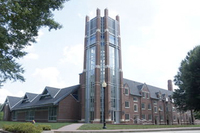 Engaged Organizations: Columbia Theological Seminary Columbia Theological Seminary participates in the Green Seminary Initiative. In addition to their larger mission (as stated on their website at https://www.ctsnet.edu/), the GSI website describes their environmental efforts: "Columbia Theological Seminary, a school in the Presbyterian Church (USA), has been a leader in ecological theological education for the last decade. They have two LEED Gold buildings on campus in Decatur, GA, was one of the founding members of the Seminary Stewardship Alliance, and their late president Steve Hayner began a Sustainability Commission that continues to this day. They also bring to the certification program a commitment to health, imagination, and resilience." Columbia Theological Seminary strives to infuse care of the earth into all aspects of theological education.
 -
 Engaged Organizations: Claremont School of Theology Claremont School of Theological participates in the Green Seminary Initiative. In addition to their larger mission (as stated on their website at https://cst.edu/), the GSI website describes their environmental efforts: "Claremont School of Theology in Claremont, CA, is a United Methodist Church seminary. Ecological sustainability has been a priority for the school since the tenure of Professor John Cobb, an early eco-theologian who began work at Claremont in 1960. Claremont held its first conference on the environmental crisis in 1971. The leaders of Claremont’s Green Team, Dr. Philip Clayton and Kristin Ritzau, shared with GSI that they see the certification process as a way to become a place of ecological education and empowerment for seminary leaders, students, and community members in Southern California. Claremont enters the program eager to share its curriculum and syllabi from multiple eco-classes and programs." Claremont School of Theology strives to infuse care of the earth into all aspects of theological education.
 -
 Engaged Organizations: Christian Theological Seminary Christian Theological Seminary participates in the Green Seminary Initiative. In addition to their larger mission (as stated on their website at https://www.cts.edu/), the GSI website describes their environmental efforts: "Christian Theological Seminary in Indianapolis, IN, is an ecumenical Christian theological institution. The school has nurtured ecological care in theological education through several course offerings, through courses taught by Dr. Marti Steussy and Dr. Carol Johnston, as well as a contextual study opportunity in Appalachia, offered by Dr. Suzanne Coyle. Dr. Robert Saler has published articles on environmental theology, while Dr. Carol Johnston, a long-time eco-theological leader in the Presbyterian Church (USA), has also published numerous books and articles and lectured internationally on religion and ecology. Dr. Felicity Kelcourse has supported community efforts to preserve Crown Hill a 30 acre pre-settlement remnant forest near the seminary that is threatened with deforestation." Christian Theological Seminary strives to infuse care of the earth into all aspects of theological education.
 -
 Engaged Organizations: Boston University School of Theology Boston University School of Theology participates in the Green Seminary Initiative. In addition to their larger mission (as stated on their website at https://www.bc.edu/content/bc-web/schools/stm.html), the GSI website describes their environmental efforts: "Located in Boston, MA, Boston University School of Theology is a United Methodist seminary with broad ecumenical connections, including Episcopal and United Church of Christ Communities of Learning. BU has been actively working toward ecological justice since 2008, and built green initiatives into their strategic plan in 2010. BU brings to the Green Seminary Initiative an expertise in how to imagine what is possible as a theological school embedded in a large university that is also committed to ecological sustainability. They also exemplify what it means to transform curriculum and communal practice, and renovate aged buildings." Boston University School of Theology strives to infuse care of the earth into all aspects of theological education.
 -
 Engaged Organizations: Austin Presbyterian Theological Seminary Austin Presbyterian Theological Seminary participates in the Green Seminary Initiative. In addition to their larger mission (as stated on their website at https://www.austinseminary.edu/), the GSI website describes their environmental efforts: "Austin Presbyterian Theological Seminary has offered three faith-based environmental courses: “Environmental Ethics,” “Nature, Theology, and Ethics: Christian Spirituality and Creation Care,” and “Christian Creation and Spirituality.” These courses are taught by Dr. William Greenway, Associate Professor of Philosophical Theology. During his tenure at Austin, Dr. Greenway has taught several other faith-based environmental courses including "Nature, Theology, and Ethics" and an experiential course titled "An Adventure in Wilderness and Spirituality." In recent years, Austin has been steadily increasing its environmental commitments through its curriculum and communal worship. In joining the program, Austin brings cross-disciplinary faculty expertise, commitment to outdoor chapel services, and the implementation of an Energy Management System to reduce the school’s carbon footprint." Austin Presbyterian Theological Seminary strives to infuse care of the earth into all aspects of theological education.
 -
 Engaged Organizations: Buddhist Peace Fellowship The Buddhist Peace Fellowship discuss their purpose and mission on their website: "Shapes movements for ecological and social justice by sharing spiritual-political practices and resources. We come together from multiple lineages, Buddhist and otherwise, to support bold, creative, loving actions to block systemic harm, while building collaborative tools and gatherings that give us the strength to be with our suffering, in order to transform towards liberation."
 -
 Engaged Organizations: A Rocha International A Rocha International discuss their mission on their website: "At A Rocha USA, our mission is to restore both people and places through collaborative, community-based conservation. We resource Christians to care for creation where they live by building a network of hands-on conservation projects in communities across the nation. Through partnerships with individuals, churches, and community groups, we provide content, curriculum, and a network of support for improving local habitats and increasing biodiversity."
 -
 Engaged Organizations: EcoSikh EcoSikh began as an initiative of the United Nations Development Program https://www.undp.org/ and the Alliance of Religions and Conservation http://www.arcworld.org/. EcosSikh discusses their mission on their website: "EcoSikh connects Sikh values, beliefs, and institutions to the most important environmental issues facing our world. We draw on the rich tradition of the Sikh Gurus and the Khalsa Panth to shape the behavior and outlook of Sikhs and the world, ensuring that our deep reverence for all creation remains a central part of the Sikh way of life." The organization's main program is Sikh Environment Day, which includes a green pilgrimage network and a campaign to make gurdwaras more sustainable.
 -
 Engaged Organizations: Interfaith Center for Sustainable Development The Interfaith Center for Sustainable Development (ICSD) discusses their mission on their website: "The Interfaith Center for Sustainable Development (ICSD) reveals the connection between religion and ecology and mobilizes faith communities to act. ICSD works on a global basis, with current engagement in Africa, the Middle East, North America, and Europe. In 2020, ICSD’s work focuses on The Seminary Faith and Ecology Project. We are also continuing with The Faith Inspired Renewable Energy Project. ICSD also provides thought-leadership to faith-based communities and beyond through our writing, speaking, teaching and advocacy. Our collection of reports, articles, course and syllabus collections, blog, and other resources provide a unique access point for leaders and followers of faith-based communities alike to explore the connections between their tradition and contemporary environmental issues."
 -
 Engaged Organizations: The Shalom Center The Shalom Center discusses their three major program priorities on their website: "(1) Addressing the Global Climate Crisis, especially drawing on Jewish and other religious teachings about shaping a sustainable society; coping with the problems created by unacccountable concentrations of corporate and government power in making change difficult; and working on these issues with special concern for those most vulnerable and most hurt as the climate crisis unfolds. (2) Addressing unjust and destructive concentrations of political and economic power in the hyper-wealthy and in giant global corporations — power that corrupts democracy, including elections, and delivers enormous “benefits” to those who wield the power while depriving the poor, the aged, the sick, Black and Latino and Native communities, much of the middle class, and large numbers of women of ways to meet their individual and social needs. (3) Peacemaking, especially among the Abrahamic communities both within the USA and in the broader Middle East, where violence is especially intense and where it engages intense emotions in the overlapping circles of the Jewish community, the other Abrahamic communities, and the American public generally."
 -
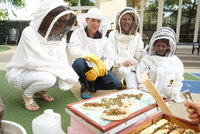 Overview of grant application process for The Bee Cause Project This link provides the document that serves as a resource to apply for The Bee Cause Project. The Bee Cause Project provides support for obtaining various bee hive options for K-12 schools. Staff and students from St. Joseph Montessori School, Columbus, Ohio, worked together to apply for one of the grants offered. The students prepared a power point presentation about the bee hives. They also added their signatures on letters of support for their application to their local planning and zoning commission in order to build their bee yard.
 -
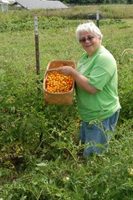 Shepherd's Corner volunteer opportunities Shepherd's Corner offers volunteer opportunities for both individuals and groups as indicated on their website: "Volunteer With Us Volunteer opportunities at Shepherd’s Corner are as abundant as the fruits of the earth. We invite individuals and groups to share in our ministry of caring for the land. All sorts of skills are needed or come to learn some new ones. One time visits, work on special projects, or regularly scheduled participation are welcome. Group Projects Groups are invited for a half day of service on a Tuesday, Wednesday, Thursday, Friday, or Saturday. We ask for one adult per 10 youth under 18 years. Individual Volunteers Come for a weekly or monthly time or fill in as needed. Individuals will need to complete our volunteer application. The application is the last to pages of the preceding link. We will ask individuals for background screening since we often have minors present. Volunteers must be age 13 or older; volunteers for animal chores must be age 18 or older."
 -
 Annual 5K Fundraiser (Shepherd's Corner) Shepherd's Corner website provides details for their annual walk/run fundraiser: Race check in and number pickup begins at 8:00 am. Pets are not allowed at the race. "Partner with us in feeding the hungry. We are committed to donating 60-65% of our naturally grown produce to local food pantries. Proceeds from the race will benefit our food pantry gardens. The 2019 overall race results can be found here: https://docs.google.com/spreadsheets/d/18c83J34HEfYjibi5FmtDY3cfRtki-IWzavCHzuaRq2k/edit#gid=0 Become a partner in our efforts by becoming a sponsor for our 2020 race. You can become a sponsor online or print a sponsor brochure. Make a donation to partner with us. Register for the race online or print a registration brochure and register by mail."
 -
 Shepherd's Fest (Shepherd's Corner) Shepherd's Corner ecological center provides information regarding their annual festival on their webpage: "Explore our food pantry gardens, take a hayride around the property, meet our sheep, and walk the meditation trail & labyrinth. Savor delicious food from a local food truck (Moody Trudy). Meet the Jefferson Township fire department and check out a fire truck up close. Watch Gail Maraman, a local felt artist, demonstrate her art. Chat with AEP representatives about electricity savings, consider more responsible energy use with Columbia gas. and learn about the environmental efforts of Green Spot Columbus. We will have a farm stand featuring of our naturally grown produce, 2019 maple syrup, and crafts made by the Dominican Sisters of Peace and volunteers."
 -
 Profile: Paula Penn-Nabrit (Founder of The Charles Madison Nabrit Memorial Garden) Paula Penn-Nabrit's autobiography (from her website): "Spiritually, I’ve been blessed as a practicing Christian, a 4th generation member of The Church of Christ of the Apostolic Faith, the same apostolic/pentecostal church my great-grandparents joined 100+ years ago. Physically, I’m blessed as an 8th generation, native-born American of the African diaspora. I’m blessed to be a widow who was happily married for 36 years, 8 months and 22 days to an incredible man, Charles “CMadison” Nabrit. And CMadison and I were incredibly blessed by the opportunity to parent and then homeschool three fabulous sons, twins Charles and Damon who arrived in 1980, and Evan who arrived in 1982. Academically, I’ve been blessed by my parents’ willingness to help pay for my education first at Columbus School for Girls and then Wellesley College. And I was further blessed by their willingness to help CMadison fund my quest for that terminal degree at the Moritz College of Law at The Ohio State University. Professionally, I continue to be blessed by decades of successful operation with my consulting firm, PN&A, Inc. www.nabrit.com/pna. I started PN&A, Inc. in 1986. Next in 1990 I convinced CMadison we could stay married and work together, then in 2007 we welcomed first Damon our tech guru and later Charles as researcher and presenter into the business and finally in 2009 Evan, our youngest and a freakishly brilliant artist, agreed to manage our freelance graphics and client videos. I’m blessed to see PN&A, Inc., a black, women-owned, family-run, information-based business moving into the 2nd generation. Intellectually, I’ve been blessed to write several books, including Morning by Morning: How We Home-Schooled Our African-American Sons to the Ivy League @2003, Random House and most recently The Power of a Virtuous Woman @2012. Personally, I’m blessed by my extended family. In 1980 with the birth of their first grandchildren my parents began a tradition of gathering their children, their children’s spouses and their grandchildren for dinner each Sunday after church. Attendance at Grandmother and GrandDad’s Sunday dinners has grown to include nine grandchildren. We miss CMadison and Daddy, but we continue to be blessed by their memory and their legacy."
 -
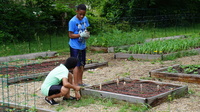 The Charles Madison Narbit Memorial Garden The Charles Madison Narbit Memorial Garden website states the purpose for it's creation: "About the Garden: The Charles Madison Nabrit Memorial Garden Named 2015 Community Garden of the Year and selected as one of 12 Hub Gardens in Central Ohio by Franklin Park Conservatory and Botanical Gardens, CMNMG@CCAF was created as a living legacy to Charles Madison Nabrit’s commitment to holistic health, self-determination, education and community service. Our mission is to: (1) increase affordable access to organic produce; (2) increase awareness of the spiritual and cultural connections to gardening within black and brown communities; (3) increase children’s exposure to functional STEM studies; and (4) increase economic self-sufficiency and sustainability in the garden, in our homes and in our community. Opened in 2014 in the midst of an urban food desert, CMNMG@CCAF is a 3,850 square foot, organic, biodiverse, self-sustaining space behind a church housing an historic, 105+ year-old, predominantly black congregation, descendents of the African diaspora to the Americas. Our hashtags speak to our spiritual and cultural heritage: #HeStartedUsinaGarden and #WeCameHeretoCultivate."