
Items
-
 Activism by Jewish Women The Jewish faith is, like many other faiths, becoming more and more environmentally conscious each and every day. One of the biggest reasons for this change is because of leaders and individuals in a faith community. In the Jewish community, many women have stepped up in a number of different ways to pave a path towards sustainability.
 -
 Renewal Project Renewal Project is an excellent resource and gateway to finding new material and success stories when it comes to religion as the environment.
 -
 Kentucky Nuns The Sisters of Loretto have been involved in social movements and justice for a long time. It’s not surprising to hear that in recent history, they were involved in stopping a Kentucky pipeline. The construction of the pipeline, as well as the route it took, would have caused potentially massive amounts of pollution and damage to the earth. As stewards of the earth, they saw it as their job to protect the planet.
 -
 Engaged Organizations: National Religious Partnership for the Environment This is a network of 4 major religious coalitions. They seek to preserve the planet by providing outlets and resources for anyone and everyone.
 -
 Engaged Organizations: Earth Charter Initiative The earth charter initiative was created to help engage communities on sustainability all around the world. This includes engaging religious communities.
 -
 Sustainability in Religion: A History Sustainability has been developing for a long time. It has recently been featured more prominently, as various world events and cultural changes are pushing it to the forefront of modern issues. Churches and religious houses are no exception when it comes to adopting sustainable goals and ideals.
 -
 Factory Farming and Religion Food is an important part of life. It is also important to many religions. Specifically, using animals as food has a long standing history with many religions. Many faiths have rules and guidelines about how animals are to be raised and killed. With the rise of factory farming, it is expected that many religions would shun its practices, but that’s not completely true.
 -
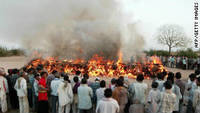 Hindu Funeral Pyres Hindu people traditionally have a funeral pyre for their deceased. However, this funeral pyre is very environmentally damaging, as it burns hundreds of kilograms of wood and creates a lot of ash. To combat this, a Green Cremation System has been developed that will allow for all traditional funeral rites and bring down environmental impacts.
 -
 Faith and Composting Many churches and religious houses have recently took to composting. This is a more spiritual way of disposing of trash while remaining environmentally conscious. Not only that, but composting programs help to teach spiritual lessons of renewal.
 -
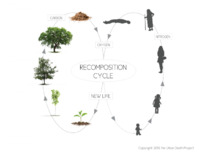 Urban Death Project Death is a part of life. Every religion has its own traditions and rites when it comes to laying a body to rest. A new program, the Urban Death Project may be changing how some faiths proceed with funeral services.
 -
 Islamic Practices and Sustainability Mr. Iskandar Waworuntu is working with Islamic faiths in Indonesia to incorporate sustainability with forgiveness. Much of the Muslim traditions have to do with purification. Waworuntu is hoping to incorporate these two ideas with each other, linking sustainability as a form of purification.
 -
 Faith and Fire A recent study conducted by professors at the University of Melbourne shows a connection between fires on earth and religion. They found that there were significantly less fires on the earth on the traditional days of rest for the predominant faith in an area.
 -
 Sustainability at Religious Sites Years ago, religious sites such as monasteries would be completely self sufficient. All the goods needed by the monks and the surrounding community would be made in the monetary itself. This tradition is having a resurgence in today’s age. These locally made goods are being created and used to boost the economy of the area through tourism and sales to visitors.
 -
 Religion and Hunting All religions have varying views on the practice of hunting. Some advocate for it, as long as it is done in a sustainable way and food is not wasted. Other religions preach vegetarianism, as all animals are living creatures that should be allowed to live. Others allow the consumption of animals, but only if the animal is killed in a sacred way.
 -
 Jewish Farmers There are many Jewish farmers living in various communities throughout New York. Many of these farmers moved out to the country for spiritual reasons, and now live out teaching of the Torah as part of their lives.
 -
 Spirituality and Food Many people in Oregon have been eating organic and locally grown food to connect with their spiritually sides. From Buddhists and Native American religions to Jews and Christians, everyone has a reason and explanation of how eating local organic food helps to connect them with their faith.
 -
 Religion and Sustainability Literature Religion and Sustainability: Social Movements and the Politics of the Environment by Lucas F. Johnston has been heralded as an invaluable resource on the movement in religions to focus on environmental care. It takes a look at the similarities and differences that various religions have with each other when it comes to stewardship, as well as the social and political implications behind them.
 -
 A Common Cause for Opposing Groups When groups share a common cause, they can see past their differences to work towards a goal. This is what has been happening recently when it comes to conservatives and liberals. These two groups are bonding over caring for the earth in their own ways.
 -
 Studying Religion and Sustainability Religion has been used for both the preservation and the destruction of the environment. On one hand, most religions teach stewardship and care for all of creation. On the other hand, with the prospect of the world ending, people are less inclined to take care of something that may not exist in the future. This is why it is important to educate people on the importance of studying sustainability. One program that has done an excellent job of this is a course offered at Cornell.
 -
 Using Religion to Teach Sustainability Almost all religions share some common roots and bonds. A program called Teaching and Learning For a Sustainable Future is helping to show people how faith can be used to promote and advocate for sustainable living by living within religious teachings.
 -
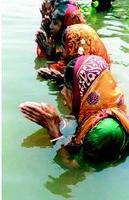 The Presence of Water in Religion Water is an important element in all religions. Whether you look at the Muslim faith, Christianity, or the beliefs of American Indians, water has constantly played an important role in purification and creation. Because of its high importance to all religions, as well as its necessity to sustain human life, it is essential that water is conserved and used in a sustainable way.
 -
 Pope Francis on the Amazon Pope Francis attended World Youth Day in Rio de Janeiro in 2013. While there, he addressed the issues that the people there face in preserving the rainforest and the need to act as stewards of the environment. He spoke to the youth and encouraged them to become active in preserving the environment and carrying out holy missions.
 -
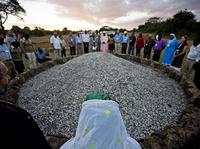 Sacred Earth Sacred Earth is a resource that was created by the World Wildlife Foundation. It helps teach and inspire faith communities to take proper care of their resources, especially the ones hold special importance to their specific faith.
 -
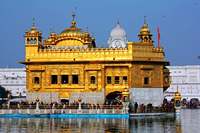 Pollution and the Golden Temple The level of air pollution India, where the Golden Temple stands, has risen to extreme levels over the past years. The pollution is dulling the golden walls, as well as causing huge health impacts on the Indian people who live there. To combat this, the government is beginning to regulate fossil fuel use as well as change various environmental standards throughout the area.
 -
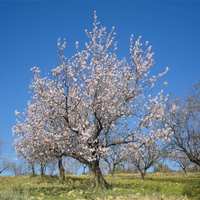 Trees in the Bible As Arbor Day approaches, it is interesting to look at how trees are used symbolically in different religions. For example, trees are mentioned many times in the various religious teachings in the bible.