
Items
-
 Global Interfaith Wash Alliance Founded by UNICEF, The Global Interfaith Wash Alliance is a coalition of different faiths. Their goal is to provide access to safe drinking water as well as spread knowledge of sanitation to people all around the world. They are achieving this goal by working together with faith leaders who can help spread this information much more effectively than any other group could.
 -
 Ganga Sagar Mela Festival and Sanitation The Ganga Sagar Mela Fetival is a meeting of million of pilgrims to cleanse themselves in the Ganges Delta. However, due to a lack of access to toilets and sanitary knowledge, it has also become a site for massive amounts of human waste. That’s all changing as the Global Interfaith WASH Alliance of India teams up with UNICEF to have faith leaders of different creeds teach followers how to begin using more sanitary practices.
 -
 Steps to Sustainability Catholic Churches have been attempting to go green for years. One resource that has helped them to achieve this goal is a series of steps explained in the National Catholic Reporter. This site shows simple and easy steps that a congregation can take to being green, from conserving water and energy to educating and building communities.
 -
 Naropa Ceremony A Buddhist tradition, the Naropa ceremony, is held once every 12 years. The Drupka, or a religious leader in Mahayana Buddhism, is excited to conduct this ceremony. One principle of Mahayana Buddhism is caring for the environment. This ceremony will help spread the concerns that the Drupka has about the environment, and raise awareness for the issues at large.
 -
 Creation Care Study Program This program pushes students into learning all about the environment in order to protect it. The lessons and missions are meant to be faith based, as students are learning about The Lord’s creations and how to care for them.
 -
 Restoring Eden Restoring Eden is a website dedicated to provided information and tips on how to be more environmentally conscious. It’s full of resources, news, and events to help get faith communities involved in their cause.
 -
 Official Denominational Environmental Webpage – Unitarian This Unitarian website is home to countless resources from the Unitarian faith. It includes a calendar of events as well as various success stories from within the community.
 -
 Official Denominational Environmental Webpage – United Methodist The United Methodist Church addresses environmental issues in a different way. They call their page that focuses on these issues: Social Principles, The Natural World. Through this, you can find information about the Methodists viewpoints on water, energy, animal life, or even space.
 -
 Official Denominational Environmental Webpage – Catholic The Catholic faith has its own set of resources when it comes to environmental awareness. Their website contains lessons on advocacy, environmental justice, and other areas of life. One program, the Environmental Justice Program, is helping people of the Catholic faith to reach out and protect the environment, especially with the poor in mind.
 -
 Official Denominational Environmental Webpage – Episcopal The Episcopal ecological Network is the Eco-based resource for the Episcopal faith. Their home website contains information on how churches and congregations can become more environmentally friendly and aware. They do this through a three part program involving reflection, education, and action.
 -
 Official Denominational Environmental Webpage – Lutheran Church The Lutherans have their own environmental resource, Lutherans Restoring Creation. This site is full of education, success stories, environmental news, and even resources for preaching.
 -
 Official Denominational Environmental Webpage – Presbyterian Church The Presbyterian faith has an online resource for all members of its community. This website helps provide information and links for people and congregations to become more Eco-friendly. Another valuable resource on their page is their Earth Care Congregations, which provides projects, education, and outreach programs.
 -
 The Good Food Toolkit The food that we eat can have a huge impact on the environment. The Good Food Toolkit is helping congregations to find food that is both produced sustainability as well as raised humanely, and is economically sound by providing the food producers with a livable wage. These are all areas that we sometimes overlook when it comes to purchasing our foods, but The Good Food Toolkit helps to identify each of these areas to help improve the quality of food we are purchasing.
 -
 Resource – GreenFaith GreenFaith is an organization that seeks to spread environmental stewardship to people of all faith communities. They provide resources, education, and positive outlets for how various faith groups can help better themselves and their environments.
 -
 Green Justice Congregations Sustainability and becoming “green” are more than just simple actions. Many people believe that to truly achieve environmental stewardship, the culture and how we look at things needs to be changed. The United Church of Christ has provided a resource to help faith communities make this change. Their program can be adopted by anyone who wants to help make an impact in their own community.
 -
 Environmental Statement – Greek Orthodox In 1989, Patriarch Dimitrios I of the Greek Orthodox Church issued a statement on concern for the environment. Like many other faiths, he cited the messages and teachings of the Bible, saying that man was intended to be the steward of nature. To raise awareness for environmental causes and stewardship, September 1st of each year since 1989 has been dedicated to preserving and praying for the environment.
 -
 The Supreme Court and The Clean Power Plan The Clean Power Plan was designed to allow states the greatest flexibility in implementation, attempting benefiting the health of individuals by improving the quality of the air for everyone. The Supreme Court has ruled to stay the implementation of the Clean Power Plan (5-4 ruling). Many churches and faiths have banded together to express their dissatisfaction with this decision. A predominant tenet of most religious organizations is their concern with protecting the health and well-being of vulnerable communities and God’s Creation.
 -
 Food Steward’s Pledge The EPA is engaging faith communities on the issues of climate change and food shortages. Many people do not have access to enough nutritional food to have a healthy lifestyle. On the flip side, there are huge amounts of food that are simply wasted every day in the United States. The EPA is hoping to bridge this gap by reaching out to faith communities and helping spread the message of reducing food waste.
 -
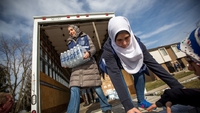 Flint Water Crisis – Activism Due to the extreme conditions in Flint, Michigan, recently, many church communities of varying faiths have stepped up to provide aid. From Catholics to Jews to Muslims, all are involved in distributing free bottled water to the residents of the area. They are also committed to making sure that this sort of situation never happens again.
 -
 The Big Church Switch A movement has started in the United Kingdom to get more renewable energy usage in churches and individual homes. This is due to many Christians joining together and giving up fossil fuels for lent this year. There is a simple process to get involved, which can be seen in the video.
 -
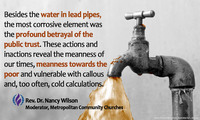 Flint Water Crisis – Religious Leaders Respond The Flint Water Crisis has affected a large community of mostly impoverished people for a long time; however, it has only recently begun to gain attention. Pastors of different churches are claiming that the situation displays a crime against humanity itself. Many religious leaders have cited biblical texts to encourage people to reevaluate what is happening here, and to start to take better care of the earth. Some hope that attention to this crisis will help people all around the country become more aware of issues of justice and realize the importance of environmental stewardship.
 -
 Environmental Statement – Reformed Church in America In 1982, the Christian Action Commission of the Reformed Church in America (RCA) released a document titled “Care for the Earth: Theology and Practice.” This was given to General Synod, who then passed several resolutions outlining the Reformed Church in America’s stance on environmental issues. The Action Institute wrote the article below that discusses the resolutions that were passed.
 -
 Environmental Statement – Lutheran Church The Evangelical Lutheran Church in America adopted a robust environmental social statement in 1993. Many themes are similar to those voiced by other religions in that it focuses on humanity’s responsibility to the environment and the call to act as the stewards of the earth. The statement notes that problems of environmental degradation have been caused by humanity, and it is up to us to restore nature to its former condition. All people of the earth need to take part, and this statement calls for action by everyone.
 -
 Environmental Statement – Episcopal Church The Episcopal Church has issued multiple environmental statements over the years. Their foundational statement in the 1990’s was released in parts. The first part discussed environmental policy, and what must be done to preserve creation. The second part addressed taking action through the church. It involves advocacy, leadership involvement, and education.
 -
 Environmental Statement – Mennonite Church Like many other religions, the Mennonite Church has released a statement about the need to take care of our environment. They are encouraging this attitude of caring for our planet among their members by using biblical text. It focuses on helping people choose simpler lifestyles, and seeking justice for the environment.